
 E-Paper



India-China prep for 8th round of border talks. Accident is the big concern
Neither side is impatient over resolution at the friction points in Ladakh, but have decided to keep the dialogue channels open at both the military commander level and diplomatic levels, senior officials said.

 Prefer HTon Google


India and China are expected to hold the eighth round of military-diplomatic talks next week on disengagement in the Ladakh theatre even as their armies prepare for winter deployment along the 1,597-km Line of Actual Control (LAC).
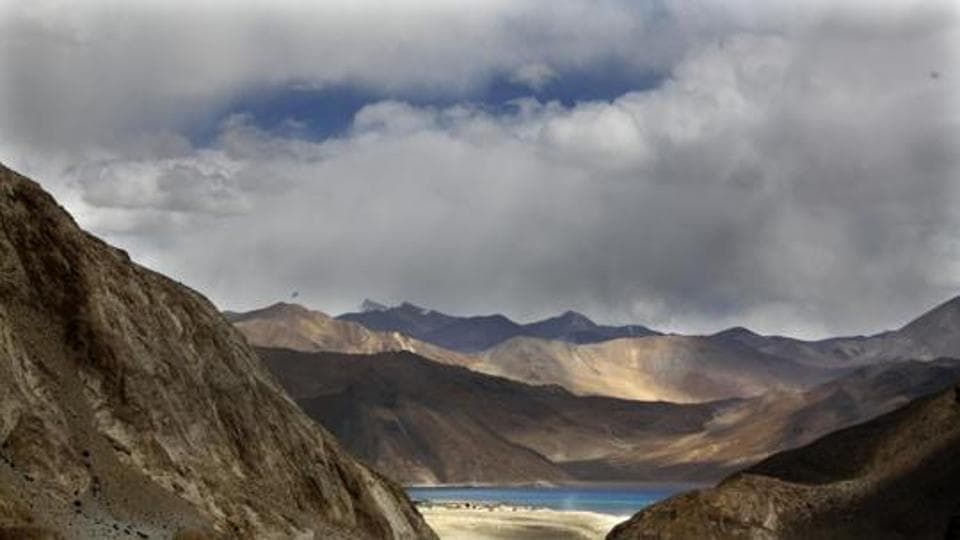
Neither side is impatient over resolution at the friction points in Ladakh, but have decided to keep the dialogue channels open at both the military commander level and diplomatic levels, senior officials said. The talks are also aimed at preventing any vertical escalation at the friction points either because of accident or the aggressiveness of an individual commander.
While the People’s Liberation Army (PLA) has proposed that both sides withdraw armoured and artillery units as part of de-escalation first and then go for disengagement of the infantry, the Indian side is very clear that armoured units cannot be withdrawn because it will give an advantage to the adversary due to terrain and capability.
Also Read | No one can take away Indian land: Amit Shah says amid border row with China
As a senior military commander explained, the issue is that the Indian Army’s approach to both the north and south banks of Pangong Tso is through two very high mountain passes---the 17,590-feet-high Chang La and 18,314-feet-high Marsimik La.
While Chang La lies between the road from Leh to the contested south bank of Pangong Tso, Marsimik La lies between the contested north banks of the lake and Kongka La.
“ If India were to withdraw its armoured units from south of Pangong Tso to beyond Chang La or beyond Marsimik La, then they will never reach back to the contested points in a worst-case scenario as both the passes are blocked by heavy snow till April every year. The PLA on the other hand has an advantage as they have a six-lane Kashgar-Lhasa highway just 10 km from both Marsimik La and Kongka La with roads running right up to their posts,” a senior official said on condition of anonymity.
There has been no snowfall yet on the peaks on the north and south banks, but the water in the lake is starting to freeze and the wind speed is very high.
The PLA launched aggression on the Galwan valley, Gogra-Hot Springs and north bank of the Pangong Tso in April-May this year; the Indian Army was able to pre-empt its moves south of Pangong Tso to occupy the Rezang La -Rechin La ridgeline in the last week of August.
The situation continues to remain tense as the PLA is deployed in full in occupied Aksai Chin as well as in the depth areas up to Chengdu and Kashgar. The PLA air force is continuing its combat patrols in the area with nearby air being bases active.
Given the circumstances, the Indian Army and the PLA are deployed on the contested points with distance being maintained so that any chance of an accident is ruled out. Indian medical facilities have come up along the LAC so that victims of high attitude sickness get immediate treatment and not wait for heli-lift to a specialised hospital at Hundar in Partapur.


