
 E-Paper



India, China should jointly oppose hegemony, tariff and trade wars: Chinese envoy
Chinese ambassador Xu Feihong said the recent meeting between Xi and Modi led bilateral ties to a “new level of improvement”

 Prefer HTon Google


NEW DELHI: India and China should jointly oppose hegemony and “tariff and trade wars” while defending the interests of the Global South, Chinese ambassador Xu Feihong said on Tuesday, against the backdrop of the global impact of the US administration’s trade and tariff policies.
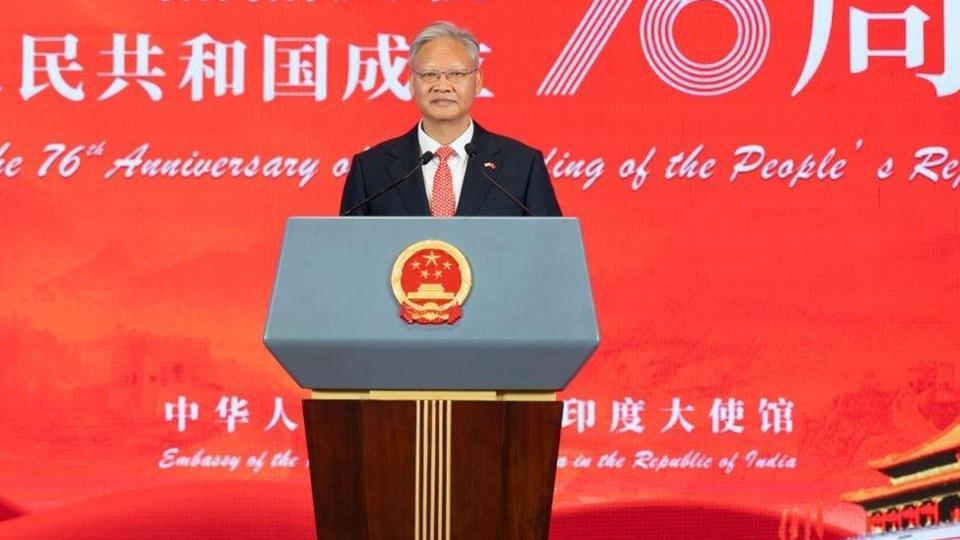
Xu made the remarks while addressing an event hosted by the Chinese embassy to mark the anniversary of the founding of the People’s Republic of China, which senior Indian diplomats attended. He also proposed a four-point approach to put India-China ties on the track of “sound and stable development”.
The comments came at a time when India and China have taken a range of steps to normalise relations after a military standoff on the Line of Actual Control (LAC) that lasted more than four years and took ties to their lowest point in six decades.
Noting that India and China had resisted fascism and fought for national independence during World War II, Xu said: “Eighty years on, it is all the more important that we carry forward the great spirit forged during the War of Resistance, firmly oppose hegemony, power politics, and any form of tariff and trade wars, jointly defend the common interests of the Global South, and build a community with a shared future for humanity.”
Xu did not name any country in the context of tariff and trade wars, though it was obvious he was referring to the US. The Trump administration has doubled tariffs on Indian goods, including a 25% punitive levy over Russian oil purchases. The US has suspended tariffs of up to 145% on Chinese goods till November as trade talks between the two sides continue. India is also engaged in trade talks with the US, following a recent thaw in bilateral relations.
After India and China reached an understanding on ending the standoff on the LAC last October, Prime Minister Narendra Modi and Chinese President Xi Jinping met in Russia and agreed to revive several mechanisms to normalise bilateral ties and address the border dispute. Modi and Xi met again on the margins of the Shanghai Cooperation Organisation Summit in China earlier this month.
Xu said the latest meeting between Xi and Modi led bilateral ties to a “new level of improvement”, and China is ready to work with India to advance “relations on the track of sound and stable development”. In this context, he proposed a four-point approach, including upholding a “strategic perspective” of planning for the long-term, and finding the “way to get along with each other in the spirit of mutual respect and trust, peaceful coexistence, common development and win-win cooperation”.
The two sides should expand friendly cooperation, including in bilateral trade, which grew 10.4% year-on-year to $102 billion, Xu said. He noted the two sides had also resumed the pilgrimage to Kailash Mansarovar in the Tibet region and that the Chinese embassy and consulates in India had issued more than 265,000 visas to Indian citizens till September 22.



