E-Paper



‘Didn’t give veto power’: Delhi stings Beijing on protest over India-US exercise
External affairs ministry spokesperson Arindam Bagchi responded to the criticism from Beijing, saying the Chinese side “needs to reflect and think about its own breach of these agreements of 1993 and 1996”.

 Prefer HTon Google


NEW DELHI: India on Thursday rejected China’s opposition to an India-US joint military exercise being held near the Line of Actual Control (LAC) and said New Delhi does not give a veto to any third country on such matters.
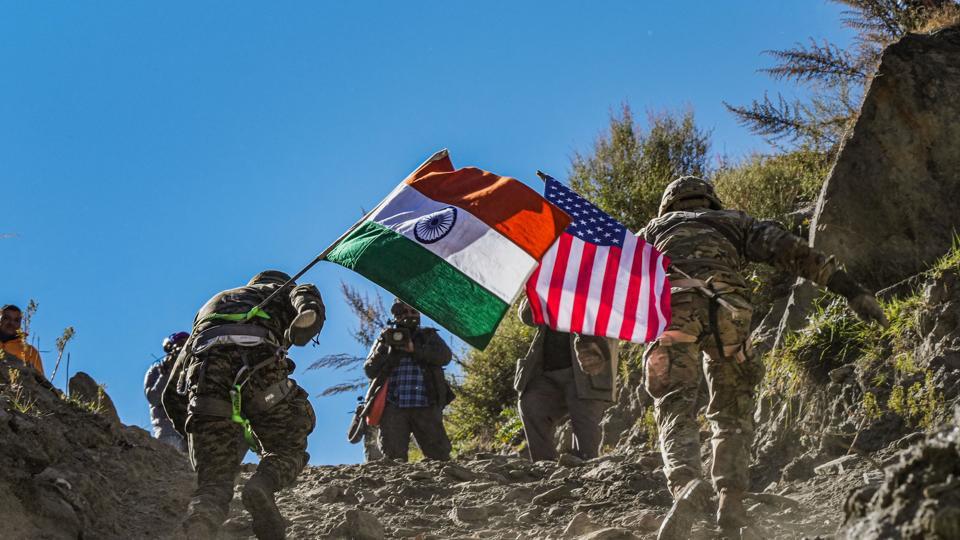
China’s foreign ministry on Wednesday opposed the holding of the latest edition of the India-US exercise “Yudh Abhyas” at Auli in Uttarakhand, 100km from the LAC and said the drills violate border management agreements signed by China and India in 1993 and 1996.
“Let me emphasise that the exercises that are going on with the US in Auli have nothing to do with the 1993 and 1996 agreements,” external affairs ministry spokesperson Arindam Bagchi told a weekly media briefing in response to questions on the position taken by China.
In a tacit reference to China’s actions in Ladakh sector of the LAC where Indian and Chinese troops have been locked in a standoff since May 2020, Bagchi added, “But since these [exercises] were raised and we are talking about them and it was raised by the Chinese side, let me emphasise that the Chinese side needs to reflect and think about its own breach of these agreements of 1993 and 1996.”
The Indian side has accused China’s People’s Liberation Army of violating several border management agreements and protocols by massing troops along the LAC and building infrastructure in disputed regions.
Twenty Indian soldiers and at least four Chinese troops were killed at Galwan Valley in June 2020, taking relations to their lowest point in six decades.
Though the two sides have withdrawn frontline troops from Pangong Lake, Gogra and Hot Springs, they have been unable to disengage at crucial friction points such as Demchok and Depsang despite more than two dozen rounds of diplomatic and military talks.
Bagchi declined to comment on a new Pentagon report that said China warned US officials not to interfere in Beijing’s relations with New Delhi amid the LAC standoff and reiterated that India does not give a veto to anyone on the relationship with the US.
India, Bagchi pointed out, expects the diplomatic and military talks with China to have objectives and lead to results. “What we want from our side is very clear – we have said there should be disengagement and de-escalation,” he said.
The annual Yudh Abhyas exercise, currently in its 18th edition, aims to enhance interoperability and sharing of expertise between the Indian and US armies for peacekeeping and disaster relief operations. The nearly two-week exercise began last month.
Chinese foreign ministry spokesman Zhao Lijian, while responding to a question from a Pakistani journalist at a media briefing in Beijing on Wednesday, said the India-US military exercise “close to the LAC at the China-India border violates the spirit of the agreements between China and India in 1993 and 1996”. Zhao added, “It does not serve the mutual trust between China and India.”