
 E-Paper



China’s concerns over Auli joint exercises are disingenuous
China has blamed India for violating the 1993-1993 bilateral border agreements by holding joint military exercises with the US in Auli near Joshimath in Uttarakhand. These are the same agreements that PLA threw out of the window when it transgressed into Galwan on May 5, 2020 in a unilateral bid to impose the already rejected 1959 line in East Ladakh.

 Prefer HTon Google


The Chinese spokesperson invoking the 1993-1996 bilateral agreements for conveying concerns over India-US battalion level joint exercises at Auli in Uttarakhand, 100 km from LAC, is yet another example of Beijing changing goalposts to suit its strategic requirements.
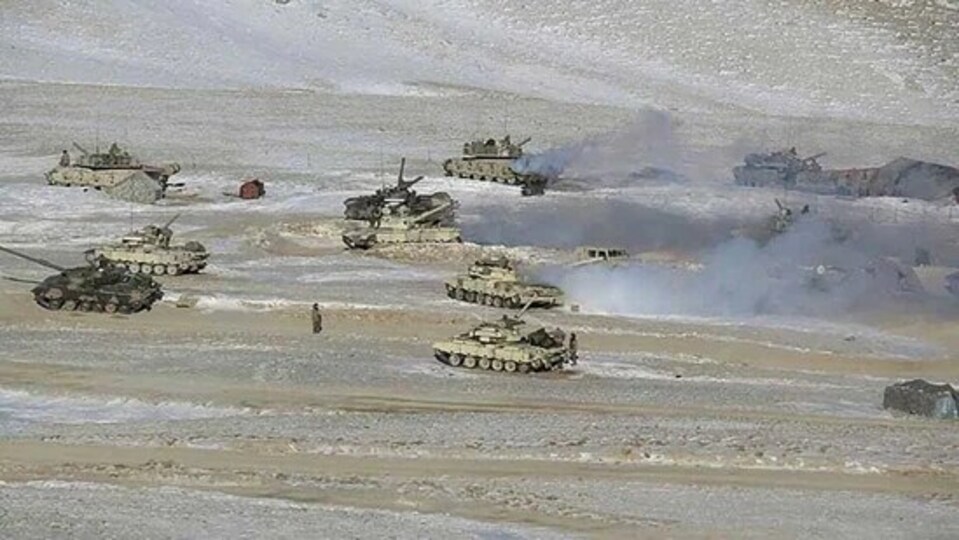
According to the Chinese Foreign Ministry spokesperson, the joint exercise near the LAC violated the spirit of relevant agreements signed by China and India in 1993 and 1996. The Chinese Defence Ministry spokesperson said the joint “Yudh Abhyas” exercise was an effort by a “third party” to meddle in India-China border affairs. The Yudh Abhyas exercise has been an annual affair since 2004.
Both statements are quite instructive as the wolf warriors of the Middle Kingdom are often known to cherry-pick past statements and agreements to put the blame on India. The 1993-1996 agreements invoked by the China were the same agreements that were torn to shreds by the PLA when it transgressed into Galwan (patrolling point 14) on May 5, 2020, and then in the areas of Kugrang Nala (patrolling point 15), Gogra (patrolling point 16-17) and north banks of Pangong Tso by occupying the heights above finger four of the salt-water lake. Even today, PLA stands in violation of both the agreements as it has amassed forces near the LAC since May 2020 with no signs of de-escalation. It has moved more forces close to the LAC across Sikkim and Arunachal Pradesh since September 2022. Not only that, the PLA Air Force has violated air protocols since May 2020 under the 1993-1996 agreements that do not allow aircraft within 10 km of the LAC. Even today, PLA is building a new highway (C-695) that cuts into the Indian claim line in East Ladakh near Khurnak Fort for faster inter-sector deployments on the north and south banks of Pangong Tso.
It was the Chinese aggression in Galwan that forced Col Santosh Babu and his troops to push them back from occupying patrolling point 14 in Galwan Valley as a result of which the Indian Army lost 20 brave men including Col Babu in the skirmish on June 15, 2020.
The Chinese social media has been actively commenting on the ongoing India-US exercises by posting apparently hitherto unseen pictures of Indian troopers along with their photos who bravely fought and lost their lives in the Galwan skirmish. In fact, one military observer account on Chinese Weibo noted that a rising India would be a serious problem for China and hence should be dismembered as soon as possible. Another account talked about China banning the sale of TATA-produced Jaguar and Land Rover vehicles as the same company was providing military trucks being used in India-US exercises.
The sudden Chinese recall of the 1993-1996 bilateral agreements on India-US joint high-altitude warfare exercises also reveals the concern that Beijing has about New Delhi and Washington joining hands on national security issues and the Indo-Pacific. For a long time, the Chinese propaganda media and their ilk in India have been trying to harp at India’s strategic autonomy to keep New Delhi distant from Washington on military security issues. The periodic recall of the USS Enterprise presence in the Bay of Bengal during the 1971 war with Pakistan is designed to promote distrust of the US among the Indian public. That Russia chose to look the other way and the US helped during the 1962 India-China war is conveniently forgotten.
Rather than invoke the 1993-1996 agreements to express displeasure over 2000 men strong infantry battalion level joint exercises far away from the LAC in the Himalayas, it is China that should adhere to the two agreements and pull back troops along the LAC in East Ladakh and in the eastern sector to restore peace and tranquility as envisaged in the bilateral agreements. Merely changing goalposts to suit PLA’s tactical and strategic objectives is rather disingenuous from an aspiring superpower.


