
 E-Paper



India expects strong condemnation of cross-border terror at SCO Summit: MEA
Lal said the SCO was established with the primary goal of countering the three evils of terrorism, separatism and extremism, which continue to remain a challenge

 Prefer HTon Google


NEW DELHI: India expects the upcoming Shanghai Cooperation Organisation (SCO) Summit in Tianjin to strongly condemn cross-border terrorism in keeping with the founding principles of the bloc, the external affairs ministry said on Tuesday ahead of Prime Minister Narendra Modi’s visit to China to attend the meeting.
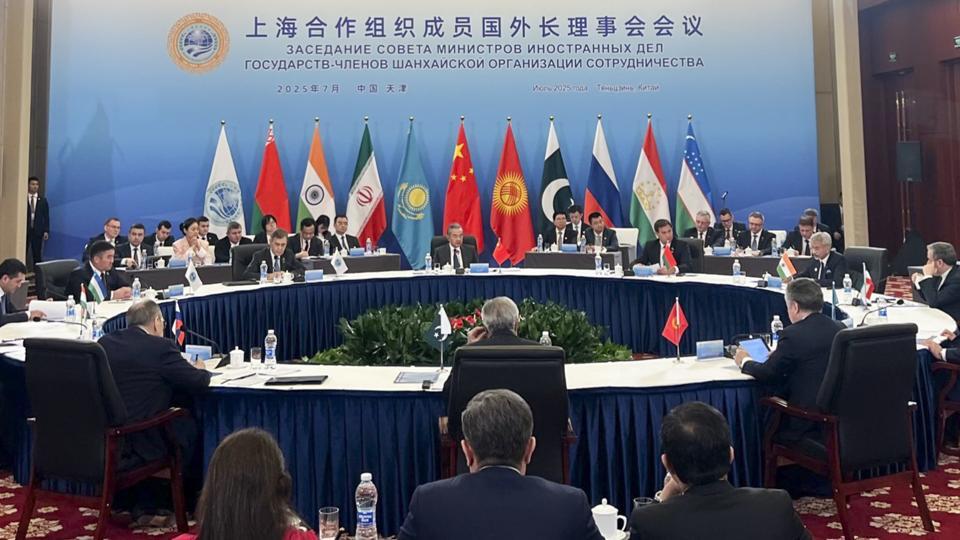
While the SCO’s charter does not allow the raising of bilateral issues, the Indian side has pushed for the condemnation of cross-border terrorism in joint statements and documents adopted by the 10-member bloc. India and Pakistan have also sparred over the issue of terrorism at past summits.
Addressing a media briefing alongside foreign secretary Vikram Misri, secretary (West) in the external affairs ministry, Tanmaya Lal, said India is working with other SCO members and partners to ensure strong condemnation of terrorism at the summit in Tianjin.
“The SCO was established with the primary goal of countering the three evils of terrorism, separatism and extremism, which continue to remain a challenge,” he said, noting that India has actively engaged with SCO’s Regional Anti-Terrorist Structure (RATS).
Joint statements adopted at past SCO Summits, including the one chaired by India in 2023, have included strong condemnation of terrorism, including cross-border terrorism, Lal said.
“As far as the declaration at this [upcoming] summit is concerned, that is under finalisation…We are working with other members and partners to see that there should be a reiteration of the strong condemnation of terrorism, including cross-border terrorism,” he said. “The security of the region remains a priority for the SCO members.”
The SCO’s Regional Anti-Terrorist Structure is based in Tashkent and India chaired the body’s council during 2021-22. During India’s presidency of SCO in 2023, the bloc adopted a joint statement on cooperation on countering radicalisation leading to separatism, extremism and terrorism.
Cross-border terrorism is back in focus ahead of the SCO meet as India launched Operation Sindoor in May to target terrorist infrastructure in Pakistan in retaliation for the Pahalgam terror attack in April that killed 26 civilians. This triggered four days of intense hostilities that ended with an understanding between the two sides on May 10.
Besides security, India’s other priority areas under SCO are economy and trade, connectivity, respect for sovereignty and territorial integrity, and the environment, Lal said.
Modi will travel to China after visiting Japan as part of the first leg of his two-nation tour. After arriving in the Chinese city of Tianjin, he is expected to participate in a welcome banquet dinner on the evening of August 31. The SCO summit will be held on September 1.
PM Modi is also expected to hold several bilateral meetings on the sidelines of the SCO Summit, including with Chinese President Xi Jinping, Russian President Vladimir Putin, and several Central Asian leaders, according to people familiar with the matter. This will be his second meeting with Xi since the two sides reached an understanding last October to end the military standoff on the Line of Actual Control (LAC).
After Modi and Xi decided at their last meeting to revive several mechanisms to normalise relations and address the border dispute, India and China resumed the Kailash Mansarovar Yatra, and New Delhi has resumed tourist visas for Chinese nationals. The two sides recently agreed on several other initiatives, including the resumption of direct flights and an “early harvest” in delimiting the border.



