E-Paper



India flags glacier retreat as livelihood crisis at global conference in Tajikistan
Addressing at a high-level international conference on Glaciers’ Preservation in Tajikistan’s Dushanbe, Singh highlighted global and regional consequences of glacial retreat

 Prefer HTon Google


New Delhi: The retreat of glaciers is not only a warning but an immediate reality with far-reaching implications for water security, biodiversity, and the livelihoods of billions of people, minister of state for environment Kirti Vardhan Singh said on Saturday.
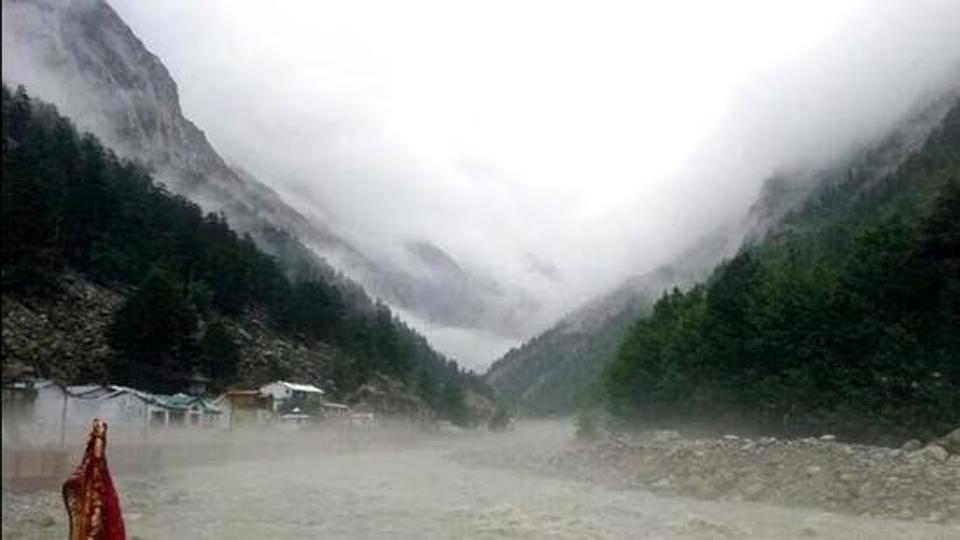
Addressing a plenary session at a high-level international conference on Glaciers’ Preservation in Tajikistan’s Dushanbe, Singh highlighted the global and regional consequences of glacial retreat, and that the phenomenon is accelerating, with disproportionate impacts on mountain regions such as the Himalayas.
He reiterated India’s deep-rooted concern, as a country intrinsically connected to the Himalayan ecosystem, and outlined a series of ongoing initiatives aimed at glacial monitoring and climate adaptation, a statement issued by the environment ministry said.
Singh highlighted that India is undertaking strategic actions under the National Mission for Sustaining the Himalayan Ecosystem (NMSHE) — a key component of India’s National Action Plan on Climate Change (NAPCC) — as well as the establishment of a Centre for Cryosphere and Climate Change Studies, designed to advance research and monitoring of glaciers and glacial lakes in the Indian Himalayan Region.
“India is leveraging advanced Remote Sensing and Geographic Information System (GIS) technologies, led by the Indian Space Research Organisation (ISRO), to systematically monitor changes in glacier mass, extent, and dynamics. These efforts are further strengthened through coordinated research by key national institutions, including the National Centre for Polar and Ocean Research (NCPOR), National Institute of Hydrology (NIH), Wadia Institute of Himalayan Geology, and the GB Pant National Institute of Himalayan Environment (NIHE),” Singh said.
These initiatives are crucial to advancing scientific understanding of glacier systems and supporting data-driven policy formulation for the sustainable management of India’s water resources, he added.
“India has strengthened disaster preparedness in the Himalayan region through improved early warning systems and Glacial Lake Outburst Flood (GLOF) risk mapping, coordinated by the National Disaster Management Authority (NDMA). Regional cooperation was underscored as vital for strengthening resilience, improving data-sharing frameworks, and fostering coordinated responses to the challenges facing mountain ecosystems,” Singh informed.
Singh stressed India’s commitment to equity and the principle of Common but Differentiated Responsibilities and Respective Capabilities (CBDR–RC) in international climate action. He emphasised that while South Asia contributes minimally to global cumulative emissions, it remains highly vulnerable to climate change impacts.