E-Paper



India hosts Myanmar military junta officers, allied politicians for discussions
The delegation’s visit was an opportunity to reiterate India’s message about the need to end the fighting and to return to dialogue and diplomacy

 Prefer HTon Google


NEW DELHI: India hosted a delegation representing Myanmar’s military junta and allied political forces this week for discussions on democracy and federalism as part of efforts to foster a solution to the neighbouring country’s security challenges, people familiar with the matter said.
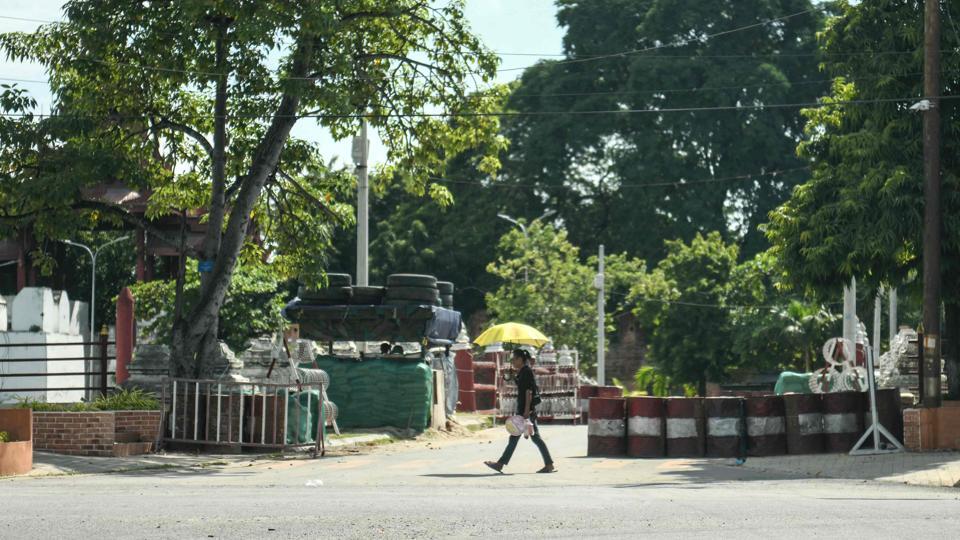
The 18-member delegation representing the military-led State Administration Council (SAC) was led by two lieutenant generals and included members of political parties and ethnic revolutionary organisations (EROs) aligned with the junta, the people said on condition of anonymity.
The Myanmarese delegation included about 10 representatives of political parties and six members of EROs that signed the Nationwide Ceasefire Agreement in 2015.
The delegation’s visit came at a time when Myanmar’s junta has suffered a series of humiliating defeats at the hands of resistance forces, the latest being the capture of several military headquarters and outposts in Rakhine state by the Arakan Army. It also coincided with junta chief Min Aung Hlaing’s visit to China to attend two regional summits in Kunming.
The people cited above said the anti-junta resistance forces were not part of a workshop hosted in New Delhi on November 5-6 by the Indian Council of World Affairs (ICWA), a think tank affiliated with the external affairs ministry that focuses on foreign policy issues. Unlike most events hosted by ICWA, the workshop was not open to the public or the media.
“The delegation’s visit was an opportunity to reiterate India’s message about the need to end the fighting and to return to dialogue and diplomacy to find a way out. It was also an opportunity to discuss the way forward in Myanmar,” one of the people cited above said.
Myanmar has been in turmoil since the 2021 coup by the junta that deposed the elected government led by Aung San Suu Kyi’s National League for Democracy (NLD). India has watched with growing concern as the security situation in the neighbouring country took a turn for the worse following the launch of a coordinated offensive by a number of armed groups in October 2023.
While the Indian government has largely engaged with the junta due to a desire to contain any fallout on the northeastern states bordering Myanmar, it has also made a tentative outreach to the National Unity Government (NUG), or the government-in-exile formed by elected lawmakers after the 2021 coup.
There is a possibility that the conference this week could be followed by similar events that will involve the NUG and the anti-junta resistance forces, the people said.
External affairs ministry spokesperson Randhir Jaiswal told a regular media briefing on Thursday that ICWA had hosted a workshop on November 5-6 that focused on India’s experience in constitutionalism and federalism. Without giving details, he said the workshop featured “stakeholders from various segments of the Myanmar society”.
Jaiswal said developments in Myanmar, an important neighbour, are of interest to India’s academic, think tank and business communities. “It is our understanding that such interactions...will contribute to deliberations on developing a Myanmar-led and Myanmar-owned solution to address the country’s current challenges,” he said.
India remains a “steadfast supporter of democracy, peace and stability in Myanmar”, Jaiswal added.