
 E-Paper



India is ready, Japan to take a call on expanding defence cooperation
Next week, Japanese Prime Minister Kishida will be in Delhi on Monday and Chinese President Xi Jinping in Moscow to firm up “no limits” alliance with Russia. The ball is now in PM Kishida’s court if he wants to deepen defence and cyber security ties with India.

 Prefer HTon Google


Japan Prime Minister Fumio Kishida will have a full plate in the Capital next Monday with Indo-Pacific, QUAD summit and G7-G20 on the agenda when he meets Prime Minister Narendra Modi.
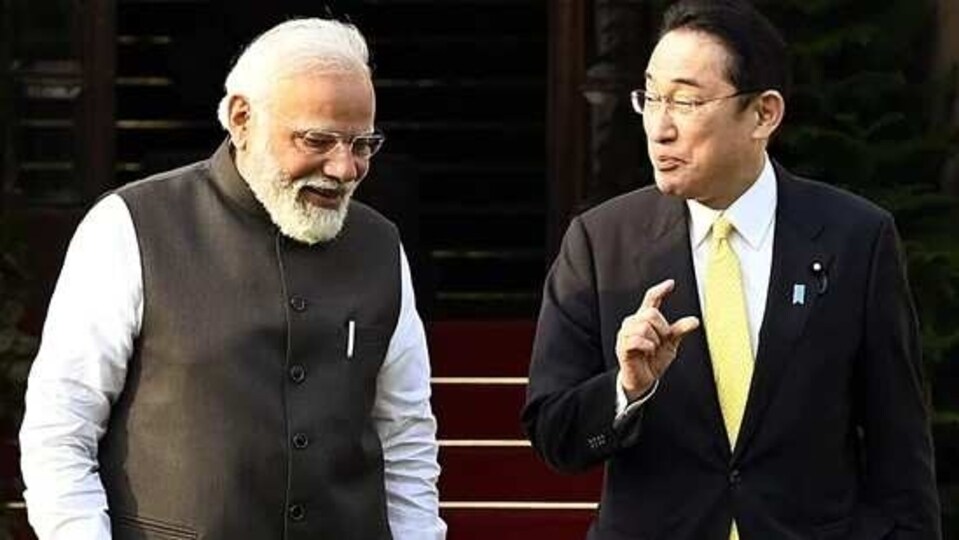
The Japanese view on the Indo-Pacific and on expanding ties with India will be revealed when PM Kishida delivers a lecture on bilateral relations at the Sushma Swaraj Institute on March 20. Japan will host the G-7 summit in Kishida’s constituency Hiroshima on May 19-21, which will be attended by PM Modi with the QUAD summit in Sydney taking place the same month.
New Delhi will be hosting the SCO Summit on July 4 with G-20 Summit scheduled for September this year.
While the Chinese belligerents in the Indo-Pacific with Beijing having military friction with Tokyo over Senkaku Islands and in East Ladakh with India on top of the agenda, PM Modi and PM Kishida will have a discussion on the G-7, QUAD and G-20 summits later this year. Key to these discussions will be how the two leaders are able to harmonize their positions over the Ukraine war as the impact of G-7 and QUAD summit communique will be felt on the G-20 summit being hosted by India in September this year. Japan is with the Anglo-Saxon powers over Ukraine and wants to punish Russia, India on its part wants the war to end without taking an anti-Russia stand.
Although India and Japan have a successful economic relationship, New Delhi is looking towards Tokyo to see whether PM Kishida wants to expand the bilateral ties to security and defence sectors. Even though Japan has doubled its capital defence spending in wake of China-Russia aggression in East China Sea and Sea of Japan, the country has still to shed off its pacificist doctrine and is diffident in deepening security ties with India. The situation gets even more complicated as PM Kishida represents Hiroshima, which was nuked and destroyed by the US in World War II, in the House of Representatives.
Even though Japan is a leader in specific defence technologies and cyber-security, PM Kishida is still mulling over whether to expand the bilateral relationship in these sectors and its impact on adversary China. From the statement emanating from Beijing on Taiwan, it is quite evident that Japan will have to be prepared for a military emergency in Taipei as some Japanese Islands in the Okinawa Prefecture are in close proximity to Taiwan.
With Chinese President Xi Jinping expected to hold a summit with Russian President Vladimir Putin next week in Moscow, the Japanese situation will get more critical as the two “no limits allies” are already holding military exercises near Japan. While India has made up its mind over its strategic choices in a rapidly changing political world, the bilateral relations with Japan will only grow if Tokyo is clear on where it stands vis-à-vis China and Russia.


