
 E-Paper



India joins EU, Brazil, Canada and Australia to back multilateralism
The P4M declaration calls for stronger cooperation on climate finance, sustainable development, AI, global health and resilient supply chains.

 Prefer HTon Google


India joined the European Union (EU), Australia, Brazil and Canada to launch a platform aimed at defending multilateralism and promoting peace and inclusive prosperity on the margins of the UN General Assembly, with external affairs minister S Jaishankar emphasising the need for participative deliberations and transparent decision-making.
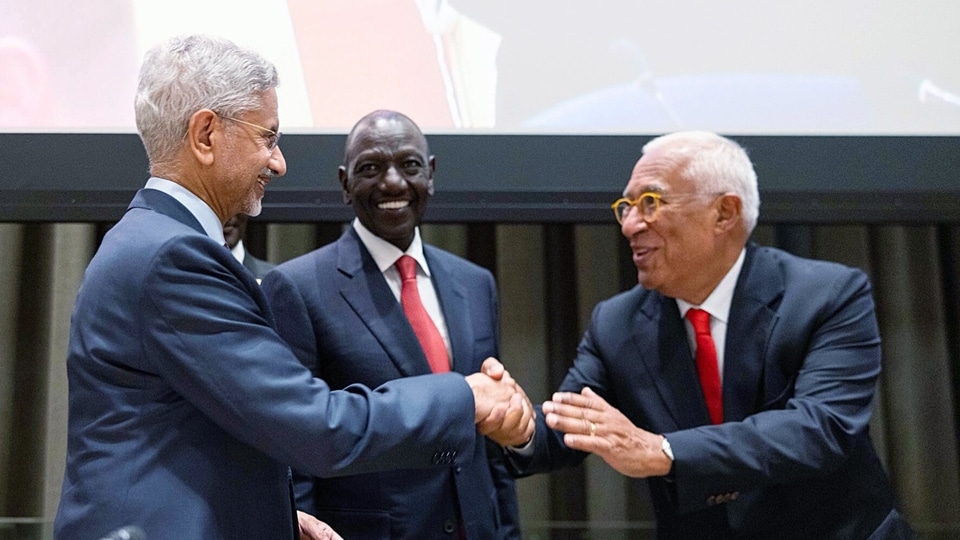
Jaishankar joined European Council President Antonio Costa, Australian Prime Minister Anthony Albanese, Brazil’s foreign minister Mario Vieira, Barbados Prime Minister Mia Mottley, Canadian Prime Minister Mark Carney and Kenyan President William Ruto for the inaugural Partners for multilateralism, international law, peace and prosperity (P4M) Summit in New York on September 21.
Also read: The UN should stop trying to be everything to everyone
Initiative seeks changes to global institutions
The initiative was first outlined in a joint op-ed article by Costa, Carney, Ruto and Brazilian President Inácio Lula da Silva, who said they will support reform of the UN and other multilateral institutions to make them more representative, effective and trusted, instead of creating “another exclusive bloc”. Carney helped catalyse the initiative, building on his remarks at the World Economic Forum in Davos in January that urged middle powers to close ranks to defend multilateralism.
Jaishankar, who is leading the Indian delegation to the UN General Assembly, noted that India is glad to join the initiative as a co-sponsor at a time when the global order is “under stress”. Extreme competition, geopolitical tensions and conflicts have impacted an ongoing rebalancing of the international order and it is essential for multilateralism to assert itself at this juncture, he said.
“Reformed multilateralism is therefore essential. More participative deliberations and more transparent decision-making are both overdue,” he said at the meeting. “That would provide the hope and the optimism which is clearly needed by the UN system. And it would reinforce our resolve to work together.”
Also read: India secures EU steel quota, seafood and shipbreaking concessions ahead of FTA
India lists key areas for collective action
Jaishankar emphasised the need for collaborative efforts to address issues such as international security, climate justice, emerging technologies, development finance, strengthening supply chains, preparing for pandemics and countering terrorism. “Let us recognise that whatever we have achieved so far is only through collective efforts,” he said.
He also called for a range of efforts, including addressing the fallout of conflicts on fuel, food, fertilisers and finance alongside efforts for broader peace. “Where new capabilities and concerns arise, there is a very powerful case for frameworks and guardrails. Where there is a threat of chokepoints dominance and disruption, de-risking and diversifying must be encouraged,” he said.
“Multilateralism will be best served when international law, rules and norms are scrupulously observed,” Jaishankar said.
Also read: India-New Zealand free trade agreement to take effect from Oct 20: Piyush Goyal
Costa highlights shared commitment to cooperation
European Council President Costa said the meeting demonstrated that there is still a strong shared commitment to cooperation in a world of growing divisions. “That commitment extends across continents, regions and political traditions. The road ahead will not be easy. But today, we have shown that we are not walking it alone,” he said.
Costa called for transforming confrontation into cooperation, and pointed to the need to create a global network based on multilateral cooperation, mutual respect and international law. He also outlined three priorities – defending the UN Charter and peaceful settlement of disputes, progress in dealing with global challenges such as climate finance, sustainable development and artificial intelligence, and reforming global institutions such as the UN “so that they are fit for tomorrow’s world”.
The seven signatories to the initiative tasked senior officials with establishing a coordination channel and identifying priority areas where they can work together and deliver concrete results. They also invited other countries to join the initiative.
Also read: EU to allow 2.5 lakh Indian cars annually at 8% duty under FTA
Declaration calls for renewed multilateral system
A joint declaration issued at the meeting described the multilateral system founded on the UN Charter as “indispensable” but said it “should be renewed and reformed to be more effective, representative, inclusive and fit for purpose”. Leaders will work jointly to reform and strengthen multilateral institutions to ensure they are better equipped to prevent conflict, respond to crises, deliver sustainable development, promote fair trade, protect the rule of law, and address existing and emerging global challenges, it said.
“We commit to strengthening multilateral cooperation that is open, fair, equitable, inclusive, networked and practical, including through closer partnerships with regional organisations and support for regional integration,” the declaration said.
The declaration backed “fair, open, resilient, predictable and inclusive” economic cooperation, including more diversified and resilient supply chains, reform of the multilateral trading system, an improved international financial architecture and stronger coordination on global finance, digital transformation, AI and global health issues.
Deep Dive




