E-Paper



India-EU trade deal sends message against tariffs, protectionism: European Council President Antonio Costa
Costa was the chief guest at the Republic Day celebrations along with European Commission President Ursula von der Leyen.

 Prefer HTon Google


India and the European Union (EU) can together act as “strong providers of stability, protectability and reliability” on the global stage and protect the rules-based order at a time of growing geo-economic turbulence and unpredictability in trade, European Council President Antonio Costa said on Monday.
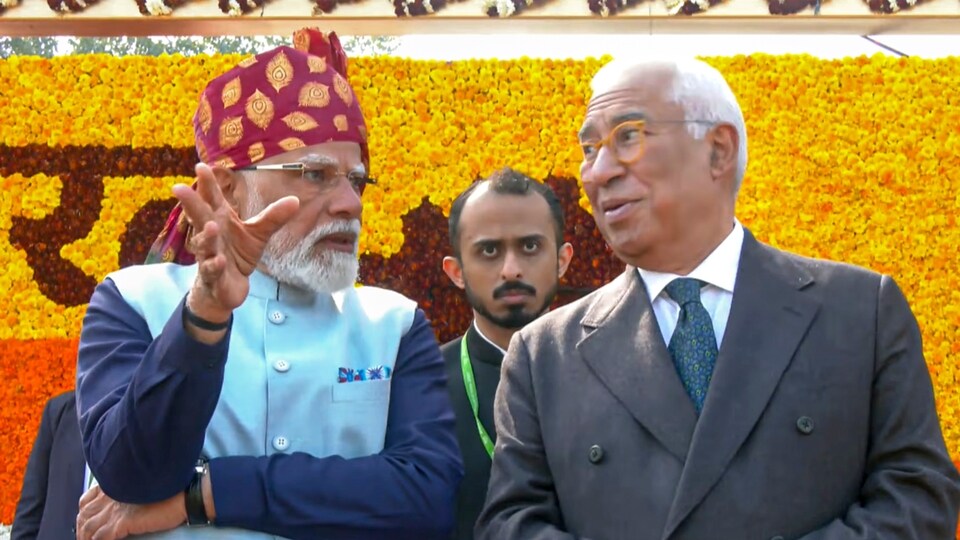
Costa, who was the chief guest at the Republic Day celebrations along with European Commission President Ursula von der Leyen and will participate in the India-EU Summit on Tuesday, said in an exclusive interview with HT that the growing security and defence cooperation between the two sides is crucial for preserving security in the Indo-Pacific and ensuring free and open commerce between the Indo-Pacific and the Atlantic.
Also Read | India-EU trade deal finalised, says commerce secy; to take effect next year
The India-EU Summit is expected to witness the conclusion of negotiations for a free trade agreement (FTA) and the finalisation of a Security and Defence Partnership and a framework agreement to facilitate mobility for Indian students and professionals.
“In our multipolar world, it’s essential that the EU and India become closer and closer partners because we can together be strong providers of stability, protectability and reliability in international relations and to protect our international rules-based order.
Our trade agreement, I think, is a very important geopolitical stabiliser and a showcase of how it’s possible to protect international rules-based trade,” Costa, who traces his roots to Goa, said against the backdrop of the turmoil created by the trade policies of the US.
The EU is India’s largest trading partner, accounting for trade in goods worth €120 billion in 2024, or 11.5% of India’s total trade. Trade in services was worth €59.7 billion in 2023. The EU’s share of foreign direct investment stock in India touched €140.1 billion in 2023, up from €82.3 billion in 2019.
Once the FTA is signed and ratified by the European Parliament, a process that could take at least a year, the agreement could expand bilateral trade and lift Indian exports such as textiles and jewellery, hit by 50% US tariffs since late August.
The India-EU FTA will send an “important political message to the world that India and the EU believe more in trade agreements than in tariffs” at a time when protectionism is rising and “some countries have decided to increase tariffs”, Costa said.
The US under Donald Trump has levied punishing tariffs on several countries, including India. To be sure, India and the US are negotiating a bilateral trade agreement. And Europe is just recovering from Trump’s comments last week over Greenland (which he wanted the US to take over) and the contribution of European countries to NATO.
The Security and Defence Partnership will build on existing cooperation in cyber security, counter-terrorism and maritime security. “We are working together with India in Operation Aspides and this has been very important to security in the Indo-Pacific and to preserve free and open trade between the Indo-Pacific and the Atlantic through the Mediterranean and the Red Sea,” Costa said.