
 E-Paper



India launches 4th nuclear-missile submarine
The fourth SSBN, codenamed S4*, was launched on October 16, a day after Rajnath Singh inaugurated Very Low Frequency Naval Station.

 Prefer HTon Google


New Delhi: In the midst of a diplomatic spat with Canada, India quietly launched its fourth nuclear powered ballistic missile (SSBN) submarine at Ship Building Center (SBC) in Visakhapatnam this week to strength its nuclear deterrence against its adversaries.
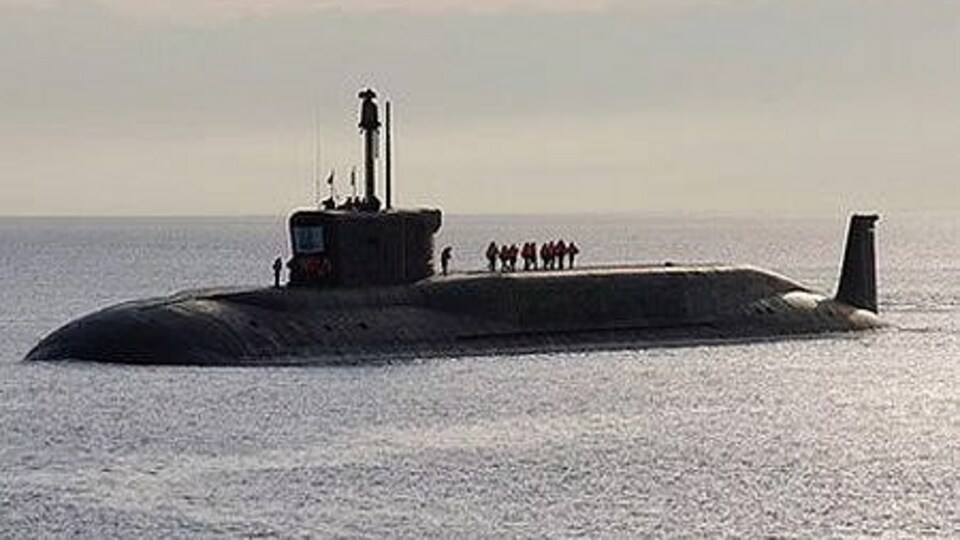
While India’s second SSBN INS Arighaat was commissioned by Defence Minister Rajnath Singh on August 29, 2024, the third SSBN INS Aridhaman will be commissioned next year. On October 9, the Cabinet Committee on Security (CCS) cleared the Indian Navy’s plans for construction of two nuclear powered attack submarines to deter any adversaries in the Indo-Pacific.
Although the Modi government is tight-lipped on nuclear deterrence, the fourth SSBN, codenamed S4*, was launched on October 16, a day after Defence Minister Rajnath Singh inaugurated Very Low Frequency Naval Station in Damagundam forest area of Vikarabad district in Telangana for command, control and communications with strategic assets of the Indian Navy.
The newly launched S4* SSBN has nearly 75% indigenous content and is equipped only with 3,500km range K-4 nuclear ballistic missiles, which can be fired through vertical launching systems. While the first of its class INS Arihant carries 750 km range K-15 nuclear missiles, its successors are all upgrades of the previous ones and carry only K-4 ballistic missiles. With unlimited range and endurance, the SSBN is constrained only by food supplies, crew fatigue and maintenance. Both INS Arihant and INS Arighaat are already on deep sea patrols and a nuclear powered attack submarine of Russian Akula class is set to join the force on lease in 2028.
INS Aridhaman was named S4*
Since national security planners named India’s first leased nuclear attack submarine INS Chakra as S1, INS Arihant was named S2, INS Arighaat S3, INS Aridhaman S4 and hence the newly launched one is the last of its class, S4* with the formal name yet to be given. The next class of Indian SSBNs will be double the 6,000 ton displacement of Arihant class and will be carrying nuclear missiles upwards of the range of 5,000 kilometers and beyond.
The focus of the Narendra Modi government on sea based submarine deterrence against powerful adversaries such as China is based on the fact that aircraft carriers are vulnerable to long range PLA missiles like Dong Feng-21 and Dong Feng-26 and could be sitting ducks in worst case scenarios. It is for this very reason that the government has given priority to nuclear attack and ballistic missile submarines over the third aircraft carrier for the Indian Navy. The government has also stepped up conventional submarine deterrence with the sixth of the diesel attack Kalvari class submarine INS Vagsheer to be commissioned in December this year.
In the meantime, the government will give a go ahead to the construction of three more advanced diesel attack submarines at Mazagon Dockyards in collaboration with the French Naval Group. With 10-11 PLA warships in the Indian Ocean every month since last year and carrier based long range patrols expected in 2025-26, strategic submarines are all set to play a major role in defending India and dominate the Indian Ocean Region (IOR).


