
 E-Paper



India may induct 3rd N-powered ballistic missile sub in Apr
India is enhancing its nuclear triad with the upcoming induction of the Aridaman submarine, set to bolster its strategic weapons capabilities.

 Prefer HTon Google


India is set to strengthen its nuclear triad, or ability to launch strategic weapons from land, air and sea, as the navy prepares to induct a new locally-made nuclear-powered ballistic missile submarine, officials aware of the matter said on Wednesday.
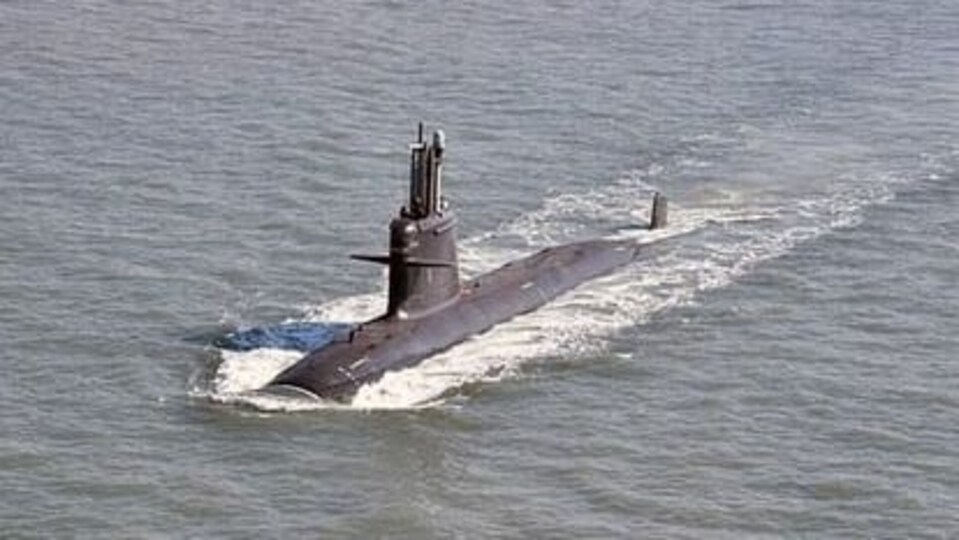
The submarine, Aridaman, is expected to be commissioned into service in April, the officials said, asking not to be named. Aridaman will be the navy’s third Arihant-class submarine, and will serve as an undetectable launch platform for missiles armed with nuclear warheads.
The fourth SSBN codenamed S-4* is likely to enter service in 2027, as previously reported by HT. SSBN stands for ship submersible ballistic nuclear or nuclear-powered ballistic missile submarines.
Aridaman is in the final stages of trials and it will be commissioned soon, navy chief Admiral Dinesh K Tripathi had said in December. The navy commissioned its second indigenous SSBN, INS Arighaat, at Visakhapatnam in August 2024. The United States, Russia, the United Kingdom, France and China are the only other countries that can deliver nuclear warheads from a submarine.
India’s first indigenous SSBN, the 6,000-tonne INS Arihant, was commissioned around ten years ago and it successfully completed its first deterrence patrol in 2018, with Prime Minister Narendra Modi then announcing that the success of the submarine “gives a fitting response to those who indulge in nuclear blackmail.” The fully operational submarine then completed the sea leg of India’s nuclear triad. Arihant is armed with 12 B-05 submarine-launched ballistic missiles (SLBMs) capable of delivering nuclear warheads up to 750 km away.
The last two Arihant-class submarines, Aridaman and S-4*, are expected to be bigger and capable of launching longer range missiles. These SSBNs could be armed with K-4 SLBMs capable of striking targets up to 3,500 km away.
India already has the capability to carry out nuclear strikes with fighter planes and land-launched missiles. The Agni series of ballistic missiles and warplanes such as Sukhoi-30s and French-origin Rafales and Mirage-2000s can deliver nuclear warheads. India’s nuclear doctrine, promulgated in 2003, commits the country to a “no first use” posture, with weapons to be used only in retaliation against a nuclear attack on Indian territory or Indian forces. It further states that nuclear retaliation to a first strike will be massive and designed to inflict unimaginable damage.


