E-Paper



India potential investment destination for new Irish sovereign wealth fund
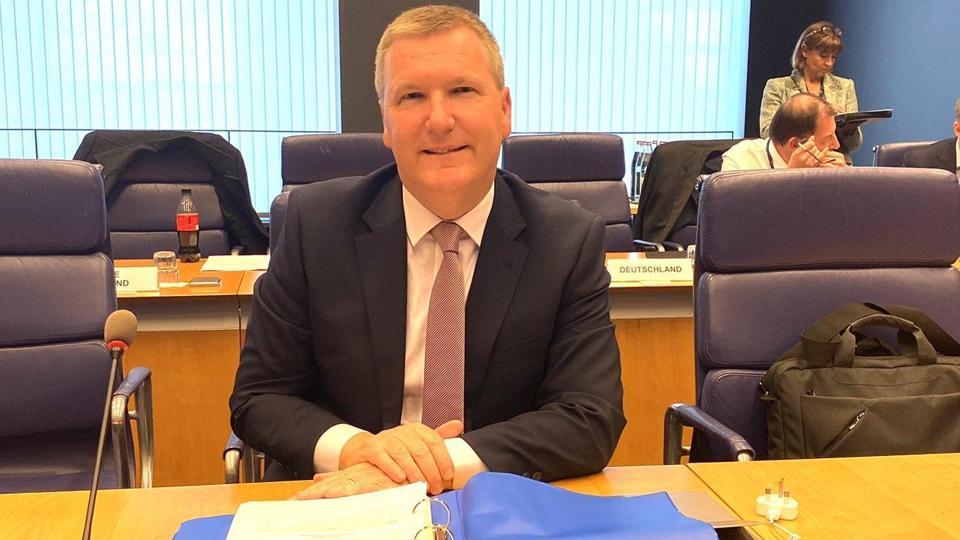
Ireland’s finance minister Michael McGrath, told a visiting group of journalists from Asia and the Pacific last week that while the investment mandate of the Future Ireland Fund is yet to be finalised, he envisaged that it will be primarily based on global investments

 Prefer HTon Google


India is a potential investment destination for a new sovereign wealth fund created by Ireland to cope with digitalisation and climate change, even as the European Union (EU) member state eyes Indian firms for investments in technology, research and innovation.
The Future Ireland Fund is one of two new funds unveiled in Ireland’s latest budget, and the government plans to put aside 0.8% of the country’s GDP into this fund every year between now and 2035. The fund is designed to meet future costs from changing demographics, an ageing population, digitalisation and the impact of climate change.
Ireland’s finance minister Michael McGrath, told a visiting group of journalists from Asia and the Pacific last week that while the investment mandate of the Future Ireland Fund is yet to be finalised, he envisaged that it will be primarily based on global investments.
“So, the Future Ireland Fund will seek to adopt an appropriate risk appetite, and of course, that will involve a diversified portfolio of assets that it will invest in around the world, including no doubt in India,” he said in response to a question from HT.
The Future Ireland Fund and a new infrastructure, climate and nature fund of more than €3 billion are being created following back-to-back surplus budgets so that the country can better prepare for future expenses and continue to invest in public capital programmes even in the event of an economic downturn or shock, McGrath said.
Ireland’s national budget surplus is forecast to a total €65.2 billion by 2027, mainly because of massive corporation tax revenues generated by global technology and pharmaceutical firms, though McGrath acknowledged that a large proportion of these receipts are “potentially windfall in nature” and may not repeat into the future.
India figures prominently in trade and investment plans under a new Asia-Pacific strategy unveiled last week at the Global Ireland Summit in Dublin. The Irish government is looking to expand its footprint in the region as part of its plans to secure 800 new investments and 50,000 new jobs in Ireland during 2023-26, according to the strategy.
Irish officials and businesspeople publicly speak about following the broader EU policy of maintaining trade and investment ties with China with adequate derisking, though they privately acknowledge that there is greater interest in the Indian market, given its growth potential.
Ireland’s target of €100 billion in annual two-way trade with Asia-Pacific by 2025 has already been exceeded, and the Irish government is now looking to countries such as India, Indonesia and Japan to further drive trade.
Andrew Vogelaar, head of the growth markets division at IDA Ireland, the government agency responsible for attracting inward foreign direct investment (FDI), said much of its business has traditionally come from the US, including firms such as Google and Apple, though it is now looking to diversify into Asia.
In this context, he pointed to Tata Consultancy Services’ operations in northwest Ireland that employs some 1,000 people, a new software development centre established by the Tata-owned Jaguar Land Rover, and the presence of Indian medical and life sciences firms such as Wockhardt and SMT.
“There’s a lot of nice Indian technology companies that we would hope would make Ireland their home for Europe,” said Vogelaar. “We could always do more with India.”
Leo Clancy, the CEO of Enterprise Ireland, a government agency that helps Irish firms, especially in the technology and innovation sphere, to find new export markets, spoke of the growing profile of Indian students and a “stay back visa” scheme that allows undergraduate and masters students to stay on and work for up to two years in Ireland.
Enterprise Ireland already has an office in Mumbai, and its focus areas in India include ICT, pharmaceuticals, life sciences, medical and agricultural technologies, and financial services.
(The writer was in Dublin for the Global Ireland Summit on a trip organised by the Irish government)