E-Paper



India rubbishes China’s claim of sovereignty over Galwan Valley
Galwan Valley was the scene of what Indian officials have described as a “violent face-off” on Monday night that resulted in the death of 20 Indian soldiers, including a colonel.

 Prefer HTon Google


India on Thursday rubbished the Chinese military’s claim of sovereignty over the Galwan Valley in eastern Ladakh, at the heart of a border stand-off, saying such “untenable claims” go against an understanding between the senior military commanders reached on June 6 to de-escalate and disengage along the Line of Actual Control (LAC).
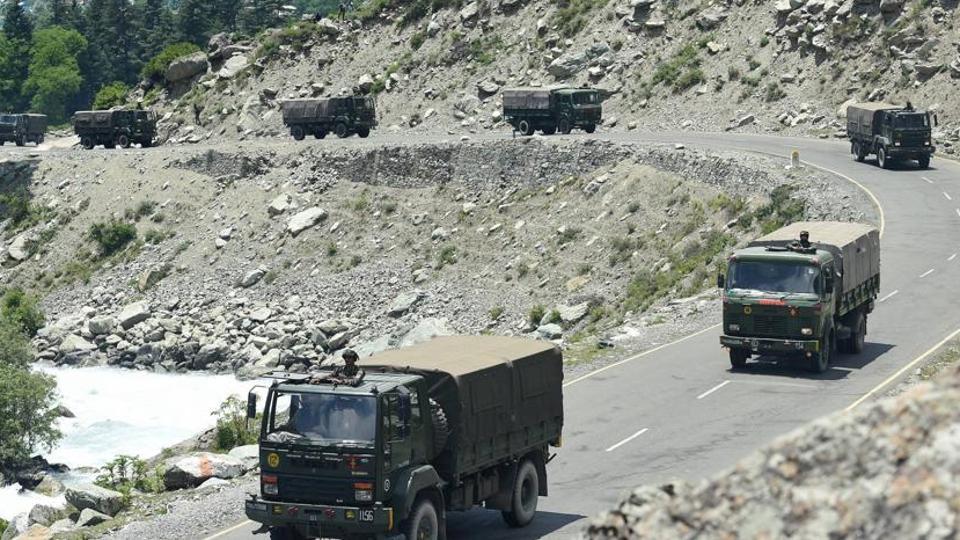
Galwan Valley was the scene of what Indian officials have described as a “violent face-off” on Monday night that resulted in the death of 20 Indian soldiers, including a colonel. Dozens more were injured and there are reports of some Indian soldiers still being unaccounted for.
After the clash, a statement in Mandarin issued by the western command of China’s People’s Liberation Army (PLA) on Tuesday had said: “The sovereignty of the Galwan River Valley has always been ours.”
Also read: 35 fatalities on China side in Ladakh clash, suggests US report
In a statement issued at about 1 am on Thursday, external affairs minister spokesperson Anurag Srivastava rejected the Chinese side’s claim that the sovereignty of Galwan Valley “belongs to China”.
Srivastava pointed to the agreement reached at a meeting of senior military commanders on June 6 for de-escalation and disengagement along the LAC and said: “Making exaggerated and untenable claims is contrary to this understanding.”
According to the Indian readout of a telephonic conversation between external affairs minister S Jaishankar and his Chinese counterpart Wang Yi on Wednesday, the Indian side has insisted on the implementation of the agreement between the military commanders.
“At the conclusion of the discussion, it was agreed that the overall situation would be handled in a responsible manner, and both sides would implement the disengagement understanding of June 6 sincerely,” the readout had said.
Jaishankar also told Wang that “premeditated and planned action” by Chinese troops while the agreement of June 6 was being implemented on the ground was “directly responsible” for the violence and casualties on Monday night. Jaishankar also blamed Chinese troops for intruding into the Indian side of the LAC.
“Ground commanders were meeting regularly to implement this consensus throughout the last week. While there was some progress, the Chinese side sought to erect a structure in Galwan Valley on our side of the LAC…It reflected an intent to change the facts on the ground in violation of all our agreements to not change the status quo,” Jaishankar was quoted as saying in the readout.
Srivastava referred to the telephonic conversation between Jaishankar and Wang and said: “Both sides have agreed that the overall situation should be handled in a responsible manner and that the understandings reached between Senior Commanders on June 6 should be implemented sincerely.”
Former Indian Army officials, have in recent interactions with the media, insisted that Galwan Valley had not been the scene of tensions between Indian and Chinese troops in recent decades, and even when tensions had flared in other sections along the LAC in Ladakh region.
The army officials and experts have said Chinese troops were trying to alter the status quo by entering into the Indian side of the LAC.