
 E-Paper



India’s Covid fight so far is marked by hits and misses
During this period, the virus spread from 85 districts to 368 of the total 718 districts in India; 1,300 containment zones with a large number of Covid cases were demarcated and completely sealed.

 Prefer HTon Google


Prime Minister, Narendra Modi, on Tuesday, announced the lockdown that was to end at Tuesday midnight would be extended till May 3. The 21-day lockdown that was to end Tuesday, saw a 20-fold increase in Covid-19 cases, pushing the Centre and the states to move to a strategy of containment , even as people showed exemplary resolve to stay indoors.
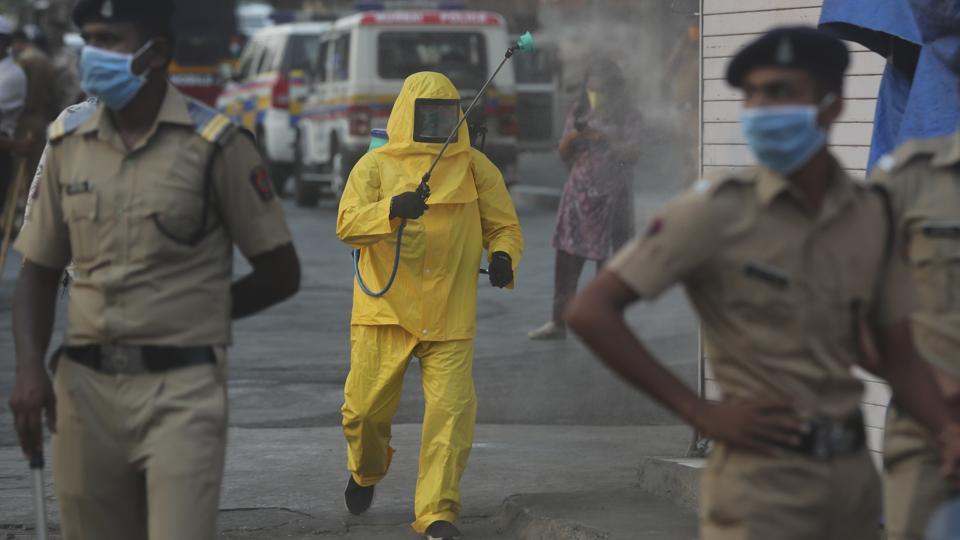
During this period, the virus spread from 85 districts to 368 of the total 718 districts in India; 1,300 containment zones with a large number of Covid cases were demarcated and completely sealed. No one is allowed to enter or exit the containment areas; essentials are home delivered; and every family in the region is screened; and municipal workers santise the zones twice a day. In some of these containment zones in Mumbai, Delhi, Rajasthan and Kerala, people have not moved out of their homes for more than 10 days,state government officials said.
Some containment zones worked. Others did not. For instance, the attempt to replicate the Bhilwara model in Covid-19 hotspot of Jaipur did not work. State government officials say this is because the Ramganj are in Jaipur is much more congested than Bhilwara. The Mumbai containment zone plan was replicated in Pune and Nagpur but the authorities had to take a different approach in smaller and rural Sangli. And the much talked about Kerala model of massive testing and effective isolating those with Covid-19 like symptoms was replicated in a modified form, and with mixed success in Maharashtra.
Most states ramped up Covid-19 testing, although not to the extent they should. The most aggressive tester is Delhi, which has tested 601 people per million. The worst is West Bengal, which has tested 24.2 people per misslion. The Indian average is 131.4 as on Monday. The US has tested 6693.1 per million population. Most governments have maintained that it is not possible to test all asymptomatic persons for Covid-19 and the first priority is testing those showing symptoms. And, that is the reason for around 80% of the tests being conducted in and around containment zones. Maharashtra has set up special fever clinics to test all symptomatic people within three kms of a containment zone, a reason for the state having conducted highest number of tests in India.
One reason for the poor testing statistic in India is that there were few laboratories doing the testing when the lockdown started (53). That’s increased to 220 laboratories including the private ones. The rapid tests that give results within 45 minutes are expected to start later this week, provided the kits arrive from China.
At the forefront of the Covid fight are millions of health workers, who started working in absence of adequate personal protective equipment in some states including Madhya Pradesh, Maharashtra and Uttar Pradesh, although most states announced special insurance cover for them. If that was not enough, health workers have faced discrimination from people on roads and from neighbours, forcing the Home Ministry to issue a direction threatening strict action against the offenders.
The biggest challenge that emerged during the 21-day period was the huge interstate migration of people, with hundreds of thousands of workers rushing back to their villages after business actvity came to a standstill. The rush started from March 26 . After two days of chaos (when all norms of social distancing were flouted) things were finally brought under some level of control; around 1.5 million workers are in 1.3 lakh government and NGO run shelter homes across India, where they have been provided food and also screened for Covid-19 symptoms. States such as Bihar, Uttar Pradesh, Odisha, West Bengal, Madhya Pradesh and Rajasthan, which witnessed high inflow of migrant workers, have converted the schools into quarantine homes for them.
For some states, including Uttar Pradesh, Tamil Nadu Haryana, Bihar, Rajasthan, and Jammu and Kashmir, the Tablighi Jamaat congregation in Delhi’s Nizamuddin in mid-March turned out to be a big source of infections. Close to 25,000 people who attended the Jamaat were tracked within five days of sealing of the Jamaat office in Nizamuddin on April ; by then they had spread across India. Around 50% of the positive cases in UP have a Tablighi link, said UP additional chief secretary (Home) Awanish Awasthi. A senior officer in Bihar said the Jamaat contributed about 60% of the cases, while most of the other cases were of the migrant labourers. In Tamil Nadu, the officials said the spurt in cases happened after the testing of Jamaat attendees started. States have also taken action against 281 foreigners, who attended the Jamaat in violation of the visa rules, and 960 foreign attendees have been blacklisted by the home ministry.
There were individuals also who contributed to the spread of Covid-19 too. A young man in Uttar Pradesh’s Basti district with no travel history died of Covid-19. He tested positive after death and turned out to be super spreader infecting 13 persons. A religious preacher in Punjab, who died, was another super spreading infecting 27 persons including his grandchild. A doctor of a private hospital in Bhilwara, who survived the disease, infected around 15 persons working in his nursing home. In Uttar Pradesh, Bollywood singer Kanika Kapoor tested Covid-19 positive and sent UP health and police departments into a tizzy. Political leaders of three states, who either attended parties where Kapoor was present or those who came in contact with attendees, went into quarantine. A Jamaat attendee and Kashmir based religious preacher infected as many as 12 persons before his death in Srinagar on March 26
Except Sikkim, all states in India have Covid-19 cases. In Ladakh, 12 of the 17 infected persons and in Andaman and Nicobar Islands, 10 of 11 infected persons have recovered, according to state government health bulletins. Among the bigger states, Kerala has best recovery rate followed by Bihar, Odisha and Haryana. Only one person of the 66 infected in Bihar has died, which is lowest death rate among the densely populated states. However, the second phase of the lockdown will be important for states such as Madhya Pradesh, Rajasthan, Maharashtra, Delhi, Jammu and Kashmir, Karnataka, Telangana and Tamil Nadu, which have witnessed big spurt in new Covid-19 cases in the past one week or so. Cities such as Delhi, Mumbai, Bangalore, Pune, Jaipur, Bhopal and Indore are at a critical point of their fight against Covid-19 with most new cases coming from them.
(With inputs from state bureaus)


