E-Paper



India should take on greater role in Egypt’s Suez Canal Economic Zone: Abdelatty
Egypt has traditionally been one of India’s most important trade partners in Africa, with a bilateral trade agreement in place since 1978


NEW DELHI: Egypt is eyeing more investments from India, especially in emerging sectors such as digitalisation, artificial intelligence and renewable energy, and is keen for India to take on a greater role at the Suez Canal Economic Zone (SCEZ), Egyptian foreign minister Badr Abdelatty said on Friday.
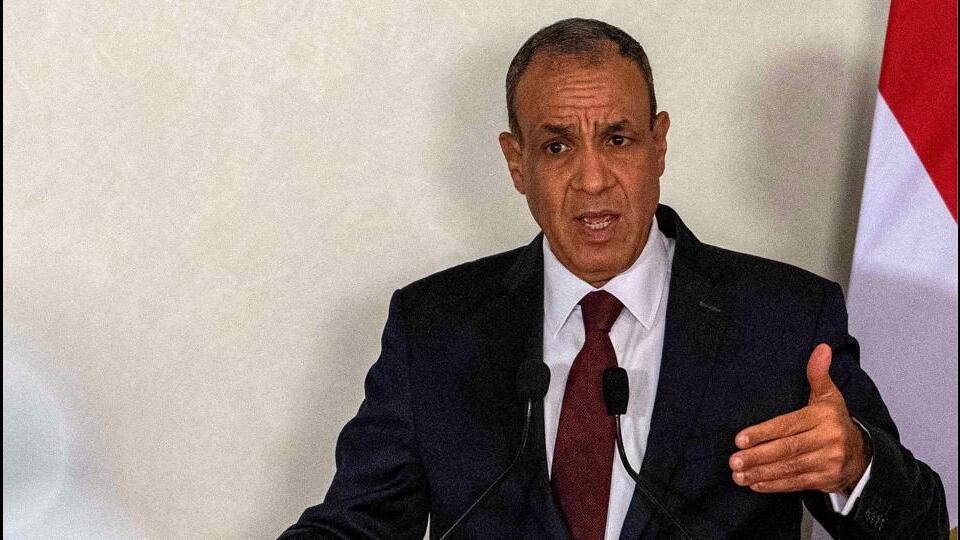
While two-way trade was worth $5.2 billion in 2024-25, including Indian exports of $3.84 billion and imports of $1.3 billion from Egypt, Abdelatty said both sides are looking to double trade. Indian investors opting for Egypt can benefit from the country’s strategic location and trade deals with African and Arab countries, he said.
Also Read: Resolving the Palestinian issue is crucial for IMEC connectivity project, says Abdelatty
Relations between India and Egypt, both members of the Brics grouping, got a boost when Egyptian President Abdel Fattah El-Sisi visited New Delhi in 2023 as the chief guest at the Republic Day celebrations. The two sides elevated their ties to a strategic partnership during the visit and set a target of doubling trade by 2028.
“The trade volume is $5.2 billion, but there is room to double it,” Abdelatty told a group of journalists at the conclusion of his visit to New Delhi for the first bilateral strategic dialogue.
“India is number six among foreign investors. There is room to increase Indian investments, especially in light of the conducive environment and very aggressive policies of the Egyptian government.”
In addition to removing administrative and bureaucratic hurdles and providing facilitation in taxes and customs duties, Egypt plans to cap public investments at about $20 billion to give more space to the private sector. Egypt’s national strategy envisages that 70% of investments come from the private sector by 2030.
Egypt has traditionally been one of India’s most important trade partners in Africa, with a bilateral trade agreement in place since 1978. A total of 55 Indian companies have invested more than $4 billion in Egypt, and India’s renewable energy companies ReNew and OCIOR have signed MoUs worth $12 billion with the Egyptian government for setting up green hydrogen plants.
Abdelatty listed Egypt’s free trade agreements (FTAs) with several blocs, including the Africa Continental Free Trade Agreement, Arab Free Trade Agreement and Egypt-European Union Association Agreement, among the incentives for Indian investors, saying that they give access to markets with two billion customers.
“President Sisi has instructed the government to provide a conducive environment, all facilitations to Indian companies to do business in not only traditional sectors such as chemicals, pharmaceuticals and minerals, especially phosphates and fertilisers, but also new sectors such as digitalisation, artificial intelligence and renewable energy,” he said.
Indian companies are interested in investing in producing green ammonia and green hydrogen because Europe, which is not far from Egypt, has a target of importing 10 million tonnes of these renewables every year, he said.
Abdelatty placed Egypt at the heart of connectivity projects, given its strategic location and the Suez Canal. He also made a pitch for Indian investors to take on a role in the Suez Canal Economic Zone, a flagship project where China and Russia already have their own industrial zones. “We are encouraging [companies] to have an Indian industrial zone [and] providing all kinds of facilitations and incentives to Indian companies,” he said.
Egypt has sustained annual losses of $9 billion following the escalation of violence in the Red Sea, after Yemen’s Houthi rebels targeted merchant shipping in retaliation for Israel’s offensive in Gaza. The number of ships using the Suez Canal every day dropped from 75 to about 30 because of attacks by the Houthis.
“We are working very hard with all the stakeholders, including the European Union, India, Russia, China and the US to settle down the current situation and ending the war in Gaza,” Abdelatty said.