E-Paper



India skewers China over letter to MPs over Tibet meet, Pangong Lake bridge
India also criticised China for trying to name 15 places in Arunachal Pradesh last week, saying it was a ridiculous exercise to support untenable territorial claims, and that Beijing should work with New Delhi to resolve the Ladakh friction points instead of “engaging in such antics”

 Prefer HTon Google


NEW DELHI: India lashed out at China on Thursday, accusing the Chinese side of building a bridge across Pangong Lake in an area it has illegally occupied for 60 years and describing the tone of a letter sent by a Chinese official to MPs and ministers who attended a meeting on Tibet as unacceptable.
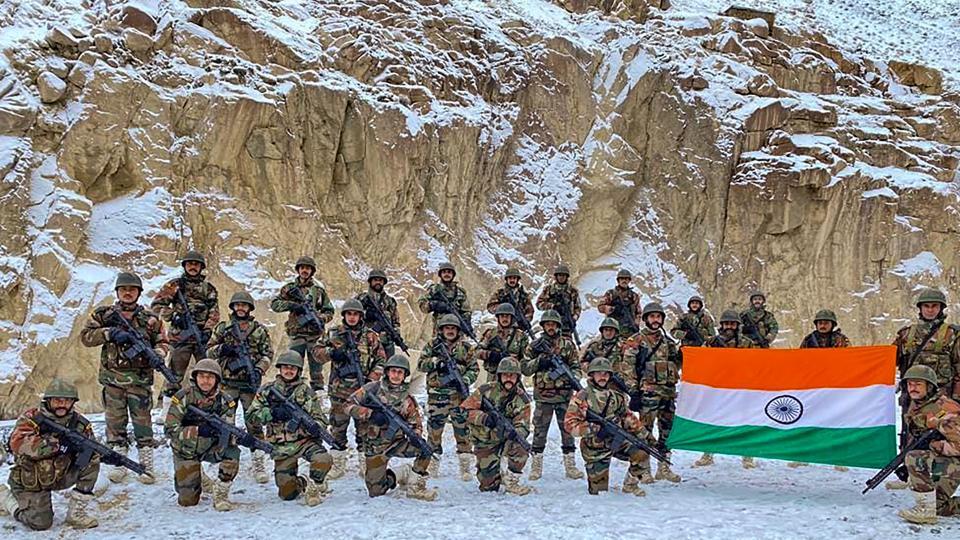
The external affairs ministry also reiterated its rejection of China’s move to rename 15 locations in the northeastern state of Arunachal Pradesh, saying that instead of engaging in “such antics”, Beijing should work with New Delhi to address the friction points in Ladakh sector of the Line of Actual Control (LAC).
The criticism from the Indian side followed the government’s prolonged silence on both the construction of the bridge linking the north and south banks of the strategic Pangong Lake and the Chinese embassy official’s unprecedented action of writing directly to ministers and lawmakers who attended a meeting of the recently revived All-Party Indian Parliamentary Forum for Tibet.
WATCH: Tibet govt-in-exile slams China's recent letter to Indian MPs
Both issues had been raised by the opposition, who sought an explanation from the government on the Chinese actions against the backdrop of the standoff on the LAC that is well into its second year. China’s state-run media also played up New Year celebrations by People’s Liberation Army (PLA) troops at Galwan Valley, the scene of a brutal clash in June 2020.
Also Read: In China moving goalposts, India sees a not-so-new plan to drag Ladakh friction
External affairs ministry spokesperson Arindam Bagchi said the government has been closely monitoring the construction of the bridge on Pangong Lake by the Chinese side. “This bridge is being constructed in areas that have been under illegal occupation by China for around 60 years now. As you are well aware India has never accepted such illegal occupation,” he told during a regular media briefing.
The government has been taking “all necessary steps to ensure that our security interests are fully protected”, Bagchi said. As part of these efforts over the past seven years, the government has been significantly funding for developing border infrastructure and “completed more roads and bridges than ever before”, he said.
These actions have provided much-needed connectivity to the local population and logistical support to the armed forces, and the government remains committed to this objective, he said.
Recent satellite imagery has shown that the Chinese bridge spanning a narrow section of the 134-km lake is nearly complete. Experts believe it will drastically reduce the time needed by the Chinese side to move troops and equipment from in-depth bases to forward locations near the LAC.
Referring to the letter written by the Chinese embassy’s political counsellor to Indian MPs and ministers over their participation in the event focused on Tibet, Bagchi said: “The substance, tone and tenor of the letter are inappropriate. The Chinese side should note that India is a vibrant democracy and [the] MPs, as representatives of the people, undertake activities as per their views and beliefs.”
He added, “We expect the Chinese side to refrain from hyping normal activities by [the] MPs and complicate further the situation in our bilateral relations.”
The Tibetan Parliament-in-Exile and the India Tibet Coordination Office had organised a dinner reception on December 22 to announce the revival of the All-Party Indian Parliamentary Forum for Tibet. The meeting was attended by social justice minister Ramdas Athawale, minister of state for skill development Rajeev Chandrasekhar, and nine members of the Lok Sabha and Rajya Sabha, including Maneka Gandhi, Jairam Ramesh and Manish Tewari.
Subsequently, the Chinese embassy’s political counsellor, Zhou Yongsheng, sent the letter to the MPs and ministers expressing his country’s concern over their participation in the meeting.
Also Read: At Line of Actual Control counter China’s belligerence | Editorial
“As is known to all, the so-called ‘Tibetan Government in-exile’ is an out-and-out separatist political group and an illegal organization completely in violation of China’s Constitution and laws. It is not recognized by any country in the world. Tibet has been an inseparable part of China since ancient times, and Tibet-related affairs are purely China’s internal affairs that allow no foreign interference,” the strongly worded letter said, adding that the lawmakers should refrain from providing support to “Tibetan independence” forces.
Bagchi also referred to the Chinese side naming 15 places in Arunachal Pradesh last week, and described it as a “ridiculous exercise to support untenable territorial claims”.
He said, “Calling Tuting as ‘DouDeng’ or river Siyom as ‘XiYueMu’ or even Kibithu as ‘Daba’ does not alter the fact that Arunachal Pradesh has always been and will always remain an inalienable part of India. We hope that instead of engaging in such antics China will work constructively with us to resolve the outstanding friction points in areas along the western sector of the LAC in India-China border areas.”