E-Paper



India stares at water scarcity, extreme heat stress: Report
Among Asian cities, Ahmedabad faces a high risk from the so-called urban heat island effect (urban centres seeing higher temperatures compared to surrounding areas) and Mumbai is at high risk from floods and sea level rise, the IPCC has said.

 Prefer HTon Google


The Ganga, Indus, Amu Darya and other river basins in Asia could face severe water scarcity by 2050 due to climate crisis and related impacts that act as stress multipliers, the Intergovernmental Panel on Climate Change (IPCC) warned on Monday.
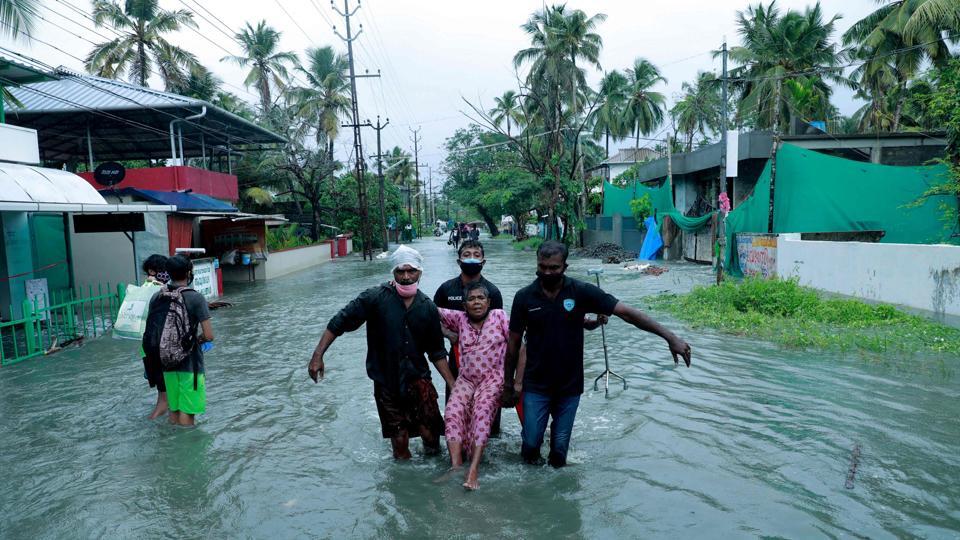
Among Asian cities, Ahmedabad faces a high risk from the so-called urban heat island effect (urban centres seeing higher temperatures compared to surrounding areas) and Mumbai is at high risk from floods and sea level rise, the IPCC has said. It adds that while Ahmedabad has adopted some institutional policies to adapt to these risks, Mumbai hasn’t.
Overall, South Asia is among the most vulnerable regions in the world when it comes to severe climate impacts due to extreme poverty and inequity, IPCC underlined.
The climate crisis is already increasing vector-borne and water-borne diseases, undernutrition, mental disorders and allergic diseases in Asia by increasing the hazards such as heatwaves, flooding and drought, air pollution, in combination with higher exposure and vulnerability, IPCC’s report titled “Climate Change 2022: Impacts, Adaptation and Vulnerability” flagged.
In addition to all-cause mortality, deaths related to circulatory, respiratory, diabetic and infectious disease, as well as infant mortality are on the rise in Asia with high temperatures. A spike in heavy rain events and temperature will increase the risk of diarrheal diseases, dengue fever and malaria in tropical and sub-tropical Asia. More frequent hot days and intense heat-waves will also increase heat-related deaths in Asia, the Asia factsheet of the report said.
“Extreme heat puts additional load on the circulatory system which has to do additional work to cool the body via perspiration. This may lead to dehydration and increased metabolism. Excess heat may be linked to increase or exacerbation of complications of diabetes due to dehydration and increased metabolism. Infant mortality will rise because children are not able to control their body temperature well. Their bodies can get overheated during heat waves. Each city should start declaring all cause deaths everyday so that we are able to see if there is an abnormal spike due to heat or other health issues. Total daily admissions to hospitals should also be declared from now on,” said Dilip Malvankar, director, Indian Institute of Public Health, Gujarat.
There has also been biodiversity or habitat loss of animals and plants due to the climate crisis in some parts of Asia. Future climate change would cause greater biodiversity and habitat loss in many parts of Asia, modelling studies indicate. The risk of irreversible loss of coral reefs, tidal marshes, seagrass meadows, plankton communities and other marine and coastal ecosystems will increase.
Glacier lake outburst flood (GLOF) will threaten the securities of the local and downstream communities in High Mountain Asia. GLOF is sudden release of water from a lake fed by glacier melt that has formed at the side, in front, within, beneath, or on the surface of a glacier.
By 2050, it is likely that 69% of fundamental human infrastructure in the Pan Arctic will be at risk, the factsheet said.
Climate change caused loss to infrastructure, disruption in services and affected supply chains in Asia and will increase risk to infrastructure further -- even as it creates opportunities to invest in climate-resilient infrastructure and green jobs, the report said.
Global hotspots of high human vulnerability are found particularly in West, Central- and East Africa, South Asia, Central and South America, Small Island Developing States and the Arctic, IPCC said with high confidence.
“Vulnerability is higher in locations with poverty, governance challenges and limited access to basic services and resources, violent conflict and high levels of climate-sensitive livelihoods (eg: smallholder farmers, pastoralists, fishing communities),” the summary for policy makers of the report said.
At 2 degree C or higher global warming, food security risks due to climate change will be more severe, leading to malnutrition and micro-nutrient deficiencies, concentrated in Sub-Saharan Africa, South Asia, Central and South America and Small Islands. Global warming will also weaken soil health and ecosystem services such as pollination, increase pressure from pests and diseases, and reduce marine animal biomass, undermining food productivity in many regions on land and in the ocean, the report added.
“This report rightly puts a spotlight on how vulnerability is exacerbated by existing inequities and factors like colonialism. Vulnerable people in poor countries and indigenous Peoples are being disproportionately impacted by climate change. The report calls for adaptation measures that are ‘effective, feasible and conform to climate justice principles. In this context, it is clear that policies and measures that replicate inequity and reinforce historical patterns of injustice will further increase vulnerability of those already impacted and who are least responsible for this crisis. Rich countries must now do their fair share and meet the long-standing demands from developing countries to pay up for loss and damage and substantially increase funding for climate adaptation,” said Harjeet Singh, Senior Adviser, Climate Action Network International.
//EXPLANATORY TEXT FOR GRAPHICS
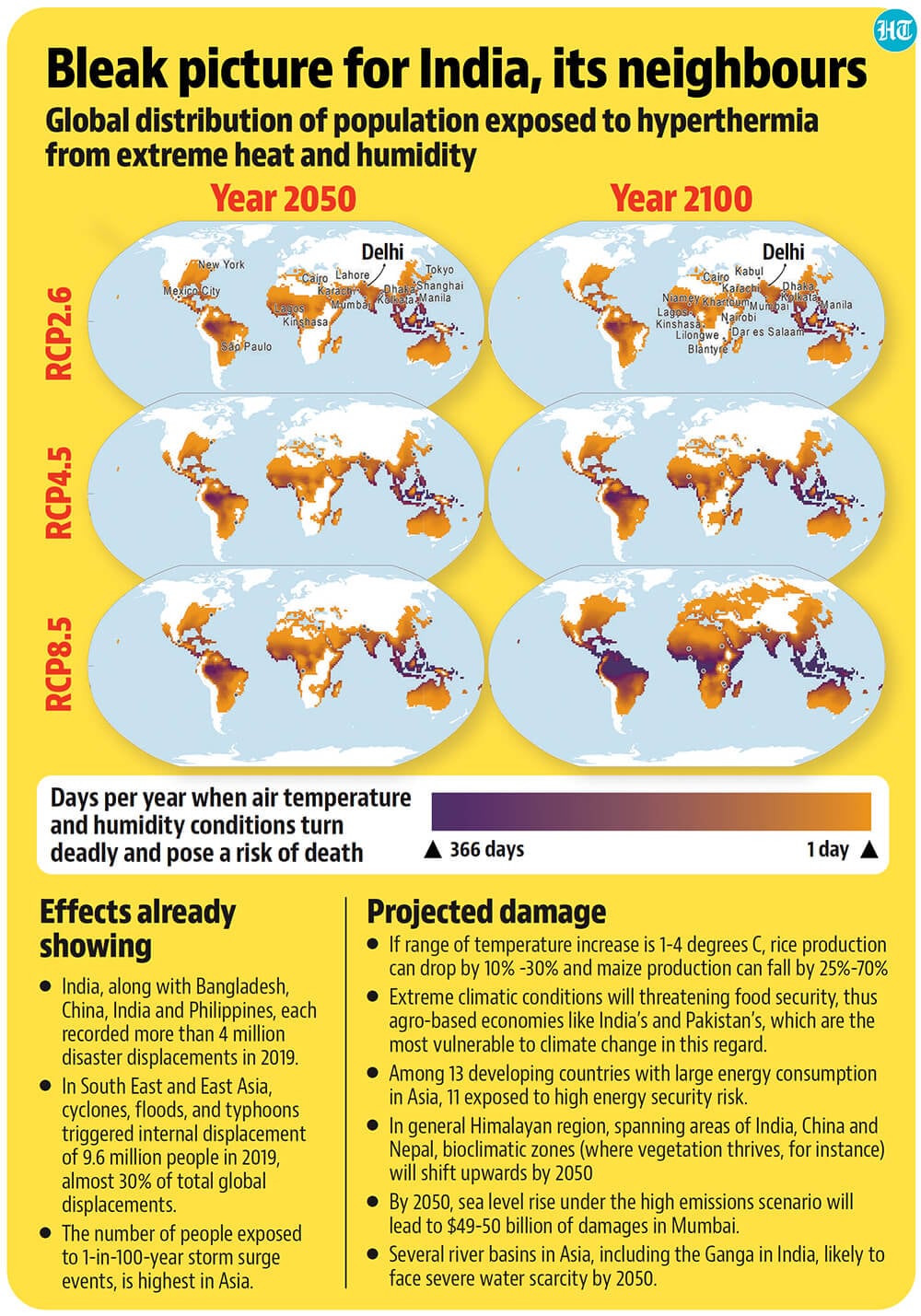
RCP stands for representative correction pathway , which is a trajectory of greenhouse gases assumed by IPCC for modelling. RCP 2.6, 4.5 and RCP 8.5 represent three futures, based on the magnitude of greenhouse gas emissions. The numbers themselves are in units of watt/square metre. The numbers are the difference between the incoming and outgoing energy on Earth; a high level of greenhouse gases means higher incoming energy.
SSP stands for Shared Socioeconomic Pathways. SSP 1 is a scenario for sustainability focused growth and equality; SSP 2 is status quo; SSP 3 is where every country does its own thing; SSP4 is a scenario where inequality spikes; and SSP5 is one where there is rapid and uncontrolled growth in energy use.
The SSPs are used in consonance with RCPs to represent different possible futures.//