E-Paper



India crosses 60 million mark for Covid-19 testing
The first Covid-19 swab sample in India was tested on January 23 at the Indian Council of Medical Research’s National Institute of Virology in Pune

 Prefer HTon Google


India crossed the 60-million-mark for coronavirus disease (Covid-19) tests on Wednesday, as 11,36,613 tests were conducted on the single day.
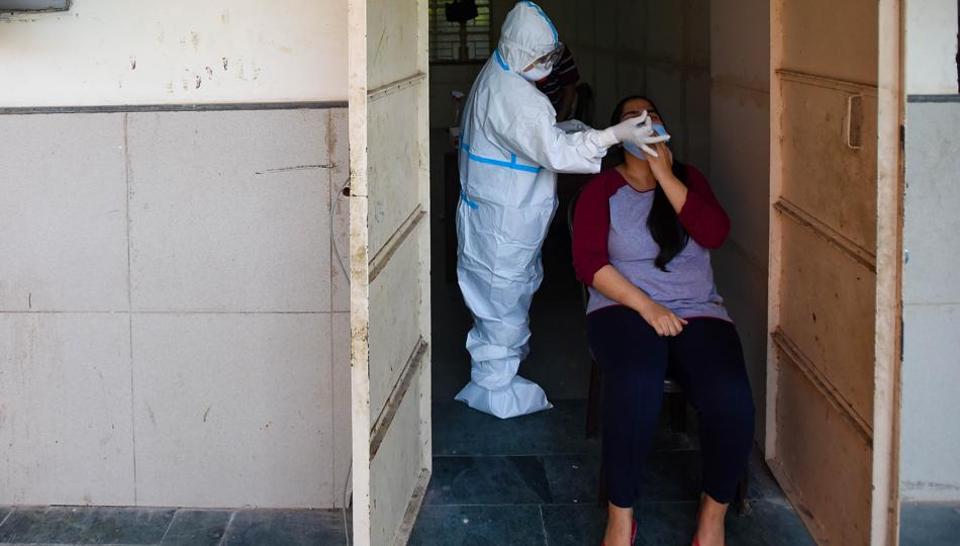
It has taken the country almost eight months to conduct 6,05,65,728 Covid-19 tests.
The first Covid-19 swab sample in India was tested on January 23 at the Indian Council of Medical Research’s (ICMR) National Institute of Virology (NIV) in Pune.
India had one NIV laboratory in January. Since then, the country has added 1,751 laboratories to its network to conduct Covid-19 tests, including 1,059 and 692 in the government and private sector, respectively.
Also Read: Covid-19: Govt faces House heat on lockdown, migrants, cases
“The laboratories are being added on a daily basis after due approvals. It has been a major effort to help establish, repurpose and even upgrade various virology laboratories across the country to equip them to conduct Covid-19 tests. Not just ICMR, other government departments such as Department of Biotechnology (DBT), the Department of Science and Technology (DST), Defence Research and Development Organisation (DRDO), etc. have also been instrumental in scaling up the testing infrastructure, and that too at such a short span of time,” said an ICMR official, requesting anonymity.
On average, India has been conducting one million tests daily to diagnose Covid-19 for the past three weeks, including reverse transcription polymerase chain reaction (RT-PCR) and rapid antigen detection (RAD) tests.
RAD tests are up to 40% of the total Covid-19 diagnostics tests by volume, according to the ICMR data.
Also Read: Covid-19: What you need to know today
There has been a progressive rise in Covid-19 tests in the country.
Until April 8, 10,000 cumulative Covid-19 tests were conducted. The figure rose to a million by May 3; five million by June 10; 10 million by July 7; and crossed the 60 million mark on Wednesday.
The average daily Covid-19 tests conducted in the country has seen a rise from 0.5 million (5,04,266) between July 29 and August 4 to about 1.1 million (10, 94, 592) this week, according to the latest data by the Union ministry of health and family welfare (MoH&FW).
However, the high Covid-19 positivity rate in some states, which are conducting large scale testing, is an area for concern.
Also Read: Monsoon session: We must fight the Covid crisis together, says Himachal CM
Rajesh Bhushan, secretary, MoH&FW, said the national Covid-19 positivity rate is at 8.4%.
But some states such as Maharashtra at 21.5%, Andhra Pradesh (12.3%), Karnataka (12.1%), Tamil Nadu (9.2%) have a higher positivity rate than the national average because of their aggressive testing mechanism, he said.
“These states will have to further increase testing because of the higher positivity rate,” he added.