E-Paper



India, Thailand agree to boost cooperation in defence and security
Jaishankar said he and Pramudwinai also discussed the next steps for the trilateral highway project but also acknowledged there were many challenges in its implementation.

 Prefer HTon Google


NEW DELHI: India and Thailand on Wednesday agreed to enhance cooperation on defence and security matters, including cyber-security, as external affairs minister S Jaishankar reiterated India’s commitment to a trilateral highway project involving Myanmar to boost regional connectivity.
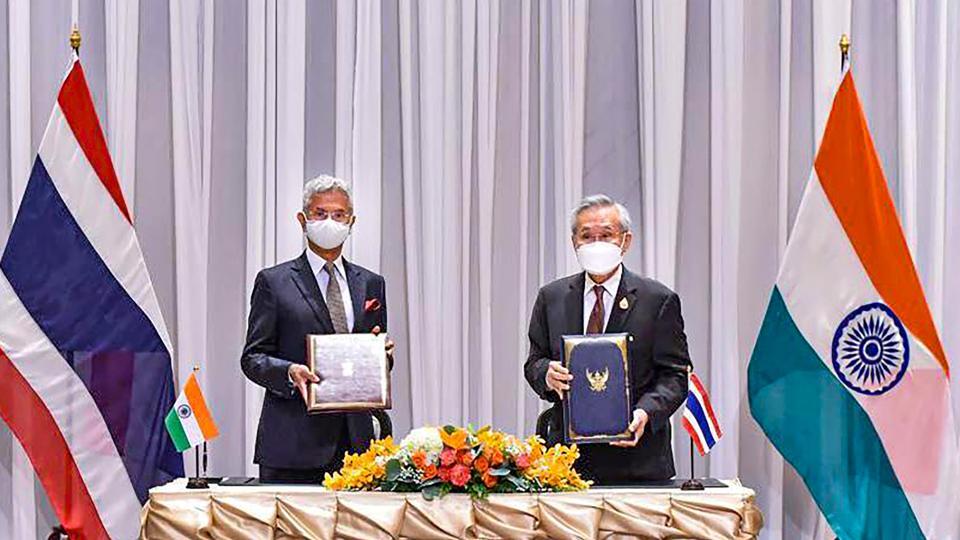
Jaishankar and his Thai counterpart Don Pramudwinai discussed a range of regional and global issues during a meeting of the India-Thailand joint commission in Bangkok. They also took stock of ongoing bilateral cooperation, including in trade and tourism.
Addressing the media after the meeting, both leaders said they agreed to strengthen cooperation in defence and security, including cyber-security and the exchange of personnel and expertise. Jaishankar said they decided to increase joint training and exercises in defence and security and recognised the importance of further cooperation in ICT.
Responding to a question about the long-pending India-Myanmar-Thailand highway, Jaishankar reiterated New Delhi’s commitment to what he said was a very important project providing physical connectivity between Southeast Asia and South Asia. He said several other Asean countries had expressed interest in joining the project.
Jaishankar said he and Pramudwinai, who also holds the post of deputy prime minister, discussed the next steps for the trilateral highway project but also acknowledged there were many challenges in its implementation.
“It’s obviously, in many ways, been challenging where its implementation is concerned. There are many factors for it but I assured the deputy prime minister that India is very deeply committed to that project, that we have been making progress,” he said.
India and Thailand are cooperating on the highway and a regime for the movement of vehicles and also have a shared interest in working with other countries to extend the highway further east, Jaishankar said.
“We persevere in overcoming the many challenges in its implementation and I certainly hope a day would come when I will be able to drive to Bangkok from India rather than come by air,” he added.
The Covid-19 pandemic and the unrest following the military takeover have affected work on the trilateral highway, people familiar with the matter said.
Following the joint commission meeting, the two sides also signed two memorandums of understanding; one for cooperation in health and medical research and the second for cooperation between the public broadcasters of the two countries.
Jaishankar and Pramudwinai said they also agreed to re-energise institutional mechanisms such as a joint trade committee and a business forum to drive the growth of bilateral trade and investment.