E-Paper



India to build two cross-border rail links with Bhutan at a cost of ₹4,033 cr
The work of the rail links between the Bhutanese cities of Gelephu and Samtse and Kokrajhar in Assam and Banarhat in West Bengal is expected to be completed in the next four years

 Prefer HTon Google


New Delhi: India announced on Monday that it will build the first two cross-border railway links with Bhutan at a cost of ₹4,033 crore, with the project being seen as part of New Delhi’s efforts to bolster regional connectivity to drive economic integration and trade.
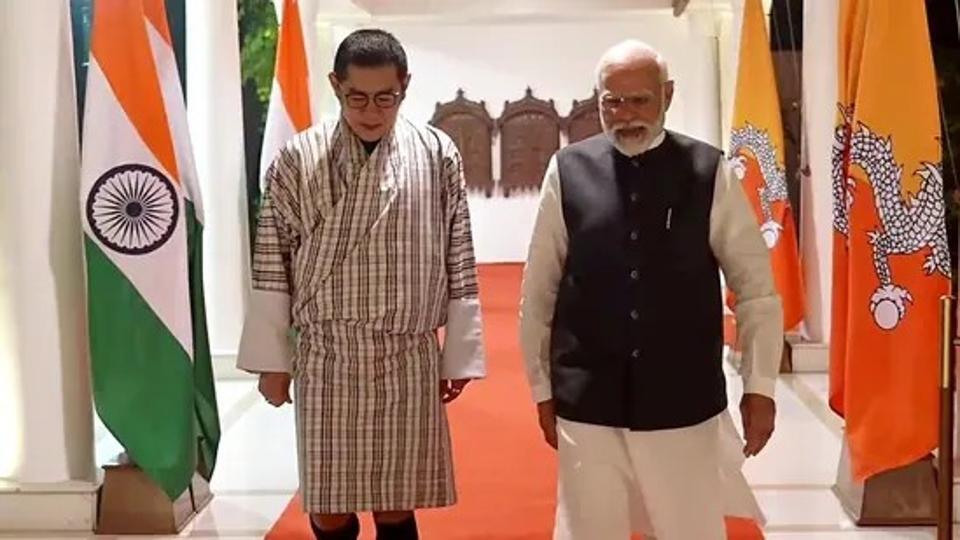
The rail links – between the Bhutanese cities of Gelephu and Samtse and Kokrajhar in Assam and Banarhat in West Bengal respectively – will entail the construction of 90 km of railway lines and the work is expected to be completed in the next four years, railways minister Ashwini Vaishnaw and foreign secretary Vikram Misri told a media briefing.
Gelephu is the site for an autonomous economic hub with executive and legislative powers and an independent judiciary that was initiated by Bhutan’s King Jigme Khesar Namgyel Wangchuck. The Bhutan government has plans to forge extensive economic and other links between Gelephu and South Asia and the Indian government has conveyed its support for the flagship initiative. Bhutan is also developing an industrial hub in Samtse.
The two new rail links will give Bhutan access to India’s extensive railway network and facilitate the transit of goods to sea ports and to third countries such as Nepal and Bangladesh. The project is also being seen as India’s answer to China’s efforts to forge railway connectivity with countries in the region, people familiar with the matter said.
“India is the largest trading partner of Bhutan and most of the export-import trade of Bhutan is done through Indian ports. Therefore, it becomes very important to have good seamless rail connectivity for the Bhutanese economy to grow and for the people to have better ways of access to the global network,” Vaishnaw said.
The Kokrajhar-Gelephu line will be about 70 km long and will entail the construction of six stations and close to 100 bridges, while the Banarhat-Samtse line will have a length of 20 km and involve the construction of two stations and about 25 bridges.
“Both goods and passengers will be using these two lines,” Vaishnaw said, adding that the lines will have advanced signalling systems and be designed for running electrified Vande Bharat trains.
Misri said the Indian segments of the two links will be funded by the railway ministry, while the sections within Bhutanese territory will be constructed using funds from India’s outlay of ₹10,000 crore for Bhutan’s 13th five-year plan for 2024-2029. In the case of both lines, the segments falling on the Bhutanese side are a little more than two kilometres.
Work on both projects, including land acquisition, will begin very soon, Vaishnaw said. The Land Ports Authority of India is developing several new integrated check posts (ICPs) on the border with Bhutan and security arrangements will be worked out by the two countries.