
India to push for consensus on climate justice at Marrakech meet
India will seek a higher share in greenhouse gas-mitigating technologies and money for adapting to the vagaries of climate change at Marrakech in Morocco, where negotiations on rules to implement the Paris agreement.
India will seek a higher share in greenhouse gas-mitigating technologies and money for adapting to the vagaries of climate change at Marrakech in Morocco, where negotiations on rules to implement the Paris Agreement will begin on Monday.
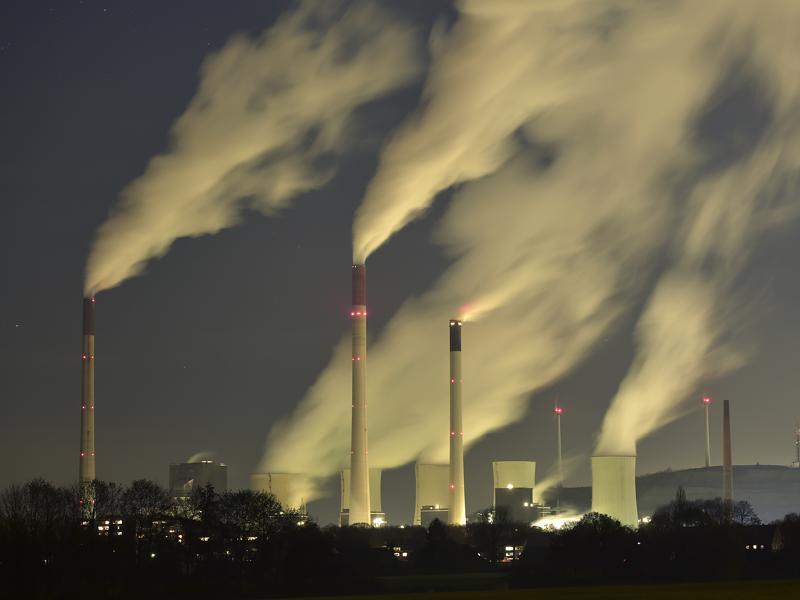
The accord on climate change, which aims to limit global warming to 2 degrees Celsius, came into force on Friday. Environment minister Anil Madhav Dave told Hindustan Times that India will be the voice of the developing world in Morocco, and it will ensure that climate justice – a concept propagated by PM Narendra Modi – is ingrained in the new rules.
All the countries had politically agreed to climate justice at Paris, but it did not find a place anywhere in the agreement except the preamble. Though an official admitted that the matter has remained “unresolved operationally”, he said developing a consensus for climate justice would be the mainstay for Indian negotiators at the conference.
The procedure for operationalising climate justice would be to have equitable compensation for global warming-induced calamities called Loss and Damage, which has to be finalised in Marrakech. Bolivarian and African countries are most ardent advocates of climate justice through Loss and Damage, and they were assured in Paris that the mechanism would be finalised at the Moroccan meet.
However, climate justice holds a different connotation for India. It implies fairness in burden sharing for fighting climate change to protect vulnerable nations, especially those in South Asia, and ensure that rich countries do enough to support the ‘victims’. This can happen only through easy finance and adequate technology transfer. A majority of the new climate-friendly technologies are expensive, and are patented by rich nations. Unless they agree to distribute them in an equitable manner, the fight against climate change will be restricted to mere lip service. “We will raise issues related to finance under the Green Climate Fund and technology transfer at affordable prices to the developing world,” Dave said.
However, TERI director general Ajay Mathur said India must keep a watch on transparency rules framed under the Paris Agreement to ensure they are not too “intrusive”.
ABOUT THE AUTHORChetan ChauhanChetan Chauhan is the National Affairs Editor looking into all aspects of news and features from across India. A Chevening scholar with over three decades of experience in reporting and news management, Chetan has extensively covered all important aspects of the social sector, political economy, environment and climate change nationally and internationally. He did a journalism course at the Reuters Institute of Journalism in Oxford and Digital Media training at Nanyang Technological University in Singapore. He started as a reporter with The Statesman in 1996 and joined the Hindustan Times in 2000 in the metro bureau covering environment, crime and Delhi politics. He covered hot local news, from the Jessica Lal murder case to the rebellion of Delhi Congress MLAs against then Chief Minister Sheila Dikshit, to the replacement of toxic vehicle fuel with cleaner compressed natural gas (CNG) in the national capital. Some of his stories on air pollution became part of the Supreme Court’s landmark MC Mehta versus Government of India case in the National Capital Region (NCR), forcing the government to take corrective measures. As part of the national political bureau since 2004, he covered important central sectors such as environment, education, social justice, labour, rural development, water resources, renewable energy, agriculture, broadcasting and the Planning Commission for more than a decade producing several exclusive and investigative breaking stories. His specialisation is the environment, having covered at least a dozen United Nations global conferences on climate change, biodiversity and wildlife including climate summits in Paris, Copenhagen and Bali. He also covered India’s two five-year plans ---11th and 12th and reported on drafting and execution of right based laws such as Right to Education, Right to Information and rural job guarantee law, MG-NREGA, now being introduced in new format as VG-RAM-G Act. He has in-depth knowledge of social sector issues. He was one of the first to report on tigers vanishing from Sariska and Panna wildlife reserves in 2004 and 2008, respectively, leading to the setting up of the National Tiger Conservation Authority (NTCA) and the introduction of stringent penal provisions for poaching. He has written extensively on the rising human-animal conflict in India and the degradation of India’s biodiversity hotspots because of mining and other activities. Since 2004, Chetan has covered Parliament comprehensively and participated in training on the nuanced coverage of Parliament proceedings. He has travelled extensively across India to cover national and provincial elections since 1998, especially in the Hindi heartland states, considered India’s road to power. He writes a regular column for Hindustan Times, Ecostani, on important national politics, economy, Himalayan ecology and environmental issues. His other responsibilities include providing inputs for edits and edit page articles for the publication, apart from managing news flow from across India.Read More

E-Paper


