E-Paper



Coronavirus: India well-prepared to handle surge in covid cases, says health ministry
Health ministry joint secretary, Lav Agarwal, said they there were focusing on strengthening infrastructure and surveillance as part of the strategy to manage positive cases.

 Prefer HTon Google


India is well-prepared to handle a surge in Coronavirus disease (Covid-19) cases, with over a hundred thousand isolation beds available across the 601 Covid-19 dedicated hospitals, the Union health ministry said on Sunday, adding that at present only 1,671 patients needed hospitalisation.
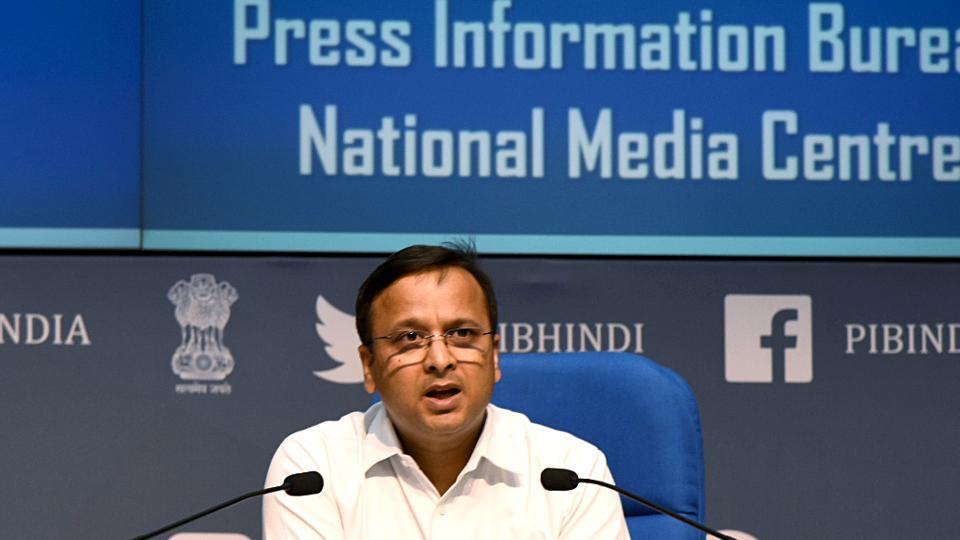
Health ministry joint secretary, Lav Agarwal, said they there were focusing on strengthening infrastructure and surveillance as part of the strategy to manage positive cases.
“If you ask what is our strategy in managing positive cases, then I would say infrastructure and manpower strengthening, and surveillance. The number of available beds [105,980 ] in proportion to the number of required beds has been far higher, our analysis shows, so there is no need to fear about the adequate availability of beds,” Agarwal said at a media briefing.
Apart from the dedicated Covid-19 hospitals, some prominent hospitals in the country such as the All India institute of Medical Sciences (AIIMS), Delhi and Safdarjung Hospital have separate beds and blocks for those suffering from Covid-19, the government has said.
“About 80% cases with no or mild symptoms can be housed in Covid-19 care facilities equipped with all basic medical care required, and about 15% [cases] with moderate symptoms will be admitted to Covid-19 health facilities that will have oxygen support. Patients with serious symptoms will be kept in Covid-19 hospitals that are equipped with ventilators and advanced Intensive Care Units. The previous two facilities will be linked to a hospital, and will have an ambulance to transport a patient in case the symptoms turn severe,” said Agarwal.
The government is also looking to make use of the private and government medical colleges’ laboratories to increase the country’s testing capacity, according to Agarwal.
“They have the laboratories to do the molecular testing, if given a little training and resources, these labs can be utilised for testing purposes,” said Dr Sanjeev Bagai, chairman and managing director, Nephron Clinic.
Ten institute of national repute such as AIIMS, Delhi and Bengaluru’s National Institute of Mental Health and Neurosciences have been identified to mentor these medical colleges, the health ministry said.
“AIIMS, Delhi has been conducting webinars on a regular basis to train doctors, nurses, paramedics and our field staff involved in Covid-19 management. The training programme can be scaled up to include these medical colleges as well so that these can also be utilized in disease management and testing,” said Agarwal.
The Indian Council of Medical Research (ICMR), the country’s apex biomedical research organisation, has tested 1,86, 906 samples for Covid-19 since January 24, with a positive percentage of 4.3%.
“If you look at last five days, 15,750 samples on an average were tested per day [across the country], with an average of 584 positive cases. There are 151 government laboratories and 68 private labs performing tests,” said Dr Manoj Murhekar, director, National Institute of Epidemiology, Chennai.
India does not have a Covid-19 vaccine candidate as of now but at least 40 vaccine-related research projects are currently on across the globe. “There is no news of any successful attempt as of now. These trials haven’t reached the next level,” he added.
Dispelling doubts on shortage of Hydroxychloroquine (HCQ), a drug that has shown some promise against Covid-19, in the country, Agarwal said that there was no dearth of HCQ and it was being exported to 13 countries, including the US, in the first batch.