
 E-Paper



India won’t recognise or accept decision on Indus Waters Treaty with Pak in Vienna: Official
India will reject any decisions by the Vienna-based court regarding the Indus Waters Treaty with Pakistan, claiming the treaty is currently in abeyance.

 Prefer HTon Google


New Delhi: India will not accept any decisions, including “proceedings” or “award”, by the Vienna-based Permanent Court of Arbitration on the Indus Waters Treaty with Pakistan as the pact remains in “abeyance”, an official aware of the matter said on Thursday, requesting anonymity.
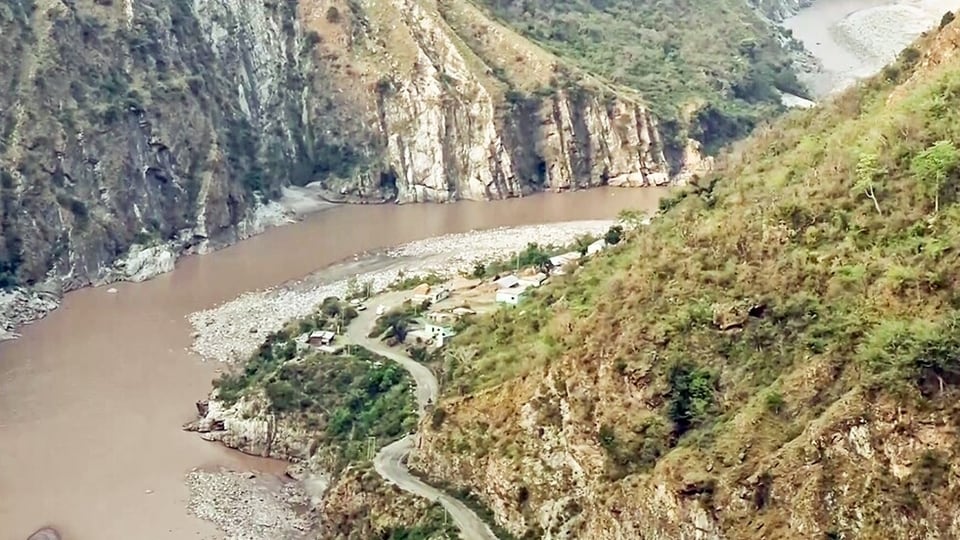
On Wednesday, Pakistan said it would go ahead with the next phase of neutral-expert proceedings on the treaty slated to begin in Vienna next week, news agency PTI reported.
“Since the government of India has kept the Indus treaty in abeyance, India will consider any decision arising out of the proceedings in the Court of Arbitration as null and void. The government of India doesn’t now recognise or accept the so-called court of arbitration,” the official said.
India announced a unilateral suspension of the water-sharing agreement, which had held for 65 years, a day after a terror strike killed 26 people in a popular tourist area in J&K’s Pahalgam on April 22.
India blamed the attack on Pakistan and retaliated with airstrikes on terror bases inside the rival nation. The proceedings under a neutral expert, Michel Lino set to begin next week are administered by the Vienna office of the arbitration court, in cooperation with its Mauritius office.
According to the agenda for the proceedings, the court-administered nuetral expert will look into Pakistan’s objections on India’s construction of two hydroelectric projects, the Kishanganga plant on the Kishenganga river and the Ratle power project on the Chenab river in Jammu & Kashmir. Both projects are seen as critical for India’s power sector.
Lino was appointed by the World Bank, which had helped to broker the pact, on 13 October 2022, pursuant to Article IX and Annexure F of the Indus Waters Treaty, 1960.
Lino moved for a Permanent Court of Arbitration, essentially a tribunal, as the registry and secretariat for adjudicating all disputes on 5 June 2023.
Alongside, the World Bank also appointed Sean Murphy, an American expert on international law, as the court’s chairman.
India was cooperating with the neutral expert till the Pahalgam attack, recommending a set of corrections in an agenda note as late as March, a month before the Pahalgam killings.
A car explosion on Monday in a densely-populated part of Old Delhi, near the historic Red Fort, killing 13 people, could further fan tensions with Pakistan, as police of several states uncovered a Kashmir-based terror module linked to Pakistan-based outfit Jaish-e-Mohammad. India has vowed to hunt down perpetrators of the blast.
On 27 June, the Vienna court issued a supplemental award on its competence, essentially ruling that India’s suspension of the treaty does not affect its jurisdiction or powers to hear the case.
On the same day, the Union external affairs ministry issued a strongly worded response, calling it a “serious breach” of the Indus Waters Treaty itself.
“The government rejected this supplemental award and also officially wrote to them to halt all proceedings henceforth since the treaty has been put in abeyance,” the official cited above said.
The Indian government has said the treaty will be in abeyance till Pakistan irrevocably abjures itself from any support to terrorism in India.
“Consequently, the external affairs ministry had issued a statement in June itself that any proceedings before this forum and any award or decision taken by it are also for that reason illegal and per se void,” the official said.
India’s view is that some of the treaty’s clauses have become outdated amid natural changes in the Indus basin . Since 2023, India has written to Pakistan several times to renegotiate the pact.


