E-Paper



India-Central Asia cooperation key to regional stability: PM Modi
The virtual summit between Prime Minister Narendra Modi and the presidents of Kazakhstan, Kyrgyzstan, Tajikistan, Turkmenistan and Uzbekistan – which lasted about 90 minutes – reflected the growing engagement with Central Asia.

 Prefer HTon Google


New Delhi: India and the Central Asian states decided at their first summit on Thursday to create a joint working group for cooperation on Afghanistan and an institutionalised framework for collaboration in areas ranging from connectivity to security.
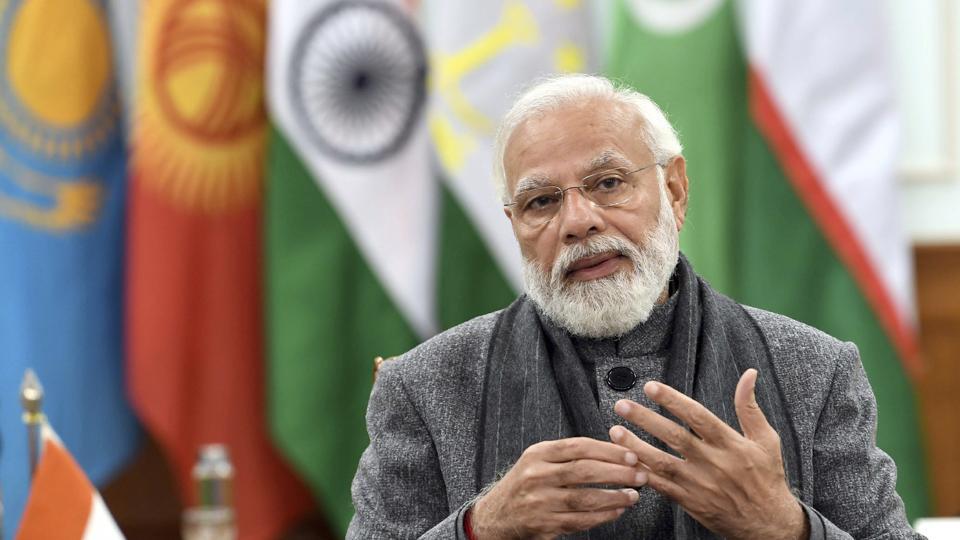
The virtual summit between Prime Minister Narendra Modi and the presidents of Kazakhstan, Kyrgyzstan, Tajikistan, Turkmenistan and Uzbekistan – which lasted about 90 minutes – reflected the growing engagement with Central Asia, which India perceives as part of its extended neighbourhood.
Modi said in his televised opening remarks that cooperation between India and Central Asia has gained in importance in the aftermath of recent developments in Afghanistan.
“We are all concerned with the developments in Afghanistan,” he said, speaking in Hindi. “In this context, our mutual cooperation has become more important for regional security and stability.”
According to the Delhi Declaration issued after the summit, the six countries agreed to continue close consultations on the situation in Afghanistan and to set up a joint working group on Afghanistan comprising senior officials.
Modi also listed the summit’s three main objectives – to make it clear that mutual cooperation between India and Central Asia is essential for regional security and prosperity, to create an effective structure for cooperation, and to create an ambitious roadmap for future collaboration.
“On behalf of India, I would like to clarify that Central Asia is central to India’s vision of an integrated and stable extended neighbourhood,” he said.
An effective structure for cooperation will facilitate regular interactions at different levels and among various stakeholders, and the roadmap will enable the six countries to adopt an “integrated approach for regional connectivity and cooperation in the next 30 years”, he added.
The virtual summit was organised as the leaders of the Central Asian states were unable to attend India’s Republic Day celebrations on January 26 because of a surge in Covid-19 infections. The five presidents – Kassym-Jomart Tokayev of Kazakhstan, Sadyr Japarov of Kyrgyzstan, Emomali Rahmon of Tajikistan, Gurbanguly Berdimuhamedov of Turkmenistan and Shavkat Mirziyoyev of Uzbekistan – were invited to be chief guests at the event, though no formal announcement was made by any of the countries.
As part of steps to institutionalise the framework for cooperation between India and Central Asia, the leaders agreed to hold the summit every two years. Apart from the India-Central Asia Dialogue mechanism at the level of foreign ministers, they agreed the ministers of trade and culture will meet at regular intervals to take forward cooperation in these areas.
The leaders further agreed to continue regular meetings of secretaries of the national security councils to discuss security developments across the region.
India made several proposals for driving cooperation with Central Asia, including establishing a joint working group on using Iran’s Chabahar port to address the free movement of goods and services, creation of an “India-Central Asia Centre” in New Delhi to act as the secretariat for the summit, and establishing an “IT/ITES task force” to work on digitalisation and e-governance.
These proposals were welcomed by the Central Asian leaders, Reenat Sandhu, secretary (West) in the external affairs ministry, told a media briefing after the summit. She said the prime minister emphasised the importance of an ambitious agenda for partnership and a roadmap for the next 30 years that focused on connectivity and cooperation in an integrated manner.
“Connectivity was one of the main issues of discussion with the Central Asian leaders...The importance of Chabahar port was equally emphasised by all,” Sandhu said.
“India stands ready to plan, build, invest and participate in connectivity projects based on the priorities of transparency, broad participation, local priorities, financial sustainability and respect for sovereignty and territorial integrity of all countries,” she added.
India has sharpened it focus on the Central Asian states both to counter China’s growing presence in the region and to strengthen cooperation on Afghanistan following the Taliban takeover of that country. However, India’s total trade with the Central Asian states was worth $3 billion in 2020, significantly lower than the region’s two-way trade with China, which stood at $40 billion in 2018.
The Confederation of Indian Industry (CII) noted that India is not a key trading partner for any of the Central Asian states despite warm relations. Indian exports to the region stood at $658 million during 2020-21.
CII director general Chandrajit Banerjee said the India-Central Asia Summit “provides further impetus to exploring new areas of cooperation for promoting trade and investments and finding new ways of overcoming connectivity issues so that economic complementarities can be fully realised”.