
Sign in

India-China border deployment risk for potential armed conflict: US intel report

The report highlights a fragile global order, China’s military expansion plans, its aggressive cyber operations

Updated on: Mar 14, 2024, 12:52:03 IST
Share
Share via
  • facebook
  • twitter
  • linkedin
  • whatsapp
Copy link
  • copy link

An assessment by US intelligence agencies warns of a “potential” armed conflict between India and China amid large troop deployments by both sides and sporadic encounters between their militaries, adding the border dispute “will remain a strain” on ties between the neighbours.
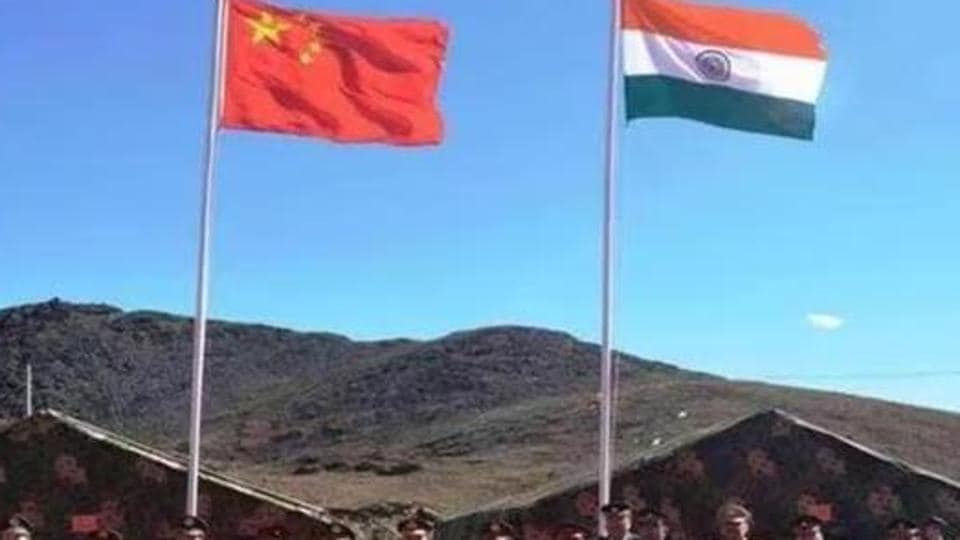
The assessment further states that China is looking to establish overseas military bases at mulitple locations. (Representative file photo)

The assessment further states that China is looking to establish overseas military bases at mulitple locations - including Sri Lanka and Pakistan - in its attempt to “project power” and “protect China’s interests abroad”.

Also Read: India rejects China’s claim on Arunachal Pradesh

“The shared disputed border between India and China will remain a strain on their bilateral relationship. While the two sides have not engaged in significant cross-border clashes since 2020, they are maintaining large troop deployments, and sporadic encounters between opposing forces risk miscalculation and escalation into armed conflict,” states the annual threat assessment of the US intelligence community, released by the Director of National Intelligence (DNI) on Monday, as it talks about potential inter-state conflicts.

The report highlights a fragile global order, China’s military expansion plans, its aggressive cyber operations and its possible attempt to influence the 2024 US presidential elections. It further talks about other conflicts including the Israel-Hamas war and the Russia-Ukraine war.

Prime Minister Narendra Modi last week inaugurated the strategic Sela tunnel, built at an altitude of 13,000 feet in Arunachal Pradesh, that will provide all-weather connectivity to Tawang.

Infrastructure projects near Indo-China border have gathered pace since a military standoff with China in Ladakh sector of the Line of Actual Control (LAC) began in May 2020. Both sides have arrayed close to 50,000 troops each in Ladakh sector and India has made it clear that bilateral relations cannot be normalised till there is peace and tranquility in the border areas.

The report also points to possible armed conflict between India and Pakistan as well in case of any provocations from Islamabad.

“New Delhi and Islamabad are inclined to sustain the current fragile calm in their relationship following their renewal of a cease-fire along the Line of Control (LoC) in early 2021. However, neither side has used this period of calm to rebuild their bilateral ties as each government has focused on more pressing domestic priorities including election perpetrations and campaigning and for Pakistan, concerns over rising militant attacks in its west,” the report underscores.

“Pakistan’s long history of supporting anti-India militant groups and India’s increased willingness, under the leadership of Prime Minister Narendra Modi, to respond with military force to perceived or real Pakistani provocations raise the risk of escalation during a crisis. There remains the potential for an event to trigger a rapid escalation,” it added.

On China’s plans to create overseas bases in India’s neighbourhood and other areas, the report states that the People’s Liberation Army (PLA) will “continue to pursue the establishment of overseas military installations and access agreements in an attempt to project power and protect China’s interests abroad”.

“Beyond developing its military base in Djibouti and its military facility at Ream Naval base in Cambodia, Beijing reportedly is considering pursuing military facilities in multiple locations, including—but not limited to—Burma, Cuba, Equatorial Guinea, Pakistan, Seychelles, Sri Lanka, Tajikistan, Tanzania, and the UAE,” it says.

The report notes that Beijing will focus on building a fully modernized national defense and military force by 2035 and for the PLA to become a world-class military by 2049.

“In the meantime, the CCP (Chinese Communist Party) hopes to use the PLA to secure what it claims is its sovereign territory, to assert its preeminence in regional affairs, and to project power globally, particularly by being able to deter and counter an intervention by the United States in a cross-Strait conflict”, it adds.
  • Rezaul H Laskar
    ABOUT THE AUTHOR
    Rezaul H Laskar

    Rezaul Hasan Laskar is Foreign Editor with the Hindustan Times, which he joined in 2015. He began as a journalist in his hometown of Shillong in northeast India and has worked in newspapers and wire services over the years. He moved to New Delhi in 1997 and initially focused on defence, national security, Jammu and Kashmir and the northeast, while also working of foreign policy and international relations. He has been part of the media delegation accompanying PMs on foreign visits and has reported from destinations ranging from Tibet to Ukraine. Between 2007 and 2013, he was the Press Trust of India correspondent in Pakistan, one of only two Indian journalists allowed to report from the country. He extensively covered Pakistan’s domestic politics and the life of the common people, as well as the fallout of the 2008 Mumbai attacks on India-Pakistan relations and the subsequent trial in Pakistan of the suspects involved in the attack. As part of his reportage in Pakistan, he travelled the breadth of the country, from the Swat Valley to Balochistan. Reza’s first gig in journalism was writing a weekly music column, and music – especially classic rock – remains a keen interest. He is also a movie buff and a keen photographer.Read More

  • Neeraj Chauhan
    ABOUT THE AUTHOR
    Neeraj Chauhan

    Neeraj Chauhan is a senior journalist with Hindustan Times and an investigative reporter specialising in national security, terrorism, organised crime, narcotics, corruption, financial crime and complex investigations. With over 21 years of experience across Hindustan Times, The Times of India, The Indian Express and The Pioneer, he has built deep expertise in India’s internal security and law-enforcement landscape. Neeraj has extensively covered India’s principal investigative, intelligence and security agencies, including the NIA, CBI, ED, IB, R&AW, MHA and other central security forces. His work has included deeply reported investigations into terrorism, terror financing, cross-border crime, narcotics trafficking, cybercrime, financial fraud and political and corporate corruption. He has reported on some of the most significant terror attacks and security developments in India over the past two decades, including the Delhi serial blasts, the 26/11 Mumbai attacks, the 2019 Pulwama terror attack and the recent Pahalgam attack. His reporting has also chronicled the rise and decline of the Indian Mujahideen, the activities and subsequent crackdown on the Popular Front of India (PFI), Islamist extremist networks, the conflict in Jammu and Kashmir, insurgencies in the Northeast and Maoist violence. Some of Neeraj’s major breaking stories are in Aryan Khan drug case, Sushant Singh Rajput suicide, interception of a 3,000-kg Afghan heroin consignment worth about ₹21,000 crore at Mundra port, Sri Lanka easter bombings, Aarushi-Hemraj murders in Noida, 2G scam, coal block allocation scam, AgustWestland VVIP chopper deal and major bank frauds and extradition cases involving Mehul Choksi, Nirav Modi and Vijay Mallya. His reporting is marked by an ability to cultivate sources, analyse confidential and complex documents, and follow investigations over several years—from the initial breakthrough to chargesheets, trials and international legal proceedings. He specialises in making complicated security and investigative developments accessible while examining their wider implications for governance and public policy. A Chevening South Asia Journalism Programme Fellow at the University of Westminster, Neeraj also spent time at the Financial Times as part of the fellowship. He was also a Robert Bosch Media Ambassadors India-Germany Fellow, studying at the University of Tübingen and working with Der Tagesspiegel in Berlin. He has previously taught investigative journalism and crime reporting as a guest faculty member at the Times School of Journalism. Over more than two decades, Neeraj has established himself as an authoritative voice on India’s national security and investigative landscape, with his reporting closely followed by officials, investigators, lawyers, policymakers and readers seeking insight into some of the country’s most complex and consequential developments.Read More