
 E-Paper



Indian Army changes border posture
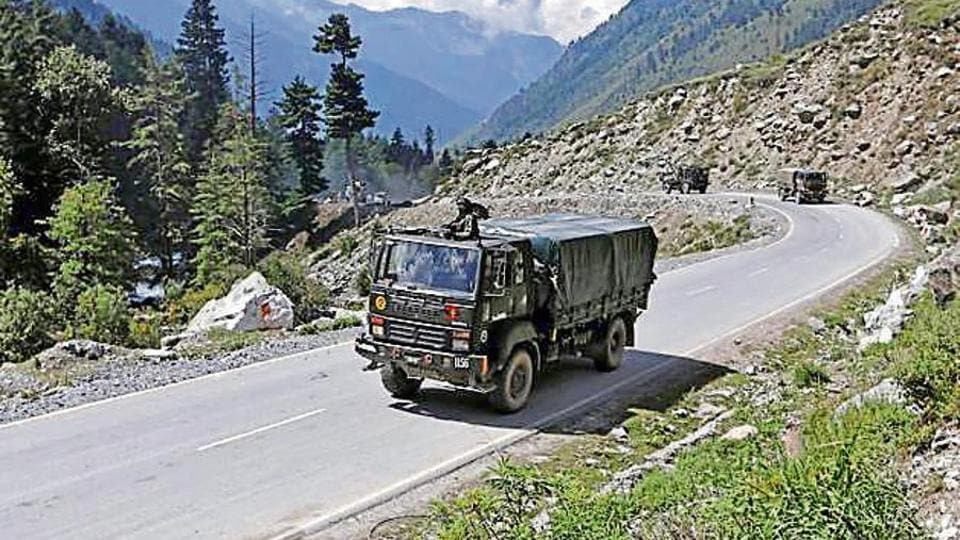
The Indian Army has changed its posture from border management to securing the border on the 1,597 km Line of Actual Control (LAC) in Ladakh after aggression by the Chinese People’s Liberation Army in the Chushul sector, followed by additional induction of troops and support elements, people familiar with the matter said.

 Prefer HTon Google


The Indian Army has changed its posture from border management to securing the border on the 1,597 km Line of Actual Control (LAC) in Ladakh after aggression by the Chinese People’s Liberation Army in the Chushul sector, followed by additional induction of troops and support elements, people familiar with the matter said.
The PLA Air Force has also stepped up its activity in the occupied Aksai Chin area, with positions being militarily strengthened.
“The Indian Army is now in a secure border mode to pre-empt any Chinese PLA transgressions in vulnerable areas of Ladakh. The repositioning of Indian forces has been done to take the Chinese aggression into account in the area and to ensure that all positions are defended,” said a senior official, requesting anonymity.
The Indian Army has also matched the PLA’s troop reinforcement in the sector by deploying additional specialised forces such as the Special Frontier Force (SFF) that was raised to counter China after the 1962 war. SFF soldiers had played a lead role in pre-empting the PLA, which tried to grab Indian territory five days ago on the southern bank of Pangong Tso. Indian soldiers have since then occupied key heights on the southern bank.
The Indian Army has deployed a combat group -- a mix of armoured and mechanised elements -- in the Depsang Plains to match a PLA mechanised brigade and another combat group in Chumar to signal to the PLA that it means business and will not allow even an inch of Indian land to be taken.
India dominates the Demchok and Chumar areas, giving soldiers a clear line of sight to the Lhasa-Kashgar (219) highway, a critical artery for PLA logistics supply. The Indian posture in Chushul clearly indicates that any further PLA perfidy will receive a matching response, a military commander said.
While the PLA, under Chinese President and Communist Party general secretary Xi Jinping, is blaming the Indian Army domestically for aggravating the border situation, Beijing is making no effort to sort out the border row diplomatically or militarily by just restoring status quo ante.
“It is a dead-end posturing as this will not yield any results for PLA as neither side can deploy troops all along the 3,488 km LAC round the clock throughout the year,” said a second senior official .
Although military and diplomatic talks are on, Indian Army troopers are leaving nothing to chance and are prepared for the worst case scenario, with decisions being taken on the spot, and not by headquarters.
Tensions have escalated in the Ladakh sector after a June 15 military skirmish in the Galwan Valley left 20 Indian troops and unspecified number of PLA soldiers dead.


