
 E-Paper



Indian military pares down its Predator drone requirement to 18 from 30
Instead of each of 3 services acquiring 10 Predator drones each, the new projection is six each for Army, Navy and Air Force.

 Prefer HTon Google


After conducting detailed operations research system analysis (ORSA), the Indian armed forces have pared down their requirement for acquisition of US MQ-9B Predator high altitude long endurance (HALE) armed drones from 30 to 18 platforms and have projected their necessity to the Narendra Modi government.
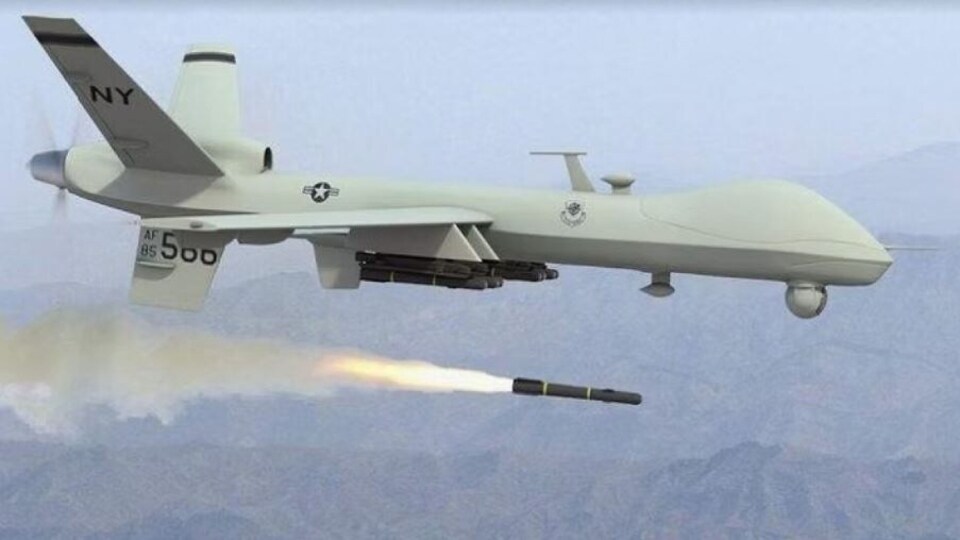
As first reported by the Hindustan Times, instead of each of the three services wing acquiring 10 each of Predator drones, the new projection is six platforms each of Indian Army, Navy and the Air Force to cater to their specific requirements. The deal after approval from the government will be done with the US on a government-to-government basis.
While the government is in constant touch with Predator manufacturer General Atomics, the need for a top of line proven armed drone was felt as the PLA is constantly upgrading and cementing military-infra along the 3488 km Line of Actual Control (LAC) and has a developed armed drone capability. To make matters worse, China is supplying the same armed drone Wing Loong II to its client state Pakistan.
The Indian Navy already has two unarmed reconnaissance versions of General Atomics drone from 2020, the lease of which is expected to expire in 2024. Based at Rajali Naval base in Tamil Nadu, the two Sea Guardian drones have generated exceptional data and maritime domain awareness from Aden off Africa to the Lombok straits in Indonesia.
The need for a hunter-killer drone like Predator has been felt as India only has medium altitude long endurance drones without armed capability. The Predator can carry four Hell-Fire air-to ground missiles and two precision guided ammunition to take out high value targets. Apart from the armed capability, the drone has top of the line radar surveillance capability and can give real time information to commanders on ground about Chinese or Pakistan unilateral moves on the border. The same drone can be used to force multiple Indian Navy capabilities in the Indo-Pacific to counter the rising Chinese Navy challenge with President Xi Jinping in the middle-kingdom imperial mode against the QUAD.
The renaming of 32 places in Arunachal Pradesh post 2017 Doklam friction, the May 2020 transgressions in East Ladakh and the naming of sub-surface features in the Indian Ocean all add up to the Chinese belligerence akin to the British imperial Navy in the 19th century. The big imperial picture emerging from China is that Modi’s India needs to be prepared for a military challenge at any point, particularly in the eastern sector. It is in this context, that stand-off weapons like Predator drones and conventional missile deterrence will work for India.


