
 E-Paper



Indian Navy to test US F-18 fighters for INS Vikrant next week
The F-18 super hornet trial begins a day before QUAD leaders deliberate on the Indo-Pacific in Tokyo on May 24.

 Prefer HTon Google


The Indian Navy will start the flight trials of Boeing F/A-18E Super Hornet carrier based multi-role fighters at the shore-based test facility (SBTF) at INS Hansa in Goa from May 23 as the US craft is one of the contenders for 26 fighters onboard soon to be commissioned INS Vikrant indigenous aircraft carrier.
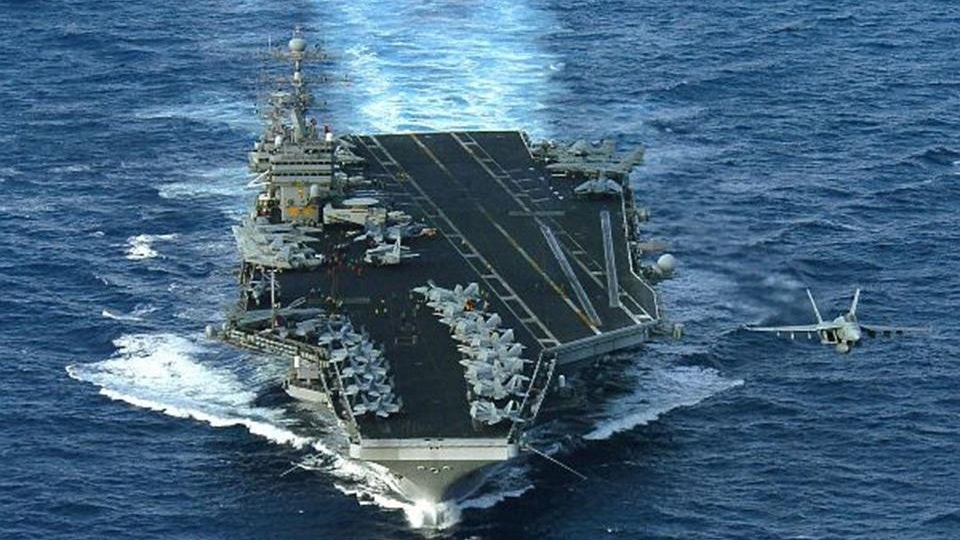
It is understood that two fighters of the US Navy will land in INS Hansa towards the end of this week for take-offs from the 283-meter mock-up deck of India’s sole aircraft carrier INS Vikramaditya. The aircraft carrier is expected to come out of a major overhaul and become operational next month.
The Indian Navy is expected to buy 26 carrier based multi-role fighter for INS Vikrant with eight of these aircraft two-seaters to be used both for flight training and operations. The Super Hornet is a proven weapon platform with an internal rotary cannon with 11 hardpoints to carry air to air missiles and air to surface missiles as well as laser-guided bunker busting bombs.
The other contender fighter aircraft for INS Vikrant, which is expected to be commissioned by Prime Minister Narendra Modi on August 15, 2022, is the Rafale Maritime strike fighter. The Rafale fighter has already been tested by the Indian Navy in January 2022 with the French offering four aircraft on lease for initial training and operational purposes. India has already bought 36 Rafale multi-role fighters for the Indian Air Force with two major maintenance bases in Ambala in the north and Hashimara in West Bengal.
In case Indian Navy goes for Super Hornet, this aircraft will deepen cooperation with the US, by far the largest operator of carrier-based fighters in the world as well as a QUAD partner and close Indo-Pacific ally. The US has the largest original equipment manufacturing in India and the Super Hornet has inter-operability with Boeing P8I and Lockheed Martin MH-60 R anti-submarine warfare helicopters purchased by India for the Navy. India’s other partners in QUAD also operate MH-60R helicopters and P8I aircraft with the Australian Navy also using the F/A-18E Super Hornet.
Both the Super Hornet and Rafale-M can be used in either INS Vikrant or INS Vikramaditya, which use short take-off but arrested recovery (STOBAR) technology for launch and landing of aircraft from an aircraft carrier. This technology is also used by Russian and Chinese aircraft carriers.
With the commissioning of INS Vikrant this year, the Indian Navy will be a formidable force with two aircraft carriers and two ballistic missile strategic submarines. Unlike the Chinese, the Indian Navy has five decades of experience in operating aircraft carriers all-round the year. Even though the era of the anti-ship ballistic missile has dawned on Indo-Pacific, a carrier based strike force is still a potent weapon to decimate the enemy.


