E-Paper



Indians ‘discovered’ America before Columbus: MP minister
Madhya Pradesh minister claims Indians discovered America before Columbus, suggesting a need to revise historical teachings in education.


Indians “discovered” America centuries before Italian explorer Christopher Columbus, developed the country and built temples in San Diego, Madhya Pradesh higher education minister Inder Singh Parmar said on Tuesday, stressing that institutions were teaching students “incorrect history”.
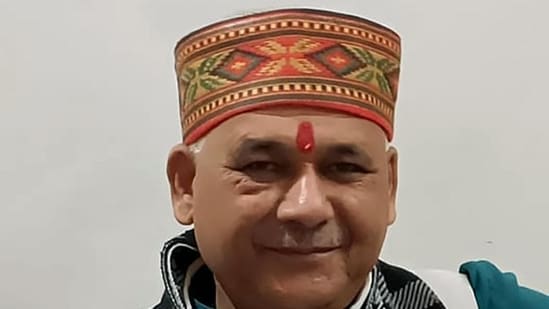
“In the eighth century, Indians went to a place called San Diego (in California) and built temples there. The proof is there in an American museum and library,” he said, without specifying which library or museum, during a diatribe against western education while addressing the convocation of the Barkatullah University in Bhopal.
He also claimed that Indians turned America into a capitalist economy. “Indians helped Mayan civilisation in development of America,” he said, referring to a civilisation that was founded around 2000 BC and which spread across parts of Mexico and Central America at its prime. For the record, the city of San Diego, California (where there are some temples, albeit, all established in the late 20th or early 21st centuries) was founded in the late 18th century.
Parmar’s comments come months after chief minister Mohan Yadav, during his first address to the Madhya Pradesh assembly, claimed Ujjain was once the global standard for time and that his administration would work to pry this status back and away from the Greenwich Meridian.
To be sure, the tale that Columbus discovered America is apocryphal.
Columbus inadvertently made a slew of trips from Spain to the Caribbean between the late 15th and early 16th centuries during failed quests to find a sea route from Europe to Asia.Columbus did not reach North America during his travels.
Moreover, the parts of the Caribbean that he did visit were already inhabited by indigenous populations.
However, there is no evidence to suggest that Indians reached America before explorers and colonisers from other countries.
Columbus died in 1507 convinced he visited Asia. However, Amerigo Vespucci, another Italian explorer, after his travels to Brazil in 1501-1502 insisted that the country was not part of Asia, but a separate continent hitherto unknown to Europeans. Once this theory was affirmed, later European historians borrowed Vespucci’s first name to christen the continent the “Americas”.
“What is the need for teachings about Columbus in India?” Parmar asked.
“What should have been taught was the migrants who went to America after Columbus killed the local tribals, who were worshippers of sun and nature, and captured their land…But it was not taught,” he said.
Parmar appeared to be making a larger argument against the perils of “western education” models and said the central government’s National Education Policy 2020 was trying to reorient this focus towards Indian culture and heritage.
“To rule the country (India) permanently, invaders systematically attacked way education policy of the country and ruined it. We are fortunate that in 2020, educationists come up with the National Education Policy and have taken resolve to build a modern and developed India towards making it ‘vishwaguru’,” he said.