E-Paper



India’s first crewed spaceflight, Gaganyaan, to lift off in early 2027: ISRO chief
Singh said India’s long-term ambitions in space include setting up the Bharatiya Antariksha Station by 2035 and sending the first Indian to Moon by 2040

 Prefer HTon Google


NEW DELHI: India’s first crewed spaceflight, Gaganyaan, will lift off in early 2027 kicking off a new era of space exploration, launching two to three astronauts to an orbit of 400 km for a three-day mission, with a second flight scheduled soon thereafter, Indian Space Research Organisation (ISRO) chief V Narayanan said on Tuesday.
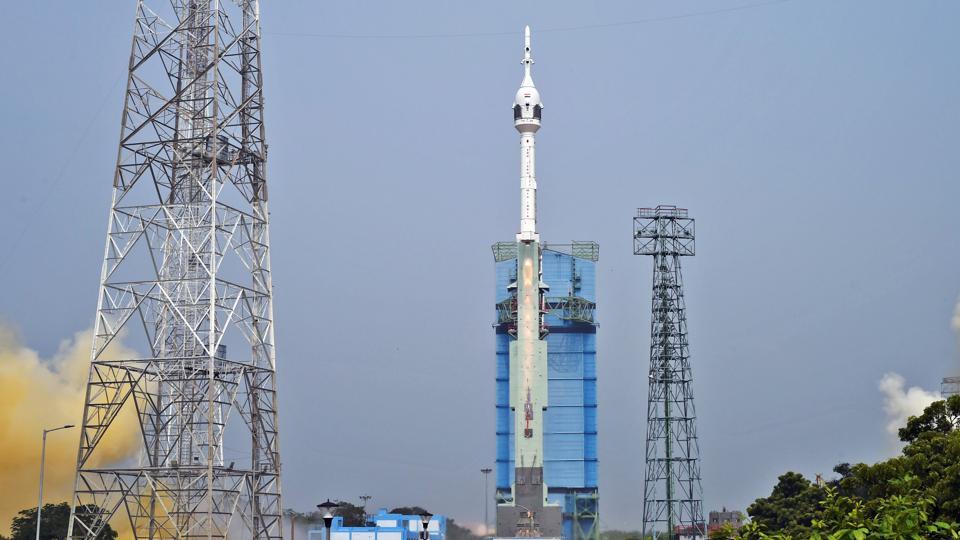
The crewed spaceflights, codenamed H1 and H2, will be preceded by three uncrewed missions (G1, G2 and G3), the first to be launched in the last quarter of 2025, he said briefing journalists on the ₹10,000-crore Gaganyaan programme.
“Gaganyaan is catalysing India’s emergence as a self-reliant space power, inspiring a new generation of scientists, engineers, and entrepreneurs,” he said.
Minister of state for PMO Jitendra Singh, whose portfolio includes science and technology, and space was present.
The Gaganyaan programme goes far beyond scientific achievement, Singh said.
“It represents India’s rise as a global space power built on indigenous technology, fiscal prudence, and visionary political leadership,” he said, adding India’s long-term ambitions in space include setting up the Bharatiya Antariksha Station by 2035 and sending the first Indian to the Moon by 2040.
The astronauts or Gaganyatris are hand-picked fighter pilots from the Indian Air Force. In February 2024, Prime Minister Narendra Modirevealed the identities of the four fighter pilots -- Group Captains Shubhanshu Shukla, Prasanth Balakrishnan Nair, Ajit Krishnan and Angad Pratap.
They have completed their physical, psychological and spaceflight training.
“Gaganyaan is not just ISRO’s mission. It is India’s mission,” Singh said, noting the contribution of the private sector and the country’s start-ups following policy reforms initiated by the government.
The human-rated LVM3 vehicle, the crew escape system, and the crew and service modules are undergoing the final stages of testing and integration.
“The expenditure being incurred on the Gaganyaan project is minimal when compared to similar human spaceflight missions conducted by other countries,” he added.
As Gaganyaan advances with focused precision, it serves not just as a leap in scientific capability but as a powerful symbol of India’s long-term economic and strategic aspirations in space, the department of space said.
The ISRO chief said the Axiom Mission 4 that will carry Shukla to the International Space Station (ISS) will be launched in early June. The Axiom Mission 4 crew will lift off in a SpaceX Dragon spacecraft and they will spend around two weeks on board the orbiting laboratory ISS.