
 E-Paper



India's island territories provide military deterrence against expansionist China
Today, an average of 6-7 PLA ships are in the Indian Ocean Region each month with aircraft carrier based task forces entering the region within this decade.

 Prefer HTon Google


Even though the tri-service Andamans and Nicobar Command was set-up by the Vajpayee government quarter of century ago, India’s military doctrine has been land centric with primacy to the Indian Army with other two services unfortunately being seen as force multipliers.
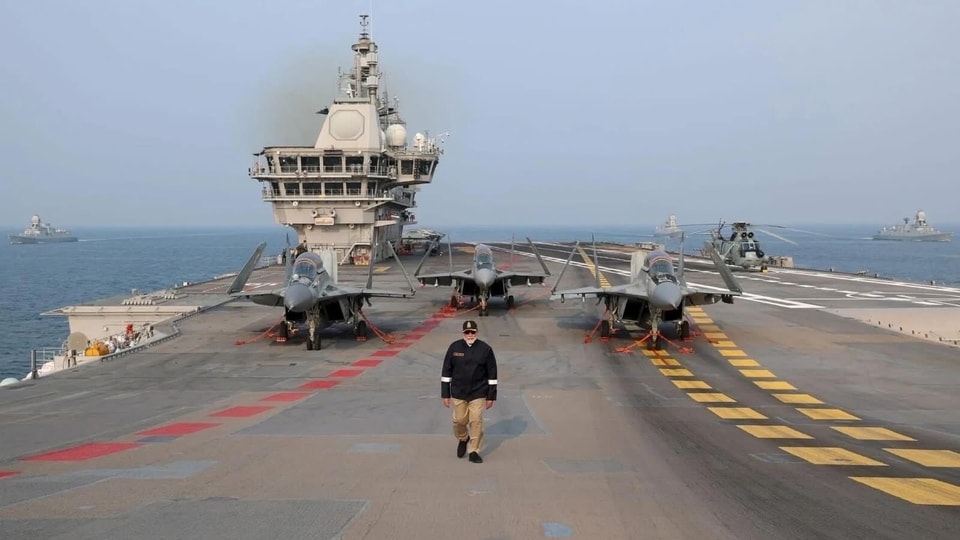
While India’s main adversary China changed its military doctrine from land to sea-centric in early 2000s, New Delhi started seriously looking at its maritime security post-2014 with PLA Navy surveillance ships, ballistic missile trackers, warships and submarines making forays into Indian Ocean Region (IOR) with logistics facilities in Cambodia, Sri Lanka, Maldives, Iran and the eastern seaboard of Africa. Today, an average of six-to-seven PLA ships are in the IOR each month with aircraft carrier based task forces entering the region within this decade.
Given that the PLA is making one ship every seven days, India has no options but to develop long range capabilities in its island territories of Lakshadweep and Andamans and Nicobar Island. It is only then that India can enforce sea-denial, sea-access deterrence as well as build leverages in the IOR against any potential rival. Apart from maritime security, India’s island territories hold huge economic potential for the country with world class transshipment hubs on the eastern as well as western seaboard of the country.

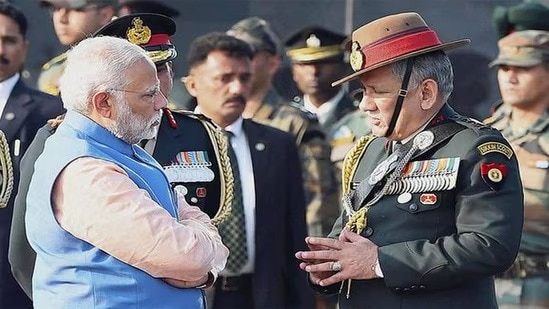
It was India’s first Chief of Defence Staff (CDS) Gen Bipin Rawat who along with national security planners, who envisioned turning Campbell Bay in Great Nicobar into a transshipment hub as well as a military base for India in order to provide first strike capability against any rival as well as protect the hinterland away from home.
With Andamans and Nicobar Island sitting on the access to all the major ingress routes to South East Asia and Lakshadweep and Minicoy Islands on the main sea lane of communication to Asia and beyond, Gen Rawat wanted expansion of bases at INS Jatayu on Minicoy, INS Baaz in Great Nicobar and INS Kohassa in north Andamans so that India had the capacity to protect its backyard as well as cause pain to any adventurer on its land borders by enforcing sea denial to oil and cargo trade coming from West Asia.
While the Modi government has responded in writing to environmental concerns raised by Congress leader Rahul Gandhi in Great Nicobar, the fact remains that both the Island territories provide India with a strategic chokehold to major sea lanes of communication towards Malacca, Sunda, Lombok, Ombi and Wetar straits in Indonesia.
The only concern here is that expansion is not taking place at the speed that it was envisaged due to bureaucratic delays, inter-service rivalries and land acquisition issues on both island territories. Even the project of expansion of Agatti airport has been stuck due to land acquisition for the past decades, with the majority offering mere lip service rather than pushing the project.
Gen Rawat wanted Great Nicobar to be a trans-shipment hub so that large vessels would not have to wait at Colombo or Chinese Hambantota ports to enter into Malacca Straits. He wanted INS Baaz to be developed so that Indian deterrence and surveillance would extend all the way up to the eastern coast of Australia.
Given that US President Donald Trump wants to play the lone ranger in West Asia and seems least interested in QUAD, India under Modi has no options but to independently develop its capabilities in IOR, as both Australia and Japan are bound by the AUKUS pact with America. India today has a robust sea-based deterrence at least in IOR with three nuclear ballistic missile submarines—INS Arihant, Arighat and Aridaman—deployed, and the fourth one, INS Arisudan, to be commissioned next year.
Apart from Arihant, the remaining three submarines are only designed to carry 3500 km range K-4 ballistic missiles and will be operating in the Indo-Pacific within this decade. India has also deployed long-range missiles in its island territories to ensure a robust response to any adversary. For India, the need of the hour is building capabilities and leveraging, not environmental activism.


