E-Paper



Indore water contamination: E coli found in 50% groundwater samples
More than half of the ground water samples taken from multiple borewells in Indore’s Bhagirathpura locality have tested positive for E coli bacteria,officials said on Monday

 Prefer HTon Google


More than half of the ground water samples taken from multiple borewells in Indore’s Bhagirathpura locality have tested positive for E coli bacteria,officials said on Monday, a day after the outbreak of waterborne diseases in the area that claimed at least 10 lives was declared an epidemic.
Indore district collector Shivam Verma on Monday said faecal coliform contamination was found in 35 out of 69 ground water samples lifted from borewells in the area. There are around 514 borewells in Bhagirathpura ; about 400 are in private homes, providing water for drinking and household chores.
Some houses in the area have both piped water connections and borewells.
The outbreak was thrust into the public spotlight on December 29 after three people died in the locality. On Saturday, test reports of water samples confirmed the tap water was a cocktail of deadly pathogens — including E coli, Salmonella and Vibrio cholerae bacteria, along with viruses, fungi and protozoa — that caused polymicrobial infections leading to multi-organ failure and sepsis among patients, officials aware of the matter said.
Contamination of drinking water samples by sewage had been blamed for the outbreak. Officials allegedly sat on complaints of contaminated water for at least six months before the spate of deaths.
Verma said an epidemic has been declared on Sunday for water-borne diseases. The administration has also banned sale of food items by street vendors in the affected areas.
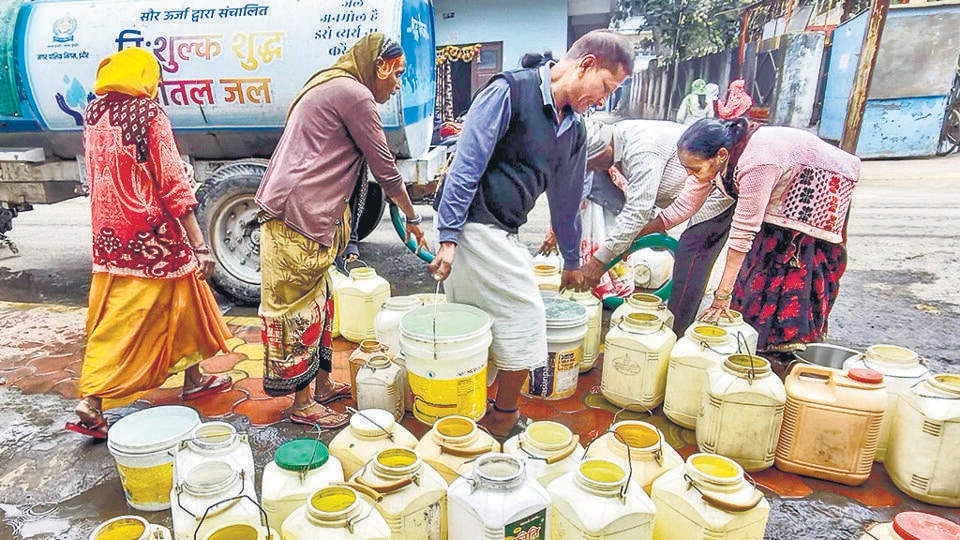
“Bhagirathpura incident has been declared an epidemic so that required protocols could be followed in the area to contain the spread. We have asked locals not to consume water from the Narmada pipeline as well as borewell water,” he said. For the time being resident have been told to use water supplied by tankers after boiling it.
Verma claimed contamination is in damaged borewells and not in the groundwater. “If the groundwater was contaminated, all the samples would have shown similar results. However, the fact that different results were obtained from adjacent borewells suggests that the issue might be localised rather than a widespread contamination problem,” he said.
To be sure, borewells don’t have separate reservoirs. Verma said the 35 borewells are being repaired and the remaining are being chlorinated .
As of Monday 3,000 people have been affected while 327 have been hospitalised in the past 10 days. According to the government, 10 people died in the area.
State surveillance officer Dr Ashwin Bhagwat said a digital survey is being launched in the area to track the source of the water used by families.