
 E-Paper



'Infection transmission risk is much lower in outdoor areas': Key points from govt advisory on Covid-19
In the advisory, the role of face masks, social distancing and sanitisation was highlighted as crucial to beat Covid-19.


Principal scientific adviser to the government of India on Thursday released a guideline which listed things to follow in order to check the spread of the raging Covid-19 pandemic which has claimed more than 287,000 lives in the country so far.
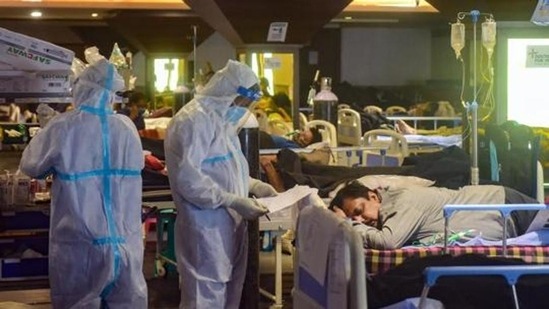
In the advisory, the role of face masks, social distancing and sanitisation was highlighted as crucial to beat Covid-19. It also said that the well-ventilated spaces play a crucial role in diluting the Covid-19 viral load of infected air and help in decreasing the risk of transmission from one infected person to the other.
India recorded 276,110 new cases of the Covid-19 in a 24-hour span, the Union health ministry data showed on Thursday morning. The total tally of the viral infection now stands at 25,772,440.
Here are the key points from the advisory:
1) Aerosols, one of the key transmission modes of the Sars-CoV-2, can travel in the air up to 10 meters. The advisory also stated that the droplets fall within 2 meters from an infected person.
2) Even one infected person showing no symptoms can release enough droplets to create a “viral load” that can infect several others.
3) Infection transmission risk is much lower in outdoor areas as virus particles get quickly dispersed in the air. Meanwhile, in closed un-ventilated spaces, droplets and aerosols become quickly concentrated and greatly increase the risk of transmission to people in the area.
4) Symptoms can take up to two weeks to appear in an infected person, during which time they may continue to transmit the virus to others. Some people never show symptoms and still transmit the virus.
5) These virus-laden droplets can survive on non-porous surfaces such as glass, plastic and stainless steel for a fairly long time. Hence the advisory asked for frequent cleaning of high contact point6s such as door handles, light switches, tables, chairs and the floor with disinfectants, like bleach and phenyl. It can remove the virus contamination from surfaces.


