E-Paper



‘iPhone is not your identity’: Shehzad Poonawalla’s advice to youth after Maharashtra teen, family die in hill fall
His comments came after a 19-year-old boy died along with his parents at Khavdya Dongar in Maharashtra's Chhatrapati Sambhajinagar district on Friday.

 Prefer HTon Google


BJP leader Shehzad Poonawalla has commented on the deaths of a 19-year-old boy and his parents in Maharashtra following a dispute over a mobile phone bought on EMI, saying the tragedy should force society to reflect on the growing pressure to own expensive products and maintain lifestyles that may be beyond one's means.
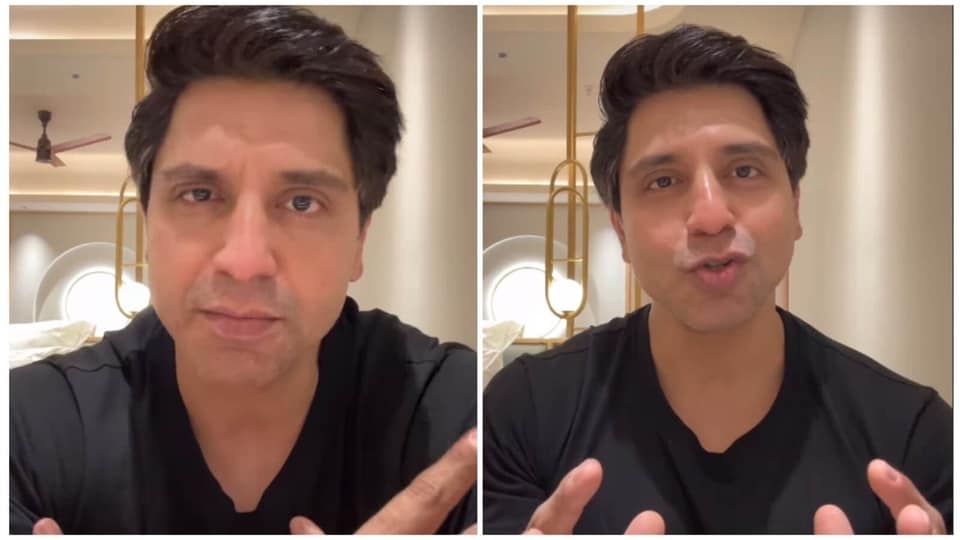
“The topic is not about an iPhone. The topic is that is an iPhone, a brand, a possession, a product, a position, a status symbol, more than your identity?” Poonawalla said, reacting to the incident.
Also Read | A family ends over a phone: Gadget addiction gone too far? Experts weigh in
19-year old's death and an iphone
Deep Dive

His comments came after a 19-year-old boy, identified as Kunal, died along with his parents at Khavdya Dongar in Maharashtra's Chhatrapati Sambhajinagar district on Friday.
According to multiple reports, Kunal had bought an iPhone on EMI and an argument broke out with his parents over money for the instalments.
Following the dispute, the teenager climbed the hill and threatened to take his own life.
Police, villagers and his family spent nearly three hours trying to persuade him to step away. However, when Kunal suddenly jumped, his father fell while attempting to save him. His mother, on seeing the two fall, also jumped from the hilltop. All three died.
‘Keep aspirations’ not ‘delusion’: Poonawalla
“No matter how much income he had, it is possible that he could not afford an iPhone. But because of EMI, the lifestyle of 1 lakh, 2 lakhs, 4 lakhs is a delusion for us. We get a delusion that we can afford it,” he said.
Poonawalla said aspiration was not inherently wrong, but warned against allowing possessions to become measures of self-worth.
“Upgrade your phones. Surely. But don't do it at the cost of downgrading your life,” he said. “The iPhone cannot become such a big status symbol. Or a car cannot become such a big status symbol that it is more important than your identity.”
He also urged young people to understand their family's financial circumstances and not treat being told “no” as an attack on their independence or an indication that they were missing out.
“Keep an aspiration. For sure, keep an aspiration. But the aspiration should be rooted in reality,” Poonawalla said. “Sometimes listening to no, understanding the reality of parents, understanding their challenges, this is not an ego issue.”
'Social media, consumerism to be blamed'
Poonawalla also linked the pressure to consumerism with the constant exposure to other people's lifestyles on social media.
“You are seeing your friends' possessions on social media. You are chasing likes. But when will you chase values? Chase values,” he said.
He argued that true wealth should not be defined simply by the ability to purchase expensive products.
“And the wealth, the richness, to be rich, does not come from acquiring these possessions,” Poonawalla said. “Richness is not the ability to buy everything. Richness is the ability to know whether you need something or you don't need that something.”
He further urged people not to let temporary financial limitations or feelings of missing out push them towards irreversible decisions.