
 E-Paper



Is India headed for an early winter? What experts say after heavy Delhi rain
The sudden change in weather has brought a wintry nip to the air much ahead of schedule, marking the season’s first widespread spell of cold and rain.

 Prefer HTon Google


Winter is expected to make an early entry into North India, with fresh snowfall already blanketing the higher reaches of Himachal Pradesh and Jammu and Kashmir, while Delhi and parts of the northern plains woke up to rain and a sharp dip in temperature.
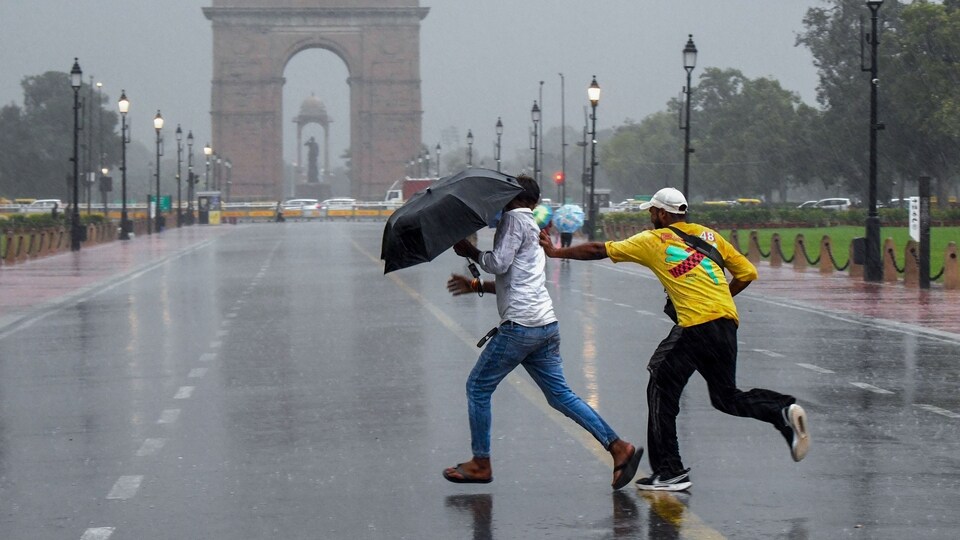
The sudden change in weather has brought a wintry nip to the air much ahead of schedule, marking the season’s first widespread spell of cold and rain.
According to the meteorological centre in Srinagar, snowfall continued through the night after the first flakes were recorded in the higher reaches on Monday. The plains of Jammu and Kashmir also witnessed moderate to heavy rainfall.
In Himachal Pradesh, higher altitudes saw snowfall for the third consecutive day on Tuesday, while light to moderate rain lashed mid and lower hills, pulling down day temperatures noticeably.
The India Meteorological Department (IMD) has forecast above-normal rainfall for most parts of the country in October, with the month expected to receive around 115% of the long-period average (LPA) of 75.4 mm based on 1971–2020 data.
Maximum temperatures are likely to stay above normal across much of India except some central and southern peninsular regions, the IMD said.
The northeast monsoon season (October–December) is also expected to be wetter than usual, especially over Tamil Nadu, Kerala, Coastal Andhra Pradesh, and adjoining regions, where rainfall could exceed 112% of the LPA.
While many areas in central and southern India are likely to experience normal to above-normal rainfall during the post-monsoon season, northwest India—including parts of the plains currently seeing rain—is expected to receive below-normal precipitation.
Meteorologists attribute the current weather activity and the upcoming seasonal trends to evolving La Niña conditions, marked by the cooling of ocean surface temperatures in the central and eastern Pacific.
Neutral El Nino–Southern Oscillation (ENSO) conditions currently prevail, but there’s a 71% likelihood of La Nina developing between October and December, according to the US National Oceanic and Atmospheric Administration.
“Normally, La Nina leads to below-normal temperatures during winter. However, models suggest that in October, temperatures will remain above normal over most parts of the country,” said M Mohapatra, Director General, IMD.
“Weak La Nina conditions are expected to develop during the post-monsoon season.”
Neutral Indian Ocean Dipole (IOD) conditions continue to prevail, with forecasts indicating stability through the post-monsoon months. Above-average sea surface temperatures are being observed across much of the Indian Ocean.
Meteorologists say the early chill and widespread rainfall signal a transitional phase, one that may usher in a cooler, wetter season ahead for parts of India.


