
 E-Paper



Isro to launch GSAT-7A from Sriharikota today, here’s what you should know
The satellite will be carried by the Geosynchronous Satellite Launch Vehicle-F11 (GSLV-F11), Isro’s 35th communication satellite and the 13th flight of the GSLV rocket to orbit.

 Prefer HTon Google


The Indian Space Research Organisation (ISRO) will on Wednesday launch the country’s newest satellite GSAT-7A from the second launch pad of Sathish Dhawan Space Centre in Sriharikota, Andhra Pradesh.
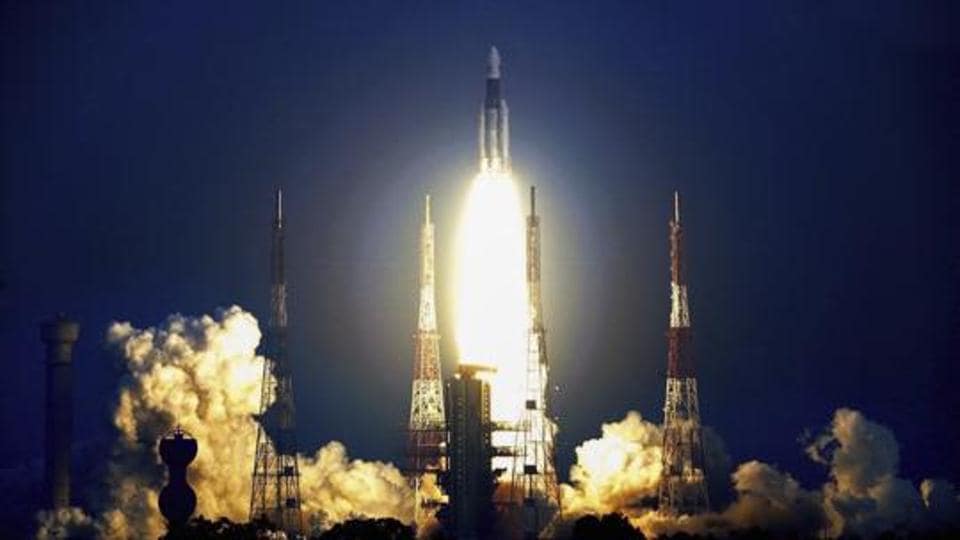
The communication satellite weighing 2, 250 kg will be launched today at 4:10 pm.
The satellite will be carried by the Geosynchronous Satellite Launch Vehicle-F11 (GSLV-F11), Isro’s 35th communication satellite and the 13th flight of the GSLV rocket to orbit.
It is believed that the geostationary communication satellite will give a boost to the Defence forces’ communication capabilities. GSAT-7A will provide communication services in Ku Band over the Indian region.
The Geosynchronous Satellite Launch Vehicle-F11 (GSLV-F11) with indigenous cryogenic upper stage has a total of three stages before reaching the destined orbit using the onboard propulsion system.
Though the first stage will take place within 20 minutes of the lift-off, it might take one or two days after separation from the launcher to reach its final orbital stage.
This heavyweight communication satellite will provide vital data for hi-tech communication in strategic fields.
The satellite will allow IAF to interlink its ground radar stations, airbases and airborne early warning and control (AWACS) aircraft, and reduce the reliance on on-ground control stations for drones, they said. It will also boost the air force’s network-dependent warfare capabilities, enhancing its abilities to operate globally.


