
 E-Paper



Jagannath temple body to pay ₹12 crore for illegal mining on its land: NGT
The National Green Tribunal (NGT) has ordered the Jagannath temple administration to pay ₹12 crore to the Odisha government for allowing illegal quarrying of laterite and black stone on land belonging to the temple in Khordha district so that the money can be used to fill up the abandoned quarries with fly ash and moorum


The National Green Tribunal (NGT) has ordered the Jagannath temple administration to pay ₹12 crore to the Odisha government for allowing illegal quarrying of laterite and black stone on land belonging to the temple in Khordha district so that the money can be used to fill up the abandoned quarries with fly ash and moorum.
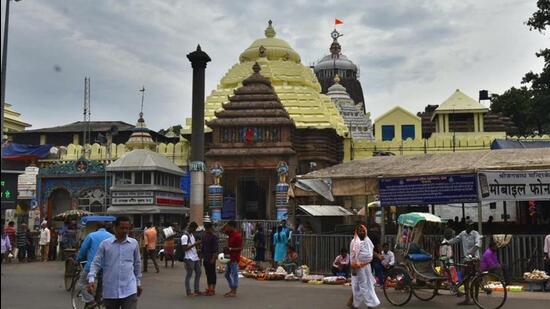
The eastern zonal bench of NGT comprising justice B. Amit Sthalekar and judicial member Saibal Dasgupta told the temple administration to deposit ₹12 crore with the Khordha district collector who will constitute a committee for carrying out restitution, reclamation and renovation of the excavated areas within the next four months and submit an Action Taken Report with the tribunal by March 31 next year.
The Khordha district collector earlier suggested that compensation be recovered from owners of vehicles transporting the mineral but the NGT rejected it, saying compensation has to be recovered not only from the drivers but also from the persons carrying on illegal mining who needed to be identified.
“As the committee (panel formed to identify the illegal mining) had failed to pinpoint and identify the persons who had carried on the illegal mining of laterite, it has been established that it would be Shree Jagannath Temple Administration, Puri which had auctioned the mines and the mining has also been carried on over an extensive area,” the NGT said in its order dated October 14. The ruling was uploaded on Tuesday.
Sri Jagannath Temple’s chief administrator Vir Vikram Yadav refused to comment on the NGT order.
In 2018 and 2020, two persons moved NGT alleging that 40 different stone quarries in Khordha district of Odisha were being illegally operated over 500 acres of land belonging to Lord Jagannath in villages like Tapanga, Anda and Jhinki Jhari under Nijigarh Tapang Gram Panchayat without environmental clearance nor consent. The petitioners alleged that during mining activities, trees were being felled. The temple body owns 60,420 acres of land across the state.
The NGT formed an expert panel to assess the quantity of mined minerals, its value, loss to the environment due to illegal extraction and the cost of restitution of the environment. The committee concluded that all the mines were illegal and unsafe.
But the committee could not identify the people who illegally mined laterite and black stones.
A special task force set up by NGT found that of the 72 black/building stone quarries on land belonging to Lord Jagannath, only 27 had the necessary approvals. Similarly, out of 26 laterite stone quarries, one neither had the environmental clearance nor consent to establish or consent to operate.
Lawyer Sankar Prasad Pani who appeared for the petition said at a time when the tribunal’s order will spur the government in acting against illegal mines and not remain a mute spectator to illegal mining. “The penalty order is a warning for all government authorities that they can’t get away when illegal mining is happening right under their nose,” he said.



