
 E-Paper



Jaishankar says he gave UPSC interview on the day Emergency was revoked: ‘Was asked…’
S Jaishankar said the real challenge in the UPSC civil services exams is the interview, adding that his own interview took place 48 years ago.

 Prefer HTon Google


External affairs minister S Jaishankar on Sunday recalled his entry into the prestigious civil services and said his interview took place on March 21, 1977, the day the Emergency was lifted in the country.
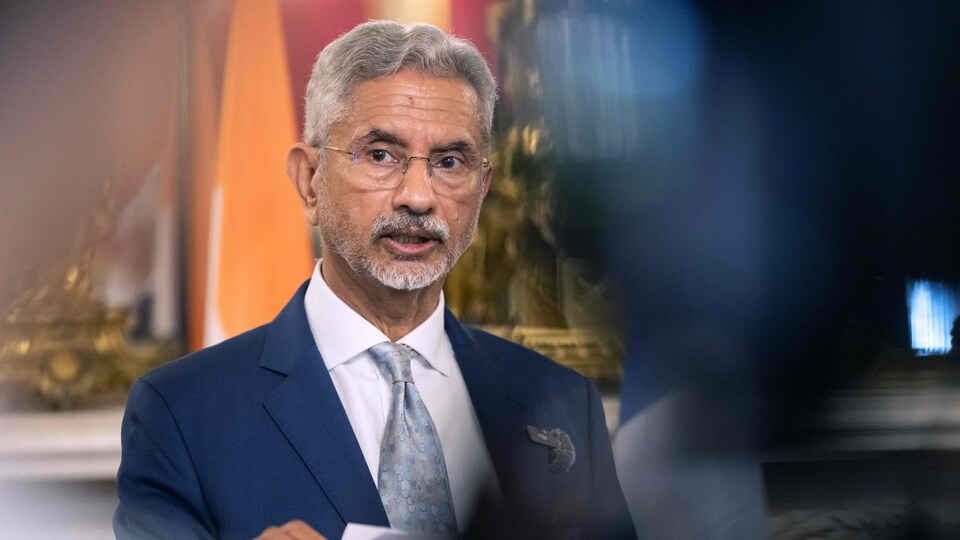
Walking down memory lane, Jaishankar said he learnt two things from the UPSC interview- the importance of communication under pressure and that the important people may be living in a "bubble."
"(1977) Election results were coming from the previous day... The sense of the defeat of the Emergency rule was coming into understanding. In a way, that is what got me through the interview," Jaishankar told the fresh batch of entrants to the civil services at an event in Delhi, according to PTI news agency.
The union minister said that the real challenge in the UPSC civil services exams is the interview, adding that his own interview took place 48 years ago. Calling the UPSC examination an 'Agni Pariksha' (trial by fire), Jaishankar said it is a "very unique" testing system in the world to select candidates for the services.
Also Read: ‘We are proud of it’: What two Himachal brothers said after marrying same woman
Recalling his own experience of the UPSC interview, he said, "My interview was on March 21, 1977. That was the day the Emergency was revoked. Revoked! So, I go in for an interview at Shahjahan Road... First person that morning."
The Emergency, which was imposed by the Indira Gandhi government in June 1975, was lifted on 21 March 1977. The General elections in the country were held between 16 and 20 March, 1977.
The Janata Party, a coalition of opposition leaders, emerged victorious in the 1977 Lok Sabha elections, in an upset for Indira Gandhi, and Morarji Desai became the next prime minister.
‘I was lucky’
Jaishankar said he was asked about what had happened in the 1977 elections. The foreign minister said that being a student of JNU and having studied political science, "I was lucky."
He said he had taken part in the election campaign and had worked for the defeat of the Emergency.
Also Read: ‘Speak Marathi or get out’: Massive verbal spat breaks out in Mumbai local train | Video
"We had taken part in the 1977 election campaign. We had all gone there and worked for the defeat of the Emergency," Jaishankar told PTI.
He then forgot he was in an interview, adding that at that moment, "my communication skills somehow came together."
He also said that after the UPSC interview, he learnt of the "Lutyens' bubble".
The minister further said that the interviewers were shocked of the public wave against the Emergency.
"These people were really shocked, they could not believe that this election result had happened, whereas for us, the ordinary students, we could see that there was a wave against the Emergency," the EAM recalled.
He added that from that day, he learned how to communicate under pressure, without offending anyone.
Also Read: Who was Prince Al-Waleed, Saudi Arabia’s ‘Sleeping Prince’, who died after 20 years in coma?
"How do you persuade, how do you explain. This was one carry-away. The second carry-away was that important people may be living in a bubble and not realising what is happening in the country," Jaishankar said.
Addressing the successful UPSC candidates, he urged them to remember that they are all "entering into a service".
"This Amrit Kaal of 25 years is your era. Your era, because you will have to work, you will have to deliver, and you will be the beneficiaries of this era, you will be the leaders of this era," the EAM said, urging them to contribute to the vision of a Viksit Bharat by 2047.
"I want you to think 20 years ahead... When we move towards the journey of Viksit Bharat, what will be your contribution? And, the mindset that you have to bring to realise that dream of making a developed nation," he added.


