
 E-Paper



Jammu’s famed gun makers not ready to bite the bullet yet
Jammu’s guns are appreciated for their quality and enjoy a wide clientele. However, changing markets and the surge in militancy is pushing the business, which makers consider a tradition, to the brink of shutting down.


Tough regulations and a market slump for handmade 12-bore double- and single-barrel guns have hit Jammu’s private, licenced gunmakers. But they won’t bite the bullet yet.

Business went downhill when armed militancy erupted in Jammu and Kashmir in the 1990s, prompting the government to strictly regulate norms for giving arms licence to people.
In the restive Kashmir Valley, gun production was banned. Jammu’s gunmakers faced hard restrictions that pushed seven of 26 units to close shop.
Besides, manufacturers couldn’t make guns above a strict production ceiling.
Today, 19 units are trying to ply the trade they call a tradition.

“We are the pioneers in India in manufacturing 12-bore double-barrel and single-barrel shotguns,” said Sumit Kumar, the owner of Santokhoo Gun Manufacturers, established in 1952.
His factory makes between 30 and 40 guns a month, depending on the demand.
“In our troubled state, getting an arms licence is an uphill task. Most of our clients now are former soldiers who come to us for a gun to get jobs as private guards, or to keep a firearm for security at home,” he said.
Jammu’s guns are appreciated for their quality and their clientele ranges far and wide — Punjab, Uttar Pradesh, New Delhi and Bihar.
The butts are made of Kashmiri walnut wood while the barrel, trigger and other metal parts come from Punjab and New Delhi. The weapon goes through rigorous tests before it’s sold. The barrels are sent to ordnance factories in Jabalpur and Kanpur for inspection.
“We have a team of experienced and professional gunsmiths. Our team ensures the product meets the standards,” Kumar said.
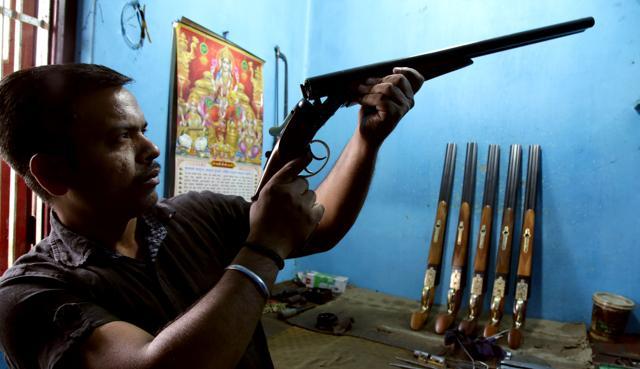
A double-barrel shotgun costs up to Rs 20,000. The single-barrel is cheaper at Rs 14,000.
But the protracted insurgency has almost killed a flourishing trade, and thrust around 1,300 workers and their families into an uncertain future.
Kumar said the government should ease norms in issuing gun licences to people — a debatable demand but legitimate for people from the trade.
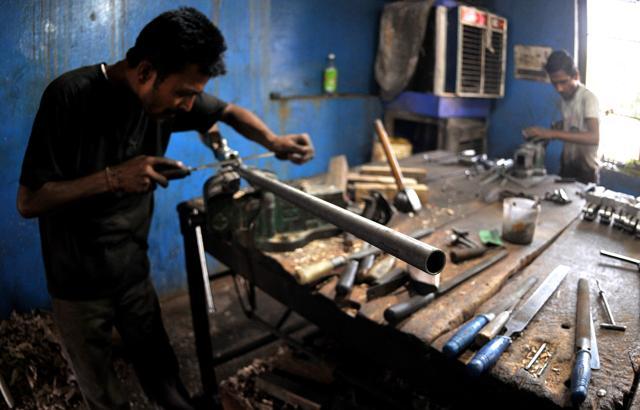
The tough licence norms and production cap won’t go away too soon, given the situation the restive Valley. A state home department official hinted as much, besides saying the 12-bore shotgun has become virtually obsolete now.
Gunmakers like Kumar has little option but stick to their guns.


