
 E-Paper



J&K delimitation: Supreme Court gives Centre 1 week to file counter on plea
The court added in its order that if the Centre fails to file its response within a week, the affidavit will be accepted by the registry only with a fine of ₹25,000.

 Prefer HTon Google


The Supreme Court on Tuesday expressed its displeasure at the delay by the Union government in responding to a petition that has challenged the validity of the delimitation commission’s proposed move of redrawing poll constituencies in Jammu and Kashmir, and increasing the tally of assembly seats from 83 to 90.
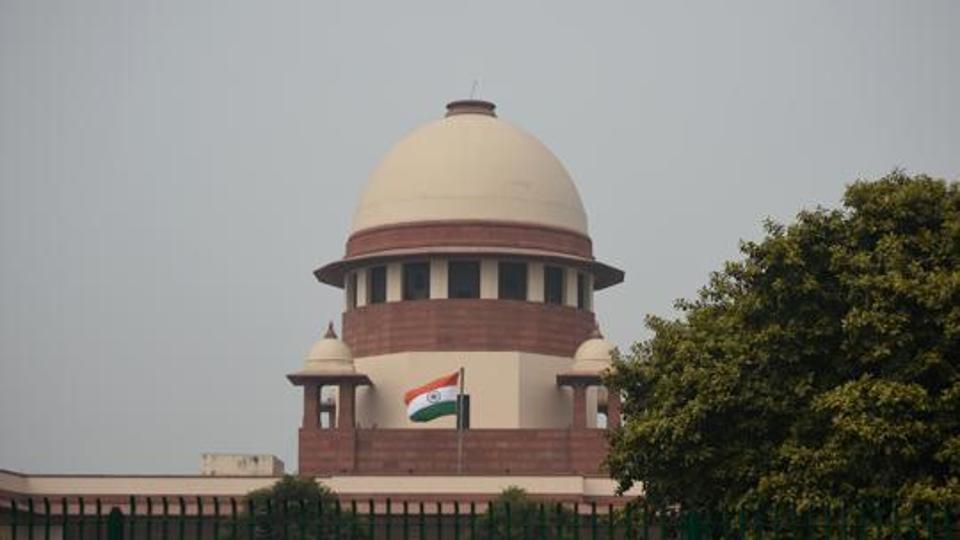
“We note this with regret that no counter affidavit has been filed by the respondents despite sufficient time given, as asked by them. We don’t appreciate it and we would have imposed cost but for the young counsel who is appearing and has assured the bench that the counter affidavit will be filed within a week,” stated a bench of justices Sanjay Kishan Kaul and Abhay S Oka.
The court added in its order that if the Centre fails to file its response within a week, the affidavit will be accepted by the registry only with a fine of ₹25,000.
On May 13, the bench had issued notices to the Centre, the Jammu and Kashmir administration and the Election Commission of India (ECI) on a petition filed by Srinagar-resident Haji Abdul Gani Khan, questioning the legality of the delimitation exercise conducted in terms of the notifications issued in 2020, 2021 and 2022.
On May 5, the three-member delimitation commission finalised the UT’s new electoral map, marking the first step for elections in the region since its special status was scrapped in August 2019. In its final order, the commission earmarked 43 seats to the Hindu-majority Jammu region and 47 to Muslim-majority Kashmir – making up a total of 90 seats for the Union territory’s assembly, up from the current strength of 83.
Out of the seven new seats added, six were allotted to Jammu and one to Kashmir. Earlier Jammu had 37 seats and Kashmir 46. This brings the Kashmir representation down to 52.2% from 55.4% of the total seats, and takes the Jammu representation up to 47.8% from 44.6%. The exercise was carried out on the basis of 2011 Census, which put the population of J&K at 12.5 million, with 56.2% in Kashmir and 43.8% in Jammu.
The delimitation commission, which comprises former Supreme Court judge Ranjana Prakash Desai, chief election commissioner Sushil Chandra and chief electoral officer of J&K KK Sharma, was set up in March 2020 with five parliamentarians from the UT as associate members.
J&K lost its special status and statehood on August 5, 2019, when the Centre moved to void Article 370 of the Constitution. At a landmark all-party meeting in June last year, Prime Minister Narendra Modi told leaders of political parties that statehood will be restored after fresh elections are held in the region, on the basis of the delimitation process.
But parties from the region, which remained bitterly opposed to the scrapping of its special status, want statehood to be restored before delimitation and elections – a demand rejected by the Centre. Assembly seats in the erstwhile state of Jammu and Kashmir were last redrawn in 1995, based on the 1981 Census.
In his petition, Khan argued that a constitutional provision coupled with a decision taken by the J7K legislative assembly required the Centre and ECI to wait till 2026 to conduct any delimitation or re-adjustment of assembly seats. He pointed out that any delimitation on the basis of the 2011 population census is unconstitutional since no population census was carried out for J&K in that year. Under Article 170 (3), the plea argued, a redrawing of constituency can be done only upon the completion of the census, which is now proposed to be conducted in 2026.
Ends


