
 E-Paper



Justice Pancholi notified as Supreme Court judge despite Justice Nagarathna’s dissent in collegium
Notification came at lightning speed, less than 48 hrs after collegium nod; resolution on SC website didn't say elevation approved with one judge dissenting

 Prefer HTon Google


The Union government on Wednesday notified the appointment of two new judges to the Supreme Court, Bombay high court chief justice Alok Aradhe and Patna high court chief justice Vipul M Pancholi, even as Justice BV Nagarathna recorded a strong note of dissent against Justice Pancholi’s elevation, warning that his appointment would be “counter-productive” to the administration of justice and imperil the credibility of the collegium system.
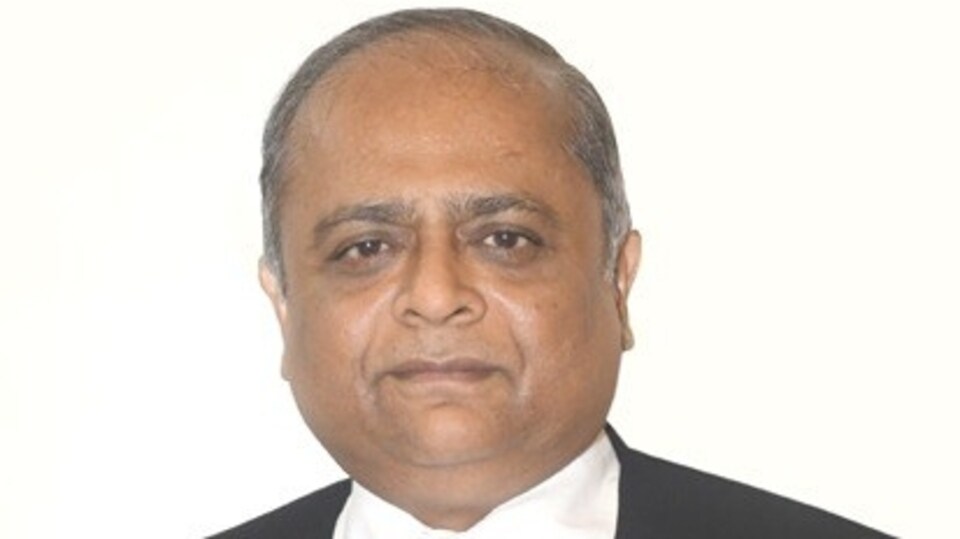
Justice Pancholi will be in line to become the Chief Justice of India (CJI) for a tenure of nearly 18 months following the retirement of Justice Joymalya Bagchi in May 2031.
Also read | 'Counter-productive': Why did Justice Nagarathna dissent on Pancholi’s elevation to SC by collegium?
Announcing the appointments on X, Union law minister Arjun Ram Meghwal said the President, in consultation with the Chief Justice of India, is pleased to appoint the two, clearing the path for the two chief justices to take oath as judges of the apex court.
The notification came with lightning speed, in less than 48 hours of the collegium passing its resolution. Notably, the resolution uploaded on the Supreme Court website did not say that Justice Pancholi’s elevation was approved by a 4–1 majority.
Justice Nagarathna, the lone woman member of the five-judge collegium led by Chief Justice of India Bhushan R Gavai and comprising justices Surya Kant, Vikram Nath, and JK Maheshwari, issued a detailed written dissent opposing Justice Pancholi’s elevation.
People familiar with her note said she reiterated reservations she had first voiced in May, when the proposal was originally broached, and underlined that advancing the appointment despite serious concerns would damage institutional credibility.
Transfer from Gujarat to Patna: Justice Nagarathna's main objection
Central to her objection is Justice Pancholi’s transfer from the Gujarat high court to the Patna high court in July 2023, a move she described as the product of considered deliberation, not a routine relocation. The dissent recounts that inputs were then sought from multiple Supreme Court judges with knowledge of the Gujarat high court, including justices MR Shah (since retired), Vikram Nath (a present collegium member), JB Pardiwala, and the then Gujarat chief justice, Aravind Kumar. All, she said, concurred with the transfer.
Given this backdrop, she urged that the confidential material and minutes underpinning that decision be called for and examined before proceeding with an elevation to the Supreme Court.
Her note raised two additional axes of concern.
First, seniority, highlighting that Justice Pancholi currently stands at No 57 in the all-India seniority list of high court judges, and several meritorious and more senior judges across high courts remain available for consideration.
Second, representation — that with justices Pardiwala and NV Anjaria already on the Supreme Court bench from the Gujarat high court, adding a third judge from the same high court risks skewing geographic and institutional balance when many high courts remain unrepresented or under-represented.
Justice Nagarathna is also understood to have pointed to the line of succession that if appointed now, Justice Pancholi would, on the present trajectory, be in line to serve as Chief Justice of India from October 2031 to May 2033. In her assessment, that outcome would not serve the institution’s best interests.
As a matter of process integrity and transparency, she has asked that her dissent be uploaded on the Supreme Court’s website, echoing the court’s recent practice of publishing reasons for collegium decisions. The resolution issued on Monday did not annex or refer to her note.
Born in 1964, Justice Aradhe has served across multiple high courts in his judicial career. Practising primarily in civil, constitutional, arbitration, and company matters before the Madhya Pradesh high court at Jabalpur, he was designated as a senior advocate in April 2007. He began his judicial career as an additional judge of the Madhya Pradesh high court in December 2009 and became a permanent judge in February 2011. Subsequently, he was transferred to the Jammu and Kashmir high court in September 2016, where he also served as acting chief justice. In November 2018, he was transferred to the Karnataka high court, later serving as its acting chief justice between July and October 2022. In July 2023, he was appointed chief justice of the Telangana high court, and in January 2025, he was shifted as chief justice of the Bombay high court.
Justice Pancholi was born in May 1968 in Ahmedabad. He enrolled as an advocate in September 1991, beginning his practise at the Gujarat high court. He served as assistant government pleader and additional public prosecutor for seven years until March 2006. In October 2014, he was elevated as an additional judge of the Gujarat high court and confirmed as a permanent judge in June 2016. After nearly a decade in Gujarat, he was transferred to the Patna high court in July 2023, where he took the oath as a judge. He was appointed chief justice of the Patna high court in July 2025.



