
 E-Paper



Kerala govt to declare state extreme poverty-free on Nov 1
The announcement follows the successful implementation of the Extreme Poverty Eradication Programme (EPEP), local self-government minister MB Rajesh said.

 Prefer HTon Google


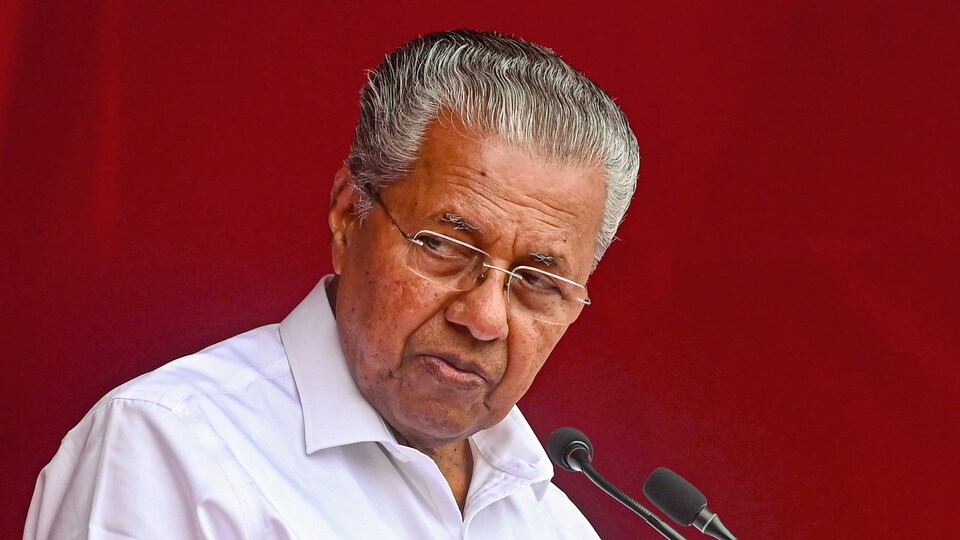
Chief Minister Pinarayi Vijayan will formally declare Kerala as extreme poverty-free on November 1 (Saturday), the state’s formation day, at a state-level function in Thiruvananthapuram.
The announcement follows the successful implementation of the Extreme Poverty Eradication Programme (EPEP), launched in 2021 to ensure that no one in Kerala remains “extremely poor.”
The World Bank defines extreme poverty as the number of people living on less than $1.90 (roughly ₹168) per day. While, India's Multi-Dimensional Poverty Index considers socio-economic indicators like nutrition, housing, sanitation, education, etc.
The programme was carried out through a transparent and participatory process involving micro-level projects across the state, PTI quoted Local Self-Government Minister MB Rajesh as saying.
Introduced as a mass, grassroots-level, multidimensional initiative, the programme aimed to ensure that no person remained “extremely poor” or was left out of the state’s development trajectory.
The initiative has uplifted over 64,006 families living in extremely poor conditions by ensuring an uninterrupted supply of food, healthcare, livelihood opportunities, and safe housing, according to the PTI report.
Highlighting that the EPEP was the first decision taken by the inaugural cabinet of the current LDF government, Rajesh said it was envisaged as a five-year plan to eradicate poverty. “Now, we have achieved 100 per cent of our target,” the minister added.
He further said that the achievement was the result of coordinated efforts and the participation of local bodies under both the LDF and UDF governments.
“It is not as if we suddenly decided one fine morning to announce that Kerala is free from extreme poverty,” Rajesh said, adding that a 19-page guideline regarding the initiative had been issued on July 26, 2021.
According to the government, extreme poverty is defined as the condition of families unable to access basic needs such as food, shelter, clothing, healthcare, and a minimum income, PTI quoted Rajesh as saying.
He added that individuals without identity documents such as Aadhaar and ration cards, and those excluded from welfare schemes, were also included in the category.
Local self-government institutions played key role, says minister
Minister MB Rajesh said that local self-government institutions played a central role throughout the process. “This was not a closed or secretive process. It was a people’s movement driven by local self-government institutions and the community,” he said.
This was implemented through multi-level committees comprising people’s representatives, Kudumbashree members, ASHA and Anganwadi workers, MGNREGS mission staff, and social activists — all of whom were trained.
In the first phase of the programme, 1,18,309 families were identified, which was later narrowed down to 87,158 families after 56,964 focus group discussions conducted by expert teams.
Rajesh said that after detailed field verification and discussions in gram sabhas, 64,006 families were identified as belonging to the extreme poverty category, PTI reported.
He added that each family on the list was provided with a personalised micro-plan to address the causes of their poverty and outline targeted interventions.


