
 E-Paper



Kolkata’s air laden with cancer-causing particles in winter, says new study
The total PAH concentration in Kolkata’s air is around 94 nanograms per cubic metre, found the study, which also compared it with PAH levels in other cities found in previous studies. The comparison showed Delhi air had 288 nanograms per metre cube of PAHs, which is three times higher than Kolkata.


More than half of the Polycyclic Aromatic Hydrocarbons (PAHs) particles suspended in Kolkata’s air are cancer and genetic-mutation causing in nature, according to a new study by researchers from the Bose Institute in Kolkata.
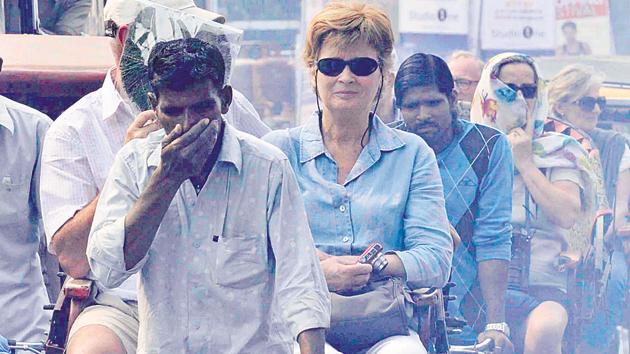
PAHs are a class of organic pollutants created from vehicular emissions, garbage burning and biomass burning. They are among the top 10 of 275 hazardous chemicals because they can lead to cancer (carcinogenic) and mutation in genes (mutagenic), according to the Agency for Toxic Substances and Diseases Registry, a US public health agency.
“Our study quantified 50‒65% carcinogenic and mutagenic PAHs in the particulate matter including chemicals like benzo(a)pyryene, benzo(a)anthracene, benzo(b)fluoranthene, chrysene and indeno [1,2,3-cd] pyrene among others. At least 17 kinds of PAHs have been found in Kolkata’s air,” said Debajyoti Ray, research associate of environmental sciences section at Bose Institute.
The total PAH concentration in Kolkata’s air is around 94 nanograms per cubic metre, found the study, which also compared it with PAH levels in other cities found in previous studies. The comparison showed Delhi air had 288 nanograms per metre cube of PAHs, which is three times higher than Kolkata.
Bose Institute researchers found that these PAH particles are not just locally generated, but also coming from “transboundary sources”, including from northwest India and areas along the eastern coast.
“During the post-monsoon period and winter months, PAH over Kolkata was found to be coming from as far as Haryana and Punjab where crop burning takes place. During the summer, smoke billowing out from biomass burning (Jhum cultivation) over Eastern Ghat regions (Andhra Pradesh, Orissa, parts of Tamil Nadu and Karnataka) significantly contributes to PAH loading in the atmosphere of Kolkata.” said Abhinandan Ghosh, a senior research fellow of environmental sciences section of Bose Institute.
Abhijit Chatterjee, associate professor of environmental sciences at Bose Institute says higher temperature, solar radiation and wind speed help in dispersing the pollutants, in summer, but lower temperature, low-speed wind and low radiation in the post-monsoon and winter season help in PAH accumulation.
The research led by Chatterjee and Ray has been published recently in Aerosol and Air Quality Research, an international peer-reviewed journal.
An environmental expert said phasing out of diesel and coal as fuels is one of the measures needed.
“Smoke from burning coal and diesel contribute the maximum to PAH particles. The solution is to gradually phase out these fuels. Delhi has already banned coal. Kolkata also needs to make similar efforts to get rid of these deadly pollutants,” said Vivek Chattopadhyay, senior programme manager (Clean Air Program) at the Centre for Science and Environment.


