
 E-Paper



Karnataka caste survey set to begin today as protests continue
Karnataka begins a caste survey on Sept 22 to address community concerns, amid political controversy and aims to gather socio-educational data.

 Prefer HTon Google


Bengaluru: The Karnataka government will on Monday commence the mammoth caste survey to address complaints from several communities who alleged that they were either excluded or underrepresented in the controversial 2015 exercise amid fierce slugfest among political parties and community leaders.
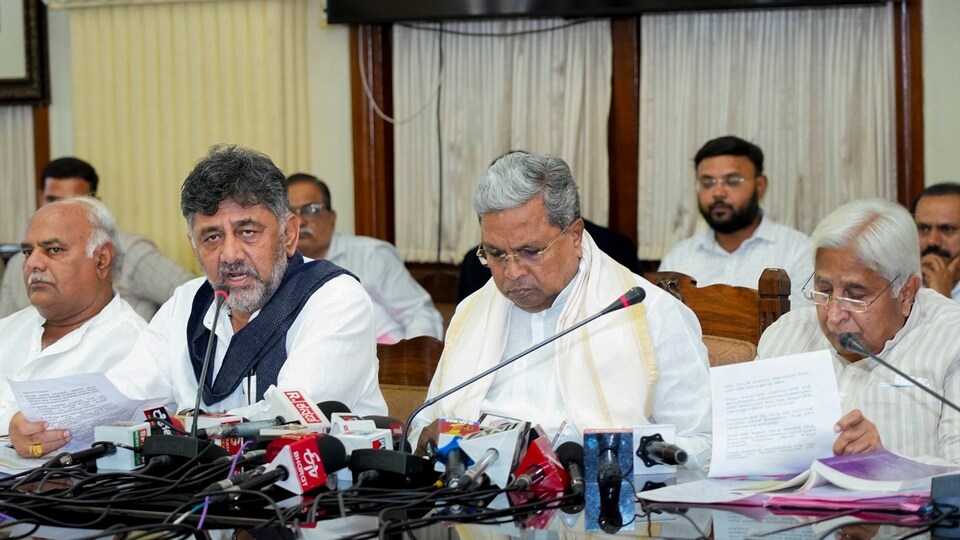
According to officials familiar with the matter, the Karnataka State Commission for Backward Classes will conduct the socio-educational survey from September 22 to October 7 at an estimated cost of ₹420 crore. As part of the exercise, around 175,000 enumerators, mostly government school teachers, will administer a 60-question form to approximately 70 million people across 20 million households in the state.
“Our survey will commence from September 22. We have made all the preparations,” chairman of the commission, Madhusudan R Naik, said.
He added: “Taking note of the possible creation of confusion in the minds of the public, we have resolved that the drop down, which is only for our internal consumption, will not prompt certain castes. But anybody out of his free will can always notify the surveyor that he belongs to such a caste.”
This is the second socio-educational survey being conducted by the commission, following the first one conducted by the H Kantharaj Commission in 2015. This is the second socio-educational survey being conducted by the commission, following the first one conducted by the H. Kantharaj Commission in 2015.
The survey report, submitted by then Backward Classes Commission chairman K. Jayaprakash Hegde on February 29, 2024, flagged discrepancies in caste-wise population figures, triggering strong reactions from Karnataka’s two dominant caste groups -- Vokkaligas and Veerashaiva Lingayats -- who termed it “unscientific”.The Siddaramaiah-led cabinet announced a new survey in June this year.
During the new survey, officials said, each household will be geo-tagged using the electricity metre number, and assigned a unique household ID. Ration cards and Aadhaar details will be linked with mobile numbers, while a helpline and online participation options have also been created.
Although the project is widely known as a caste survey, Siddaramaiah has insisted that it is broader in scope. “It is a survey being done to provide equal opportunities to people by collecting not just information about their caste, but also about their economic, social, and educational status,” he had said.
The Opposition Bharatiya Janata Party (BJP), however, has called it an “anti-people survey” and an attempt to divide Hinduism.
“The Congress government is working to divide Hinduism in the name of a caste survey. People from all castes have opposed conversion. Names like Kuruba, Brahmin, Vishwakarma, etc., have been prefixed with “Christian.” Congress leader Sonia Gandhi is a Christian, and this is being done to please her. If someone says they are from Pakistan or do not believe in the Constitution, will they write it down as it is? If it’s a socio-educational survey, why mention caste names in it? Under the guidance of Rahul Gandhi and Sonia Gandhi, they are dividing Hindus,” Karnataka leader of Opposition R Ashoka told reporters in Bengaluru.
Earlier, state BJP leaders had petitioned Governor Thaawar Chand Gehlot to block the use of Christian sub-castes in the survey, accusing the Congress of trying to fracture Hindu society.
Disagreement has also surfaced within the Congress, with state health minister Dinesh Gundu Rao, who belongs to the Brahmin community, objecting to the idea that Christian versions of Hindu castes exist. “A person who converts to Christianity loses the caste identity. The person also exits Hindu religion. There are no castes called Lingayat Christian or Gowda Christian,” he said. He noted that such categories appeared in earlier surveys when the BJP was in power but did not attract objections then.
Amid the controversy, the Siddaramaiah government on September 20 announced the removal of 57 Christian sub-castes from the main list of categories.
The debate has spread well beyond political circles. Vokkaliga leaders have urged their members to declare Hinduism as their religion and Vokkaliga as their caste, avoiding sub-caste references unless necessary. Among the Veerashaiva Lingayats, a long running argument has resurfaced about whether to describe the community as a separate religion or as part of Hinduism. Kurubas, Muslims, Brahmins, and Scheduled Castes have also convened meetings to decide on their approach.
Some religious figures have questioned whether the state can complete the exercise in the short time allotted. Swami Nirmalanandanatha of the Adichunchanagiri mutt, an influential Vokkaliga monastery, pointed to the neighboring state of Telangana, which needed 65 days to survey a population half the size of Karnataka’s.
Union minister HD Kumaraswamy of the Janata Dal (Secular) has meanwhile called for a postponement, saying that the government should conduct the survey in phases over three months “to make the exercise flawless”. Advocacy groups have also warned that the schedule is too tight, citing previous commissions that required far longer to complete their work.
Social welfare minister Shivaraj Tangadgi, meanwhile, defended the exercise. “The purpose is to gather comprehensive data on the social and educational backwardness of communities, which will help the government identify eligible beneficiaries for various schemes and also create a robust database for policy making and budgetary allocations,” he said.


