
Sign in

Lack of anti-drone equipment on warships poses challenge while guarding waters

Indian Navy has now deployed four destroyers and one frigate to protect merchant shipping from missile and drone attacks in the Arabian Sea

Updated on: Dec 31, 2023, 24:44:36 IST
By , New Delhi
Share
Share via
  • facebook
  • twitter
  • linkedin
  • whatsapp
Copy link
  • copy link

While the Indian Navy has now deployed four destroyers and one frigate to protect merchant shipping from missile and drone attacks in the Arabian Sea, the larger challenge faced by navies across countries is the lack of anti-drone equipment on these warships, according to people familiar with the matter.
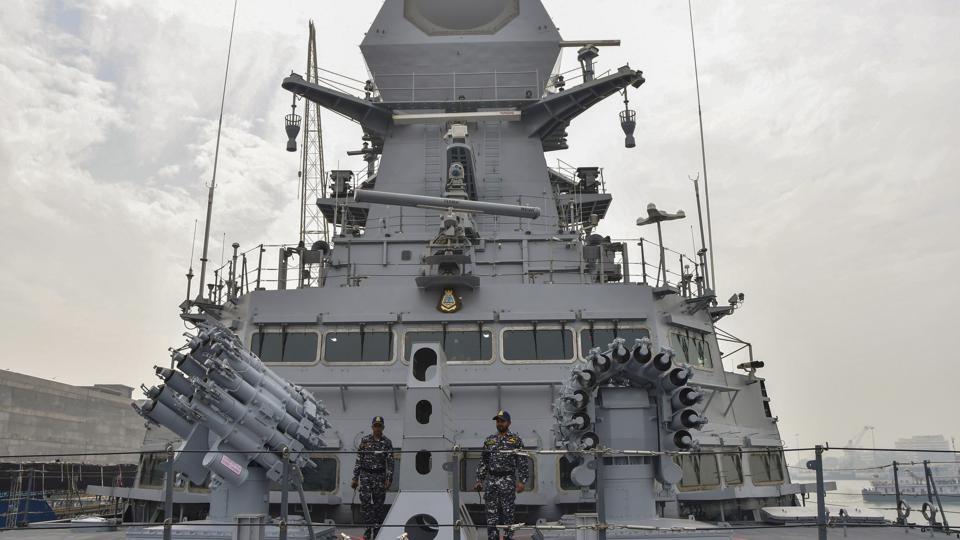
Officials at the Indian Navy’s newly-commissioned Stealth Guided Missile Destroyer Imphal at Naval Dockyard in Mumbai. (PTI)

This makes merchant ships or oil tankers with no protective measure sitting ducks for the Houthi missiles and Iranian loitering ammunition in the Red Sea, apart from rampaging Somali pirates across the region, the people added.

A frontline frigate of the INS Talwar class is now headed towards the central Arabian Sea to join destroyers INS Kolkata, INS Kochi, INS Chennai and INS Mormugao, which are deployed south of the Arabian Sea to deter missile attacks in the light of recent developments, the people said. INS Visakhapatnam is on standby at the Mumbai harbour as Kamikaze drone-hit tanker MV Chem Pluto is currently undergoing repairs at the Mumbai dockyard.

Read here: Mission from promoting drone use in state

While one US carrier strike group, French, UK, Spanish, Japanese, Italian and Danish warships are deployed in the Arabian Sea, none of these platforms, like the Indian vessels, have specific anti-drone systems such as high-energy laser or microwave weapons. Though US, UK and French warships have been able to shoot down drones and missiles with long-range guns and surface-to-air missiles, none of these platforms use jamming or spoofing techniques as they interfere with communication. Even Indian warships have long-range guns and SAMs to shoot down drones.

HT has learnt that friendly navies have formed a sort of corridor from the southern Red Sea to the western coast of India to protect the sea lanes, with dhows or suspicious vessels not allowed to enter this zone in the Arabian Sea. Indian warships are also approaching suspicious vessels, and navy sailors are boarding and checking them for weapons and loitering ammunition.

Apart from ships, the US, French and Indian navies are also using long-range drones for maritime domain awareness, apart from surveillance aircraft and helicopters to ensure that merchant shipping and oil tankers can transverse the red zone.

  • Shishir Gupta
    ABOUT THE AUTHOR
    Shishir Gupta

    Shishir Gupta is Executive Editor at Hindustan Times and one of India's top journalists covering national security, strategic affairs, foreign policy and geopolitics. Over the past three decades, he has extensively reported on India's military, diplomatic and security landscape, covering every major conflict and national security challenge, from the 1999 Kargil War and the 2020 East Ladakh standoff to Operation Sindoor in 2025. He has also covered major terror attacks, including the IC-814 hijacking, the 26/11 Mumbai attacks and the 2025 Pahalgam terror strike, along with numerous Pakistan-backed terrorist incidents in the Kashmir Valley and across India. He has reported on national and state elections for more than three decades. A recognised authority on strategic affairs, Gupta has covered India's nuclear programme since the Pokhran-II (Shakti series) tests in May 1998 and has written extensively on global nuclear issues, Indian diplomacy and the country's expanding global outreach. He has also reported widely on international conflicts and terrorism, with a special focus on the Indian subcontinent. Gupta has interviewed Prime Minister Narendra Modi more than four times, including Modi's first interview with the print media after becoming Prime Minister in May 2014. His other interviews include three with the Dalai Lama, as well as conversations with Benjamin Netanyahu, Amit Shah, Yogi Adityanath, S. Jaishankar, Nirmala Sitharaman and Piyush Goyal. He is the author of Indian Mujahideen: The Enemy Within (Hachette, 2011) and Himalayan Face-off: Chinese Assertion and Indian Riposte (Hachette, 2014). He was awarded the Chevening-Wolfson Joint Scholarship at Wolfson College, University of Cambridge, UK, in 1998 and participated in the International Visitor Leadership Program (IVLP) of the US State Department in 2006. He received the Ben Gurion Prize from Israel in 2011 and the K. Subrahmanyam Prize for Strategic Studies in 2015 from the Manohar Parrikar Institute for Defence Studies and Analyses (MP-IDSA). Since 2024, he has hosted Point Blank, Hindustan Times' weekly YouTube show on global geopolitics.Read More