
 E-Paper



Land degradation to increase hunger, food prices: IPCC report
IPCC’s Climate Change and Land report’s summary for policy makers released in Geneva on Thursday revealed that since the pre-industrial period, the land surface air temperature has risen nearly twice as much as the global average temperature.


Land surface temperature has increased by 1.53 degree C since pre-industrial period while the global mean temperature, which includes land and ocean has increased by 0.87 degree C, new data from the Intergovernmental Panel on Climate Change (IPCC) has said.
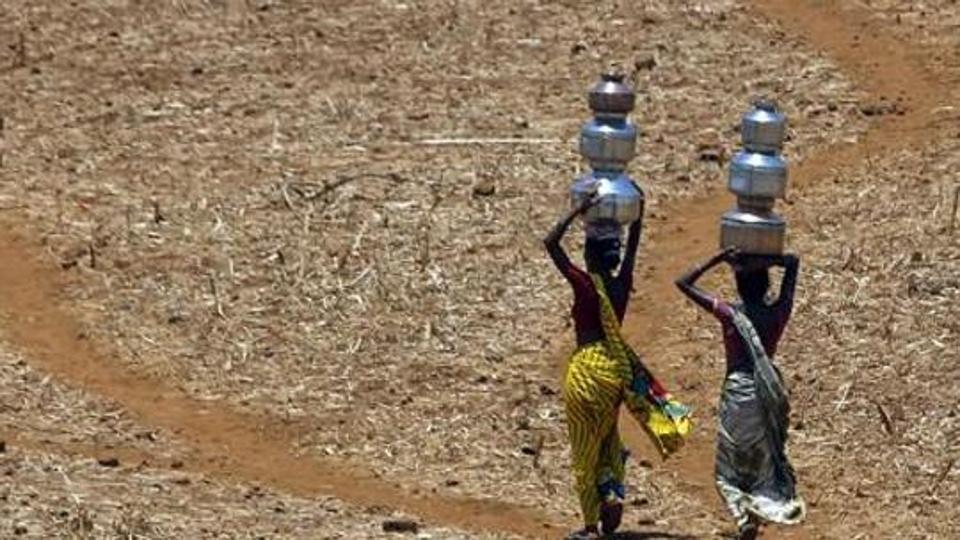
IPCC’s Climate Change and Land report’s summary for policy makers released in Geneva on Thursday revealed that since the pre-industrial period, the land surface air temperature has risen nearly twice as much as the global average temperature, which indicates that land is bearing the brunt of severe climate change impacts already. This will lead to food insecurity, nutritional deficiency, increase in food prices and water availability.
The report has warned of massive impacts on soil fertility and increase in arid and desertified zones, contraction of polar climate zones and biodiversity. Asia is among areas worst affected by land degradataion, the report has said.
Between 1961 and 2013, the annual area of drylands in drought has increased, on an average by more than 1% per year globally, according to the report.
“Climate change exacerbates land degradation, particularly in low-lying coastal areas, river deltas, drylands and in permafrost areas,” the report said.
Among major impacts from land degradation, the report has underlined that the stability of food supply will decrease leading to more hunger.
Increased CO2 levels are likely lower the nutritional quality of crops. In shared socioeconomic pathways 2 (SSP2) scenario—when consumption patterns continue as usual, medium population growth and slight decrease in inequality—“global crop and economic models project a median increase of 7.6% in cereal prices in 2050 due to climate change,” the report said.
Under the same scenario, the dryland population vulnerable to water stress, drought intensity and habitat degradation is projected to reach 178 million people by 2050 at 1.5 degree C warming, increasing to 220 million people at 2 degree C warming, and 277 million people at 3 degree C warming, the report has warned.
“Food security will be increasingly affected by future climate change through yield declines – especially in the tropics—increased prices, reduced nutrient quality, and supply chain disruptions,” said Priyadarshi Shukla, co-chair of IPCC working group .
On the upside, land management can play an important role in keeping global temperature rise under 2 degree C or within the threshold decided under the Paris Agreement of 2015 because of the soil’s ability to absorb carbon.
The IPCC land report was approved by representatives of governments on Wednesday after deliberations started on August 2. The meeting had to be extended by a day because certain contentious issues like dietary restrictions and the need to change over to a plant-based diet was discussed.
The IPCC report will be an important scientific input into upcoming climate negotiations, such as the Conference of the Parties of the UN Convention to Combat Desertification (COP14) in New Delhi in September and the UN Framework Convention on Climate Change Conference (COP25) in Santiago, Chile , in December.


