
 E-Paper



Locals, refugees and simmering strife
Since Myanmar’s military coup in 2021, over 40,000 Chin refugees have crossed over to Mizoram.

 Prefer HTon Google


On January 24, four refugees from Myanmar allegedly killed an auto-rickshaw driver in Mizoram’s Siaha district after a monetary dispute. Three of the accused were arrested. On April 3, a refugee from Myanmar allegedly assaulted a village council vice president in Vengthar.
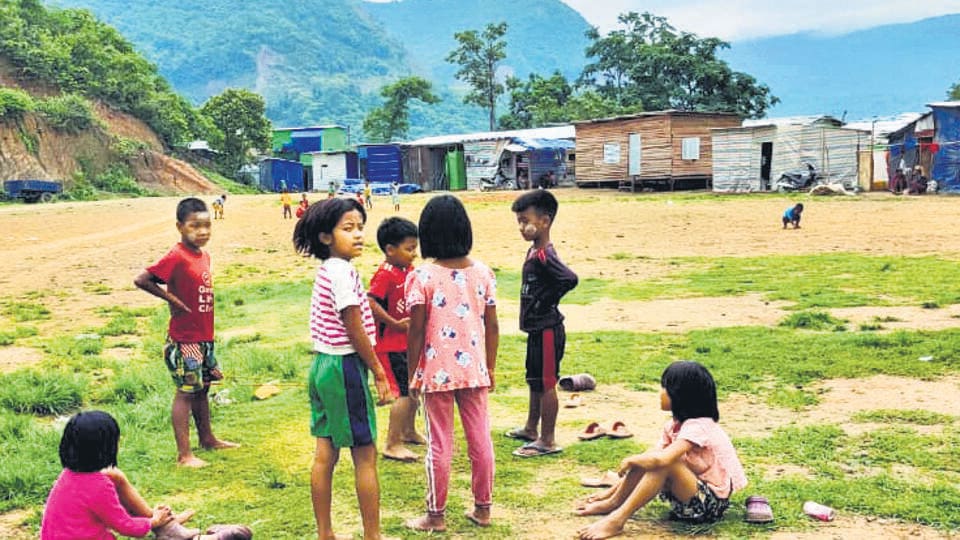
The two are among several instances that suggest all is not well between local Mizos and Chin refugees from war-torn Myanmar who have made a home in the northeastern state over the past four years. Both share ethnicity, religion and language — one reason why the state government is sheltering the refugees — but the bonhomie between them is beginning to fray.
“Minor clashes and law-and-order issues allegedly involving refugees have occurred and is indicative of growing unrest against them among locals,” said a senior police official, who asked not to be named.
On March 11, social activist VL Thlamuanpuia wrote to Union home minister Amit Shah, expressing concern over the escalating influx of Myanmar refugees. He warned of potential threats to national security and demographic balance, and cited mounting pressure on local resources.
Since Myanmar’s military coup in 2021, over 40,000 Chin refugees have crossed over to Mizoram, according to the state government. Mizoram home minister K Sapdanga on Friday said that the state is currently hosting 41,355 displaced individuals. Of these, 33,505 are refugees from Myanmar, 2,217 from Bangladesh, and 2,633 are internally displaced persons (IDPs) from Manipur. As of now, the refugees account for 3.77% of the state’s total population. “We have given refuge to our own,” he said, pointing out that nothing was done under duress.
This solidarity is, however, beginning to fray. Four regional bodies in Mizoram have issued public notices warning Chin refugees to strictly follow Indian laws—or risk expulsion.
“This isn’t about a single incident,” said Lalrammawia, secretary of the Melthum Local Council, which is one of the four. It has asked the refugees to produce “temporary” identification issued by state government, or risk expulsion. The trigger for the notice was the April 3 incident. “People are beginning to feel insecure in our own land; refugees sheltering in our area must provide temporary identification tag given by the state government before April end, failing which will result in eviction.”
In Lawngtlai town, the civil society body has barred refugees from markets after 9pm. Sub-divisional Officer (Sadar) Margareth J Vanlalremruati said, “Civil societies have issued their own diktats—we weren’t informed. But the situation seems to warrant them. Nightlife in Lawngtlai has deteriorated, and refugees are putting pressure on natural resources.”
According to locals, another reason for resentment is economic concerns as many refugees are being accused of selling lower priced Chinese goods, thus, destabilising the local trade. “Local traders pay up to 28% GST, while these sellers pay nothing,” said Laldinthara, president of the Mizoram Merchants Association (MIMA). “It’s undermining fair competition and hurting our economy.”
The refugees also work for less. “The refugees offer cheap labour which has resulted in unemployment among the local workers,” said Stephen Vanlalmuana, secretary of Kulikawn branch Young Mizo Association, a prominent youth organisation.
And they have also been accused by locals of cutting trees for fuel. “After almost four years, relief material and donations are dwindling. Refugees are turning to forest resources for survival,” said Rohmingliana Zathang, secretary of the Young Lai Association (YLA) in Lawngtlai.
Tender bamboo shoot is a local delicacy in Mizoram, and the Lengpui and Sihhmui areas are the primary sources for the shoot in Aizawl. “However, refugees are now scouring these resources without any consideration for sustainability. This is depleting the supply, and the locals, like myself, who relied on this resource for income, are now facing significant trouble,” said Frederick Mapuia,a resident of Sairang village near Aizawl.
“We’re being drained on both ends—economically and environmentally,” added Laldinthara.
The Peace Accord MNF Returnee Association (PAMRA), a body formed by former insurgents, has also accused some refugees of drug trafficking and smuggling. “They are exploiting our generosity,” PAMRA said in a statement on April 7, 2025. “While many Chin people are respectful, some are involved in illegal drug trade.”
Mizoram Police data suggests otherwise. Between September 2023 and December 2024, only 4% of those arrested were foreign nationals from Myanmar. The remaining 96% were Indian citizens, most of them from Mizoram.
But the damage has been done.
Several branches of the Young Mizo Association (YMA) have urged the government to implement stricter documentation procedures and limit refugee participation in local affairs. “We’re sheltering over 800 Chin refugees—the most in Aizawl city,” said Lalengzauva, vice president of YMA’s Edenthar branch. “They move freely, even cross into Myanmar and return undocumented. That has led to law and order issues, including drug-related cases.”
On April 8, the Central Young Mizo Association, Mizoram’s most influential civil body, urged the state government to adopt a comprehensive framework for refugee management. The association has been providing relief to the refugees since they started coming in 2021.
State government officials admitted to the growing tension between the locals and the refugees.
“The actions of a few must not overshadow the suffering of thousands fleeing persecution,” said Lalmuanpuia Punte, MLA and political adviser to the chief minister. He added that the government acknowledges that refugees need to work to survive and the state needs to provide them help to survive. “It will have some impact on locals, they also need to understand and learn to coexist peacefully.”
Mizoram home department secretary Vanlalmawia stressed on the need for tighter refugee management. “District collectors are investigating cases of illegal crossings and improper documentation and the home department is actively monitoring such concerns,” he said.
The Network for Unity Association (NUA), an Aizawl-based organisation involved in refugee relief, stressed the need to distinguish between genuinely vulnerable refugees and those frequently crossing the Indo-Myanmar border. “Not all refugees can be viewed through the same lens,” Zonunthanga, NUA’s general secretary told HT. “Some live in makeshift shelters and are in desperate need. Others rent homes in towns and appear well off.”
The refugees are feeling the pressure.
“We came here because we had no choice,” said Damno Lian, who fled the Matupi region in Myanmar with his wife and children in 2022. They now live in a makeshift bamboo shelter in Sihhmui, on the outskirts of Aizawl.
His wife, Teum Nu Oi, a former schoolteacher in Myanmar, now forages in nearby forests to support their children, who attend a community-supported school. “I’m afraid they’ll tell us to leave,” she said softly. “Where would we go?”
Like Damno Lian’s family, around 40 households in the Sihhmui relief camp now face an uncertain future. This uncertainty extends to several refugee camps.
Lalremruata, a schoolteacher in Champhai, however, urged the locals to be calm.“We opened our homes to them. There was no question of nationality, it is only humanity.”


