
 E-Paper



LS clears cooperative societies bill amid din
The bill is part of a broader push by the Narendra Modi government to modernise the country’s 115-year-old cooperative sector

 Prefer HTon Google


New Delhi: The Lok Sabha on Tuesday passed the Multi-States Cooperative Societies (Amendment) Bill, 2022, through a voice vote amidst protests by the opposition over the situation in violence-hit Manipur.
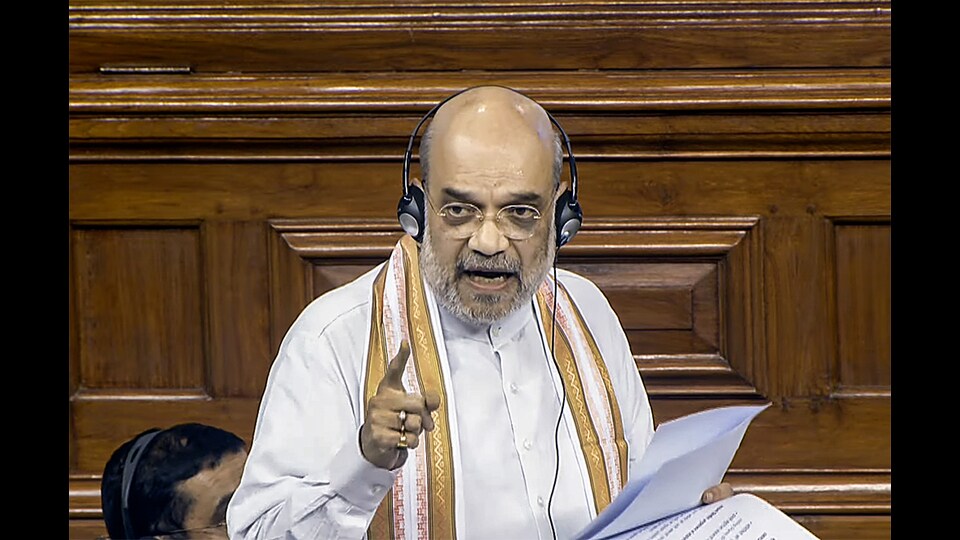
Home minister Amit Shah, who also holds the cooperation portfolio, moved the draft legislation as soon as the lower house reassembled at 5pm after an adjournment, following which a couple of members from the ruling coalition spoke in what was to be a short discussion. No opposition member spoke on the bill.
The bill is part of a broader push by the Narendra Modi government to modernise the country’s 115-year-old cooperative sector. It will pave the way for setting up two national-level cooperatives backed by the Union government. The Union cabinet had in October approved the Multi-State Cooperative Societies (Amendment) Bill, 2022, which amends the Multi-State Cooperative Societies Act, 2002.
“I am introducing a very important bill today. It aims to bring a new work culture and revolutionary changes in the cooperative sector,” Shah said. “Since independence, the cooperative sector has played an important role in the economy, but has suffered due to lack of attention from the central government.”
Shah, who spoke for nearly 50 minutes, laid out the broad objectives of the bill, which was preceded by short speeches on new provisions in the bill by two Bharatiya Janata Party members.
BJP Lok Sabha member Manoj Kishorbhai Kotak thanked Modi for creating a separate ministry for cooperation. “New check and balances provided for the bill will strengthen cooperatives, bring transparency and root out corruption as well as political influence,” he said. Santosh Gangwar, BJP MP from Bareilly, said the bill on multi-state cooperatives was a historic step to give “new direction” to cooperatives.
The country has nearly 36,000 viable PACS, or primary agricultural cooperative societies, which are undergoing computerization so that they can be linked up with organisations higher up in the value chain. A cooperative is a business jointly owned by members who share profits and losses.
In order to make the governance of multi-state cooperative societies more democratic, transparent and accountable, provisions for setting up of cooperative election authority, cooperative information officer, cooperative ombudsman, etc., have been provided for in the amendment bill, Shah said.
“Entire clause 45, from section a – l, deal with electoral reforms in cooperatives. We have also passed model bylaws, which have been adopted by all states, except West Bengal and Kerala,” the cooperation minister said.
Another key provision in the bill is a co-operative rehabilitation, reconstruction and development fund for the revival of sick multi-state co-operative societies. The fund will be financed through contributions by profitable multi-state co-operatives.
The bill sought to promote “equity and inclusiveness with provisions relating to representation of women and Scheduled Caste/Scheduled Tribe members on the board of multi-state cooperative societies”, Shah said.
To promote professional management, provisions have been included for bringing in co-opted directors with experience in the field of banking, management, cooperative management and finance or having specialisation in any field relating to the objects and activities undertaken by such multi-state co-operative society.
The bill was referred to a joint committee of Parliament on December 20, which submitted its report on March 15.


