
 E-Paper



Fair skin, curly hair, tall height no basis to determine caste, religion: Madras HC
The court made the observation while setting aside an order, which held that a community certificate held by a man was not genuine citing physical attibutes.

 Prefer HTon Google


The Madras High Court recently said that physical attributes including fair skin, tall height and curly hair, without any evaluation conducted by an anthropologist, could not be used to determine someone's religion or community.
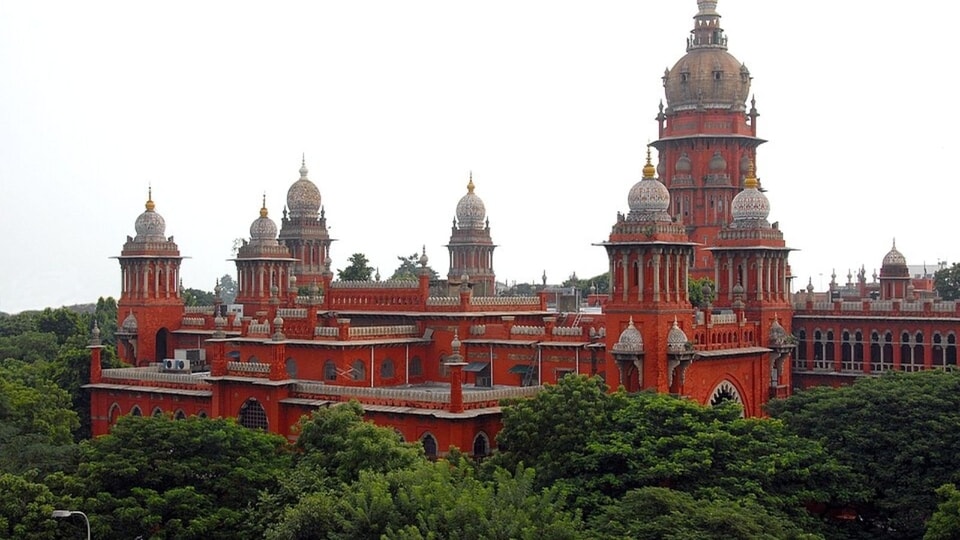
The court made the observation while setting aside an order of the District Level Vigilance Committee – which had held that a community certificate held by a man was not genuine. The committee had decided that the man did not belong to the Adi Dravidar community, which is a Scheduled Caste community, Live Law reported.
The HC was hearing a petition filed by M Ravikumar, who had challenged the order deeming his certificate invalid. Ravikumar had, in his petition, stated that his father belonged to the Adi Dravidar community but had converted to Christianity. However, Ravikumar said both his father and him had reconverted to Hinduism later.
Also Read | SC rejects presumption of child sale, orders custody to adoptive parents in Telangana
“While, whether the petitioner follows the Hindu gods or Christianity, will be relevant, the reasoning that the petitioner and his family members are very fair in colour, they are tall and having good physique and speak Tamil and English and have curly hair, may not have any relevance,” Live Law cited the HC as saying.
What was the case?
Ravikumar had, in his plea, argued that his father originally belonged to the Hindu Adi Dravidar community, but had converted to Christianity. Ravikumar was born when his father was a practicing Christian, according to Live Law.
However, Ravikumar and his father later reconverted to Hinduism, with the petitioner submitting that both had gone to the Arya Samaj centre, where the re-conversion ceremonies took place.
Ravikumar stated that he had obtained a community certificate after reconversion and was working as Assistant Commissioner in Chennai General Commissionerate. However, right before his superannuation in May earlier this year, the authorities had initiated a verification of the genuineness of his community certificate, with the commissioner later conveying the finding that the certificate was not genuine.
What were the arguments made?
Ravikumar argued that his family was practicing Hinduism, while submitting that both his and his daughters' marriages had been solemnised according to Hindu rites and customs.
Regarding the mention of appearance, he said that the certificate was held as not genuine while only considering their looks, fair colour, height etc, adding that this did not stand the scrutiny of law, Live Law reported.
Meanwhile, the authorities submitted that the petitioner and his family were only claiming to practice Hinduism to get employment and reservation status, but were actually professing Christianity. The defendants further argued that the petitioner's father was buried in a Christian cemetery, and said that while the petitioner had claimed reconversion back to Hinduism, the community people had not accepted it.
What were the court's observations?
Justice Bharatha Chakravarthy set aside the District Level Vigilance Committee order, saying the complexion of a person, their height and proficiency in Tamil alone are not enough to prove that they practice Christianity.
“The manner, in which the said reasons are mentioned in the impugned order, is also not in the context of any evaluation by any anthropologist in this regard,” the court added. The HC noted that the Commission had stated that in the 1994 ration card, the petitioner's daughter's name was in Christian, however, as per the petitioner, he got married in 1994 and the daughter was born in 1998.
The high court directed the petitioner to be given an opportunity of personal hearing, according to Live Law, and asked Ravikumar to appear before the authorities within four weeks and submit all documents, including the photographs and other materials, to prove that he was following Hinduism. The Madras HC also directed the vigilance committee to pass orders within eight weeks of the enquiry.


